The rare coin market is having a moment. Stack’s Bowers cleared $325 million in auction sales in 2025 — a company record across more than 130 separate sales. The January 2026 FUN show in Orlando broke all-time attendance records going back 70 years, with lines stretching the length of the building and dealers reporting the best sales of their careers. Gold above $3,300 an ounce is pulling new money into anything gold-adjacent, and the Semiquincentennial has put U.S. coinage into mainstream headlines.
More money is chasing coins right now than at any point since the late 1980s. And like the late 1980s, some of that money is chasing the wrong coins.
Rarity Is Not What You Think It Is
The word “rare” does more heavy lifting in coin marketing than any other adjective. A coin with a mintage of 500,000 gets called rare. So does a coin with a mintage of 12.
What matters is not how many were struck — it’s how many survive, and in what condition.
The U.S. Mint struck over 175 million gold coins between 1795 and 1933. Fewer than 2% survive today. Most were melted after Roosevelt’s Executive Order 6102 in 1933, when citizens surrendered gold coins to the Federal Reserve. The coins that survived did so by accident, by exemption, or by sitting in European bank vaults where U.S. law didn’t reach.
Mintage numbers alone are misleading. A coin with a mintage of 1.2 million might have 3,000 survivors. A coin with a mintage of 200,000 might have 5,000 because a hoard turned up in a European vault — the Rive d’Or Collection being a well-known example.
Survival rate, not mintage, determines scarcity. PCGS and NGC population reports are the closest thing the market has to a census. They’re imperfect — resubmissions inflate numbers, and not every coin has been slabbed — but they’re the best data available. Before paying a premium for any coin marketed as “rare,” check the population report. A coin with 47 examples graded MS-65 across both services is genuinely scarce. A coin with 8,000 is common in that grade, regardless of the listing.
The Story Has to Be Real
Every coin that commands a sustained premium has a story behind it. The 1995-W Proof Silver Eagle — available only in the 10th Anniversary set (30,125 sets produced), never sold individually — became the lowest-mintage Proof Silver Eagle in series history. The story is clean: extremely limited distribution, accidental rarity, and a collecting community that recognized it before the Mint did.
The 2020-W V75 Proof Gold Eagle had a different but equally real narrative: 1,945 coins struck to mark the 75th anniversary of V-E Day. It sold out within minutes at $2,600 and trades at multiples of that today in PR-70.
Both coins share the same foundation — verifiable scarcity, a historical event that actually matters, and limited distribution that can’t be replicated.
The modern commemorative market is the opposite. The U.S. Mint has produced hundreds of commemorative coin programs since the 1980s. The vast majority trade at or below their original issue premium years later, and at times can be bought for melt value. The 1970s and 1980s proof and mint sets — mass-produced, heavily marketed as “collectible” — sell today for less than the Mint charged forty years ago. A coin that’s marketed as collectible at the point of sale is usually priced for the launch window, not the long-term market.
Liquidity Separates Investments from Souvenirs
A coin is only worth what someone will pay when you need to sell.
PCGS and NGC certification is the baseline — a slabbed coin is tradable anywhere in the world. A raw coin requires the buyer to trust the seller’s grading, which means a lower price and a smaller buyer pool.
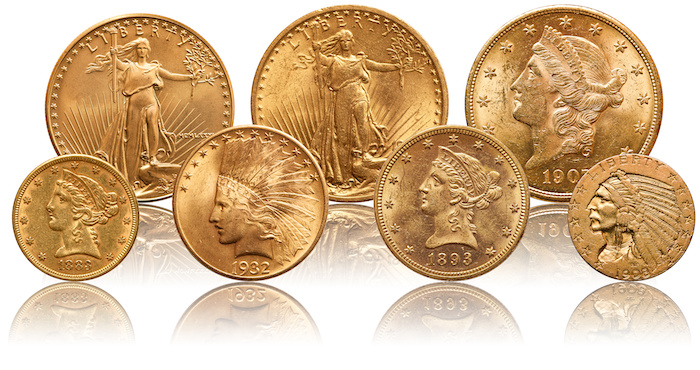
Beyond the slab, liquidity depends on the series. Pre-1933 U.S. gold — $20 Liberty and Saint-Gaudens Double Eagles, $10 Liberty and Indian Head Eagles, $5 Half Eagles — trades on a deep, active market. Every major dealer buys them. Bid-ask spreads on common dates in popular grades (AU-55 through MS-63) are tight. You can sell a certified Saint-Gaudens Double Eagle in MS-63 within 24 hours at a price within 5-10% of the wholesale sheet.
Compare that to a limited-edition modern commemorative. The original buyer pool was the Mint’s mailing list. The secondary market is eBay and a handful of specialists. Spreads can exceed 30%.
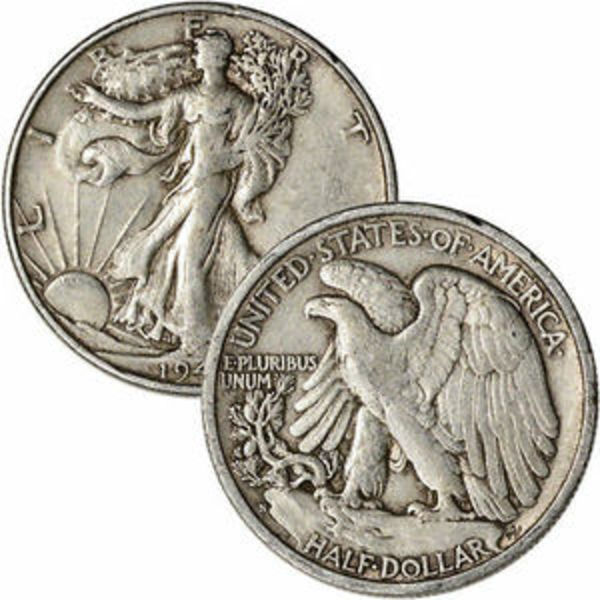
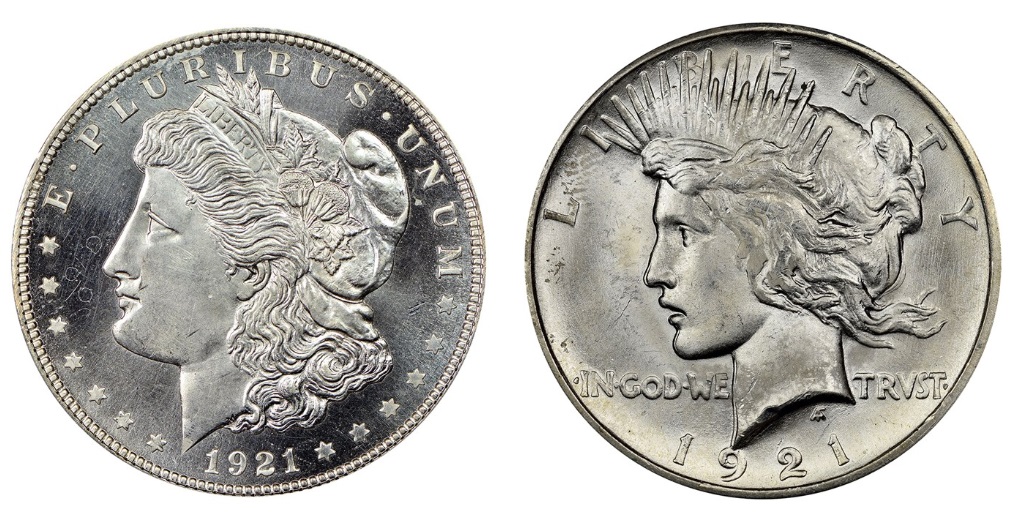
The more broadly collected the series, the more liquid the coin. Morgan Silver Dollars, Saint-Gaudens Double Eagles, Indian Head gold, Walking Liberty half dollars — these series have collector bases in the hundreds of thousands. That depth is what makes them viable as investments, not just collectibles.
The Bullion Crossover
Every pre-1933 gold coin has a melt value. A common-date Saint-Gaudens Double Eagle contains 0.9675 troy ounces of gold — roughly $3,193 at $3,300 spot. The numismatic premium is whatever the market pays above that floor.
Historically, common-date pre-1933 gold traded at 20-60% premiums over melt. Over the past two years, as gold surged past $3,000, those premiums compressed to near zero. Many common-date pieces now trade at 0-5% above melt.
The mechanics are simple. When gold runs hard, new money enters focused on metal content. Those buyers don’t care about dates or grades — they buy modern bullion (American Gold Eagles, Gold Buffalos, Maple Leafs) because it’s cheaper per ounce. Collector demand for pre-1933 pieces doesn’t scale with the gold price — it moves on its own cycle.
Common-date pre-1933 gold at single-digit premiums over melt is historically cheap. Buyers who acquired common-date Liberty Double Eagles at 3-5% over melt during previous compression windows and held through the cycle were rewarded when premiums reverted. The gold content provides a hard floor; the numismatic premium is the upside.
The same dynamic works in silver. 90% silver coins — pre-1965 dimes, quarters, and half dollars — trade as bullion by face value, but every bag contains coins with dates and mint marks. A 1916-D Mercury dime (mintage: 264,000) could be sitting in a $10 face value lot priced at melt. Walking Liberty half dollars routinely trade as junk silver in circulated grades. Metal content sets the floor; the coins themselves provide optionality that a generic bar never will.
What’s Overlooked Right Now
The current market is fixated on a few high-profile areas: the 2026 Semiquincentennial releases (Gold Eagles, Gold Buffalos, Silver Eagles), ultra-high-grade modern issues, and trophy coins at the million-dollar-plus level. That attention creates blind spots.
Common-date pre-1933 gold in circulated grades. As discussed above — trading at the tightest premiums to melt in years. A $5 Liberty Half Eagle in XF-45 or a $10 Indian Head Eagle in AU-50 gives you gold content, historical provenance, and finite supply at prices that barely reflect the numismatic component. These are the coins that get ignored when headlines focus on $6 million 1804 dollars.
The $3 gold piece (1854-1889). An entire series where almost every date is genuinely scarce. Mintages were low to begin with — the denomination never gained traction in commerce — and survival rates are among the lowest of any U.S. gold series. Despite this, $3 gold pieces remain underpriced relative to their actual rarity because the series lacks the broad collector base of Double Eagles or Morgans. For buyers who understand that scarcity matters more than popularity, this is one of the most structurally undervalued series in U.S. numismatics.
$1 gold dollars (1849-1889). Similar dynamics to the $3 piece — low mintages, low survival rates, minimal collector competition driving prices. Type I (Liberty Head, 1849-1854) examples in VF-XF can be acquired for well under $500 — a genuine 170-year-old U.S. gold coin at an accessible price point.
Carson City gold. The “CC” mint mark carries a permanent premium because of the Mint’s short operating window (1870-1893), the Wild West narrative, and collector appetite that never fades. But not all CC gold is priced the same. $10 CC Eagles and $5 CC Half Eagles in circulated grades remain more accessible than most buyers assume — and meaningfully cheaper than comparable Carson City Morgan Dollars in some cases.
How to Avoid Costly Mistakes
Don’t confuse product limits with rarity. A product limit of 25,000 on a modern proof sounds low, but it’s not. The 2020-W V75 Gold Eagle had a limit of 1,945. The 1995-W Proof Silver Eagle was available only in a set. Those are rare. A coin with a five-figure production limit and nationwide Mint distribution is constrained, not rare. The distinction matters at resale.
Check population reports before paying up. Before paying a premium for any coin marketed as scarce in a particular grade, look it up on the PCGS or NGC population report. If 4,000 examples exist in that grade, you’re not buying scarcity.
Buy certified. For any coin over $500, PCGS or NGC certification is the cost of liquidity. Raw coins trade at lower prices, attract fewer buyers, and carry authentication risk. For pre-1933 gold, certification is non-negotiable.
Know the spread. Ask the dealer what they’d pay to buy the coin back today. On liquid coins (common-date Morgans, Double Eagles, popular modern proofs), the spread is 5-15%. On illiquid coins (obscure commemoratives, ungraded pieces, niche series), it can exceed 30%.
Buy from established dealers. Counterfeiting is a growing problem, particularly for pre-1933 gold and key-date Morgan Dollars. Verify slab serial numbers against PCGS and NGC databases for secondary-market purchases.
The Long View
The coins that have appreciated most consistently over the past fifty years share a few characteristics: genuine scarcity confirmed by population data, a story rooted in history rather than manufactured for a press release, deep secondary-market liquidity, and a purchase price that reflected value rather than hype.
Right now, the market’s attention is on the 2026 Semiquincentennial releases and trophy-coin auction records. That attention isn’t wrong. But the best opportunities in rare coins have always been in the spaces where the market isn’t looking — common-date pre-1933 gold at compressed premiums, scarce denomination types that lack glamour but not rarity, and circulated key dates in series with deep collector bases.
Related
- Pre-1933 Gold Coins: The Complete Collector & Investor Guide
- Understanding NGC and PCGS Grading for Pre-1933 Gold Coins
- $1 Gold Dollar: History, Values & What to Look For
- $5 Half Eagle: History, Values & Buying Guide
- $10 Eagle: History, Values & Buying Guide
- American Gold Eagle Mintage History by Year
- Morgan Silver Dollar Value Guide
- American Gold Eagle vs. Gold Buffalo
- Why 90% Silver Coins Are Worth a Look
- Pre-1933 U.S. Gold Collection
- Compare Gold Coin Prices
Sources: Stacks Bowers 2025 sales data, PCGS and NGC population reports, U.S. Mint product data, CoinWeek market analysis, Numismatic News.