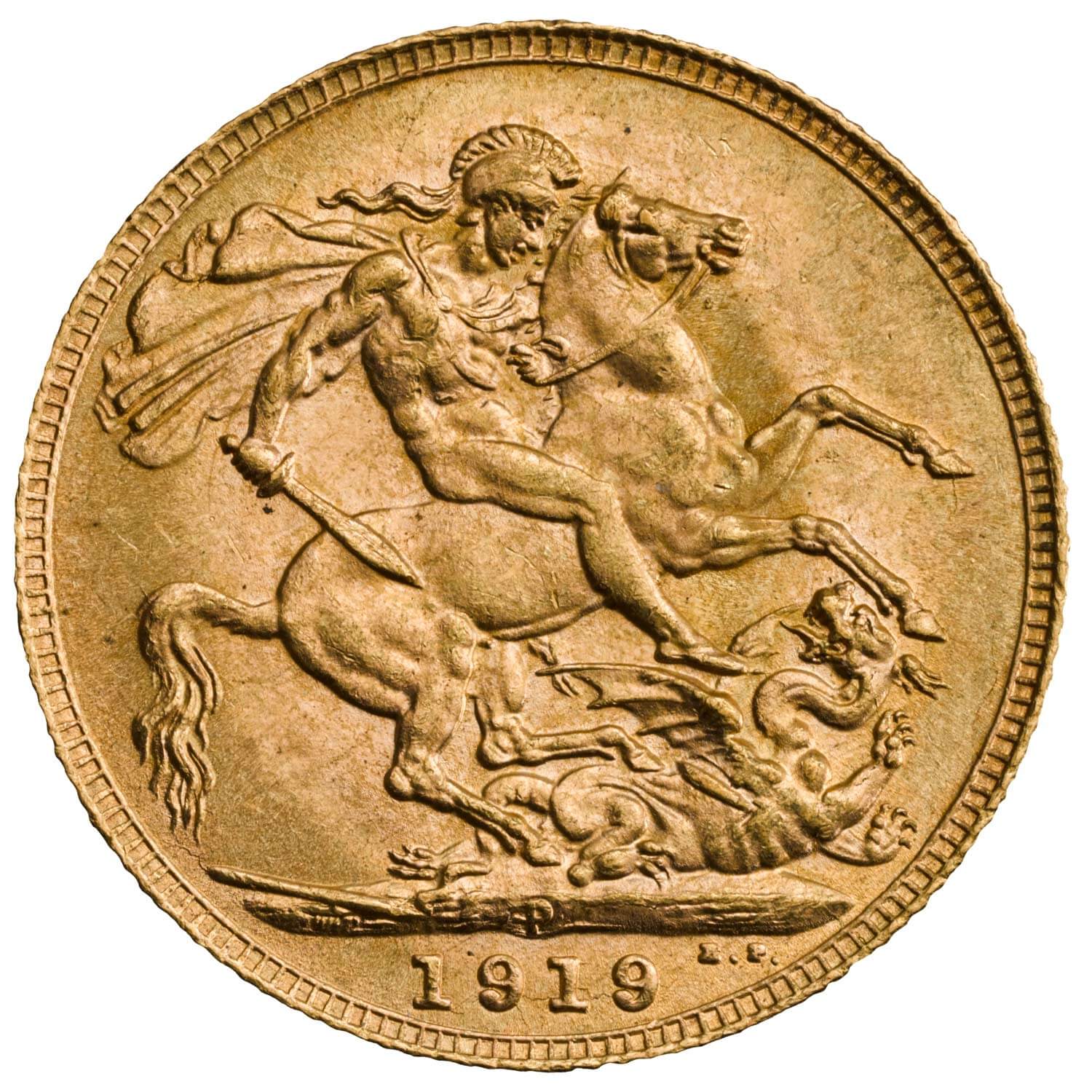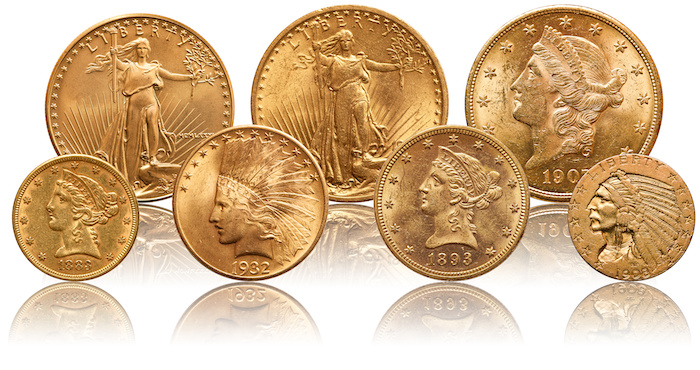
Before 1933, gold coins weren’t collectibles — they were money. Americans carried $5 Half Eagles, $10 Eagles, and $20 Double Eagles the way we carry debit cards today. These coins passed through the hands of frontier merchants, railroad agents, and bank tellers for over a century before Franklin Roosevelt’s Executive Order 6102 pulled them from circulation in April 1933.
The coins that survived — saved by collectors, exempted for their numismatic value, or tucked away in European bank vaults — are now among the most actively collected and traded series in American numismatics. Their appeal goes beyond gold content. Each denomination reflects a specific chapter in United States monetary history, from the founding standards of the Coinage Act of 1792 through the California Gold Rush, the Civil War, and the final years of the gold standard.
This guide covers what pre-1933 US Mint gold coins are, the denominations and specifications collectors encounter, their historical context, what gives them their value, and how to buy them with confidence.
A Brief History of US Gold Coinage
The Coinage Act of 1792 established the United States Mint and defined the country’s first gold coinage: the $10 Eagle, $5 Half Eagle, and $2.50 Quarter Eagle. Each denomination was specified by weight in grains of pure and “standard” gold — standard gold being the 90% gold, 10% copper alloy (.900 fineness, equivalent to 21.6 karat) that would remain the US coin standard for over 140 years.
These weren’t symbolic issues. Gold coins were legal tender used in daily commerce, circulating alongside silver dollars and copper cents in a bimetallic monetary system. The $10 Eagle represented serious purchasing power — roughly equivalent to a week’s wages for a skilled tradesman in the early 1800s.
The system expanded in 1849 when the California Gold Rush flooded the US Treasury with new bullion. The Coinage Act of 1849 authorized two new denominations: the $1 gold dollar (the smallest US gold coin ever produced) and the $20 Double Eagle, which became the largest regular-issue US gold coin by face value. The Coinage Act of 1873 further revised the system, demonetizing the silver dollar and moving the US toward a de facto gold standard.
Gold coins continued circulating until Executive Order 6102 in April 1933 required citizens to surrender most gold coins to the Federal Reserve. Millions were melted into bars and transferred to the US Bullion Depository at Fort Knox and the Federal Reserve Bank of New York’s underground vault. However, coins with recognized numismatic value were exempt from the recall, and millions more had already been exported to European banks as part of international trade — where they remained undiscovered for decades.
One notable example is the Rive d’Or Collection, a substantial hoard of well-preserved US gold coins found in a Paris bank vault and released to the numismatic market in 2008. Discoveries like this continue to supply collectors with coins in conditions that would otherwise be unavailable.
Pre-1933 Gold Coin Denominations and Specifications
Every pre-1933 US Mint gold coin was struck to the same standard: .900 fine gold (90% gold, 10% copper). The copper alloy provided durability for circulation without meaningfully reducing gold content. Below are the denominations defined by the original Coinage Acts and their specifications.
| Denomination | Pure Gold (grains) | Fine Gold (troy oz) | Total Weight (grams) | Years Minted |
|---|---|---|---|---|
| $1.00 gold piece | 25.8 | 0.04837 | 1.672 | 1849–1889 |
| $2.50 Quarter Eagle | 67.5 | 0.1210 | 4.18 | 1796–1929 |
| $5 Half Eagle | 135 | 0.2419 | 8.36 | 1795–1929 |
| $10 Eagle | 270 | 0.4838 | 16.72 | 1795–1933 |
| $20 Double Eagle | 516 | 0.9675 | 33.44 | 1849–1933 |
Understanding these specifications matters because they establish the intrinsic floor value of every coin — the minimum worth based purely on gold content at current spot prices. Any value above that floor reflects the coin’s numismatic premium: its rarity, condition, historical significance, and collector demand.
The Major Pre-1933 Gold Coin Series
$20 Double Eagles: Liberty Head and Saint-Gaudens
The $20 Double Eagle is the cornerstone of most pre-1933 collections. More Double Eagles were minted than all other gold denominations, and their substantial gold content (just under one troy ounce) makes them the most actively traded pre-1933 coins on the secondary market.
Two major design types were produced:
Liberty Head (Coronet) Double Eagle (1850–1907): Designed by James B. Longacre, the Liberty Head was introduced as a pattern coin in 1849 — a single specimen of which resides in the Smithsonian — with regular production beginning in 1850. The series spans the Civil War, Reconstruction, and the Gilded Age. Collectors divide it into three subtypes based on reverse design changes: Type 1 (1850–1866, no motto), Type 2 (1866–1876, motto added, denomination as “TWENTY D.”), and Type 3 (1877–1907, denomination spelled out as “TWENTY DOLLARS”). Common dates in circulated grades are widely available, while key dates and condition rarities command significant premiums.
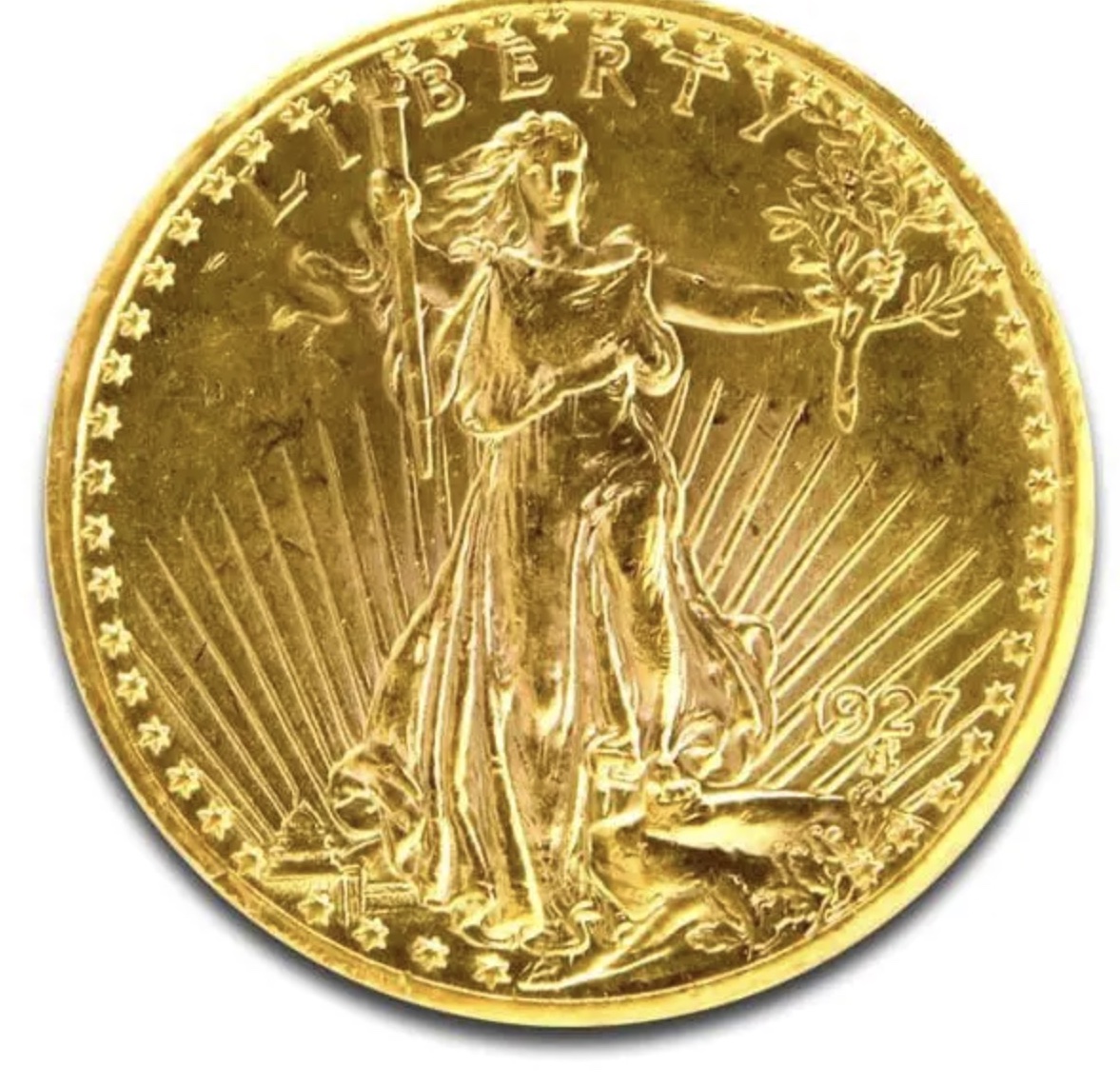
Saint-Gaudens Double Eagle (1907–1933): Commissioned by President Theodore Roosevelt and designed by sculptor Augustus Saint-Gaudens, this coin is widely considered the most beautiful US coin ever produced. The obverse depicts a full-length Liberty striding forward with a torch and olive branch; the reverse shows a flying eagle above a rising sun. The series includes several notable rarities, including the legendary 1933 Double Eagle. For collectors and bullion buyers alike, the Saint-Gaudens remains one of the most sought-after pre-1933 coins.
$10 Eagles: Liberty Head and Indian Head
The $10 Eagle was the original flagship denomination of US gold coinage, produced continuously from 1795 through 1933.
Liberty Head Eagle (1838–1907): The long-running Liberty Head design by Christian Gobrecht appeared in several variations across nearly 70 years of production. These coins are widely available in circulated grades and represent an accessible entry point for collectors interested in 19th-century gold.
Indian Head Eagle (1907–1933): Designed by Bela Lyon Pratt, the Indian Head Eagle features an incuse (recessed) design — the devices are sunk into the field rather than raised above it. This unconventional technique was controversial at the time but is now appreciated as one of the most distinctive designs in American numismatics. For a deeper look at both series, see our guide to $10 Eagle gold coins.
$5 Half Eagles: Liberty Head and Indian Head
The Half Eagle holds the distinction of being the first gold coin struck by the United States Mint, with production beginning in 1795. At 0.2419 troy ounces of gold, the $5 denomination offers collectors a more affordable way to acquire pre-1933 gold.
Liberty Head Half Eagle (1839–1908): A workhorse of American commerce for nearly 70 years, the Liberty Head $5 is plentiful in circulated grades and spans a wide range of mint marks and date varieties.
Indian Head Half Eagle (1908–1929): Shares the incuse design of its $10 counterpart. The Indian Head $5 has a devoted collector following and tends to trade at slightly higher premiums than Liberty Head examples in comparable condition.
Both series are covered in detail in our guide to collecting Liberty Head $5 gold coins.
$2.50 Quarter Eagles
The smallest standard gold denomination (excluding the $1 gold dollar), the Quarter Eagle was produced from 1796 through 1929 in Liberty Head and Indian Head designs. These diminutive coins — smaller than a modern dime — carry outsized historical significance as the longest-running denomination in US gold coinage history. Our Quarter Eagle collecting guide covers the series in detail.
$1 Gold Dollars
Authorized by the Coinage Act of 1849, the $1 gold dollar is the smallest US gold coin ever produced. Three design types were struck between 1849 and 1889: the Liberty Head (Type 1), the Small Indian Head (Type 2), and the Large Indian Head (Type 3). Their diminutive size — just 13mm in diameter for the Type 1 — makes them a curiosity in the series, and they remain an affordable entry point for collectors given their modest gold content.
What Gives Pre-1933 Gold Coins Their Value
The value of any pre-1933 gold coin rests on two components: its intrinsic gold content and its numismatic premium.
Intrinsic value is straightforward — it’s the coin’s fine gold weight multiplied by the current spot price. A $20 Double Eagle containing 0.9675 troy ounces of gold will always have a base value tied to the gold market. This provides a floor that has historically protected collectors from total loss even when numismatic markets soften.
Numismatic premium is driven by a combination of factors: rarity (determined by mintage numbers, survival rates, and the number of examples available in a given grade), condition (graded on the Sheldon scale from About Good through Mint State 70), historical significance (key dates, mint marks, provenance from notable collections), and collector demand.
Coins that are common in one grade may be rare in another — a date that’s plentiful in VF (Very Fine) might be scarce in MS (Mint State) because few examples survived without circulation wear. Coins with historical connections — whether to specific events, notable collections like the Rive d’Or hoard, or limited mintage runs — often appreciate independently of gold price movements. This is the numismatic dimension that distinguishes pre-1933 gold from modern bullion: the story behind each coin contributes to its market value in ways that raw gold content alone does not.
Raw vs. Graded: Understanding Coin Certification
When buying pre-1933 gold coins, you’ll encounter two categories: raw (uncertified) and graded (certified) coins.
Raw coins have not been evaluated by a third-party grading service. They’re typically bought and sold based on their bullion content, historical significance, and overall appearance. Raw coins may vary in condition, and their value is often subject to the buyer’s assessment and current market sentiment. For experienced collectors who can evaluate condition independently, raw coins can offer value — particularly common dates where the numismatic premium is modest.
Graded coins have been examined by professional grading services — primarily NGC (Numismatic Guaranty Company) and PCGS (Professional Coin Grading Service). Each coin is evaluated by multiple experts, assigned a numeric grade on the Sheldon scale, given a unique serial number, and sealed in a tamper-evident plastic holder (known as a “slab”). This process verifies authenticity and provides a standardized condition assessment that both buyers and sellers can reference.
The condition difference between grades can be substantial in dollar terms. The gap between a coin graded VF-30 and one graded MS-63 can be thousands of dollars for the same date and mint mark. For collectors building a serious pre-1933 portfolio, certified coins reduce uncertainty and simplify future resale. For newer collectors in particular, buying graded coins from reputable dealers is the most practical protection against counterfeits.
How to Buy Pre-1933 Gold Coins
Set a Budget That Matches Your Goals
Pre-1933 gold coins span a wide price range, with much of the price based on gold content. The smaller denominations make an affordable entry point: a $2.50 Quarter Eagle or even a $1 gold dollar can get you started without a major commitment. The mid-range includes the $5 Half Eagle and $10 Eagle. At the top, a $20 Double Eagle contains nearly a full troy ounce of gold and is priced comparably to modern bullion gold coins, plus its numismatic premium.
Many online bullion dealers offer random-year selections based on available inventory, in both raw and graded options. These are often the most cost-effective way to start building a collection.
Choose Reputable Dealers
Working with trusted dealers is essential. Research credentials through the BBB, check third-party review sites, and look for dealers who are members of recognized industry organizations. When comparing prices across dealers, keep in mind that dealer buy prices will be below market and sell prices above it — that spread is how they operate, and it’s standard across the industry.
FindBullionPrices.com tracks pre-1933 gold coin prices from dozens of trusted online bullion dealers to help you compare premiums and find the best prices available.
Verify Authenticity
Counterfeits do circulate in the pre-1933 market, typically from unvetted online sellers or overseas sources. Several verification methods are available. Professional certification from NGC or PCGS remains the most reliable. Electronic verification devices like the Sigma Precious Metals Verifier measure electrical conductivity to confirm metal composition and have become standard equipment at coin shops and precious metals dealers. XRF (X-ray fluorescence) analysis provides precise elemental composition data for conclusive testing.
For collectors, buying from established dealers with return policies and purchasing certified coins when possible are the most practical protections.
Where Pre-1933 Gold Coins Fit in a Portfolio
Pre-1933 gold coins occupy a space where numismatics and precious metals investing overlap. Some collectors focus purely on the historical and aesthetic dimensions — assembling type sets, pursuing grade upgrades, or specializing in a single denomination. Others are primarily interested in gold exposure and view pre-1933 coins as a way to hold gold with potential upside from collector demand.
Several characteristics make pre-1933 gold coins appealing as a component of a precious metals portfolio. Their gold content provides intrinsic value tied to the metal itself. Their numismatic premium can appreciate independently of gold prices when collector demand is strong. And their historical scarcity — a fixed supply that will never increase — differentiates them from modern bullion coins that are minted in large quantities each year.
It’s worth noting that coin values can fluctuate based on both gold prices and numismatic market conditions, which don’t always move in the same direction. Premiums over melt value vary by coin type, condition, and market cycle. As with any investment, diversification and informed decision-making are essential.
Building a Pre-1933 Gold Collection
There’s no single right way to collect pre-1933 gold, which is part of what makes the series appealing. A few popular approaches include:
Type sets focus on acquiring one example of each major design type — Liberty Head and Saint-Gaudens Double Eagles, Liberty Head and Indian Head Eagles, Liberty Head and Indian Head Half Eagles, both Quarter Eagle designs, and the three $1 gold dollar types. A complete type set covers over 130 years of American coinage history in roughly a dozen coins.
Denomination sets concentrate on a single denomination across all years and mint marks. The $20 Double Eagle is the most popular choice for this approach, but denomination sets for $10 Eagles, $5 Half Eagles, and $2.50 Quarter Eagles each have dedicated followings.
Grade upgrades appeal to collectors who already have a foundation and want to improve the quality of individual coins in their collection. Upgrading a circulated example to a Mint State coin, or moving from an MS-62 to an MS-65, can transform a collection over time.
Budget-conscious collecting is entirely viable. Common-date Liberty Head Double Eagles, random-year Saints, and circulated Half Eagles all trade at modest premiums over their gold content. Starting with these coins lets you build experience and develop your eye for condition and quality before pursuing scarcer pieces.
Related Guides
For deeper information on specific denominations and topics within the pre-1933 gold series, explore these guides:
- Saint-Gaudens Double Eagle: Value, Premiums, Key Dates, and How to Buy Smart
- Common-Date $20 Liberty Double Eagle Values and Conditions
- $10 Gold Coin Guide: Liberty and Indian Head Eagles
- Collecting Liberty Head Half Eagle $5 Gold Coins
- The Joys of Collecting $2.50 Quarter Eagle Gold Coins
- Coin Grading: The Sheldon Scale & NGCX
- Executive Order 6102: The 1933 Law That Made Gold Ownership Illegal
- Why Pre-1933 Gold Coins Are Becoming a Smart Move for Bullion Investors
- Investing in Vintage Gold Coins
- Top 10 Vintage Gold Coins for Investors
This article is for informational and educational purposes only. It is not financial, investment, or tax advice. Gold coin values fluctuate with precious metals markets and numismatic demand. Past performance does not guarantee future results. Consult a qualified financial advisor before making investment decisions. FindBullionPrices.com is a price comparison platform and does not sell coins directly.