What the numbers on the slab actually mean — and how they affect premiums.
If you’ve browsed certified pre-1933 gold coins, you’ve seen labels like “MS-62” or “MS-65” on sealed plastic holders. Those characters directly affect the premium over melt value. Understanding how NGC and PCGS grading works helps you decide which grade fits your goals — gold content, collectibility, or both.
What NGC and PCGS Actually Do
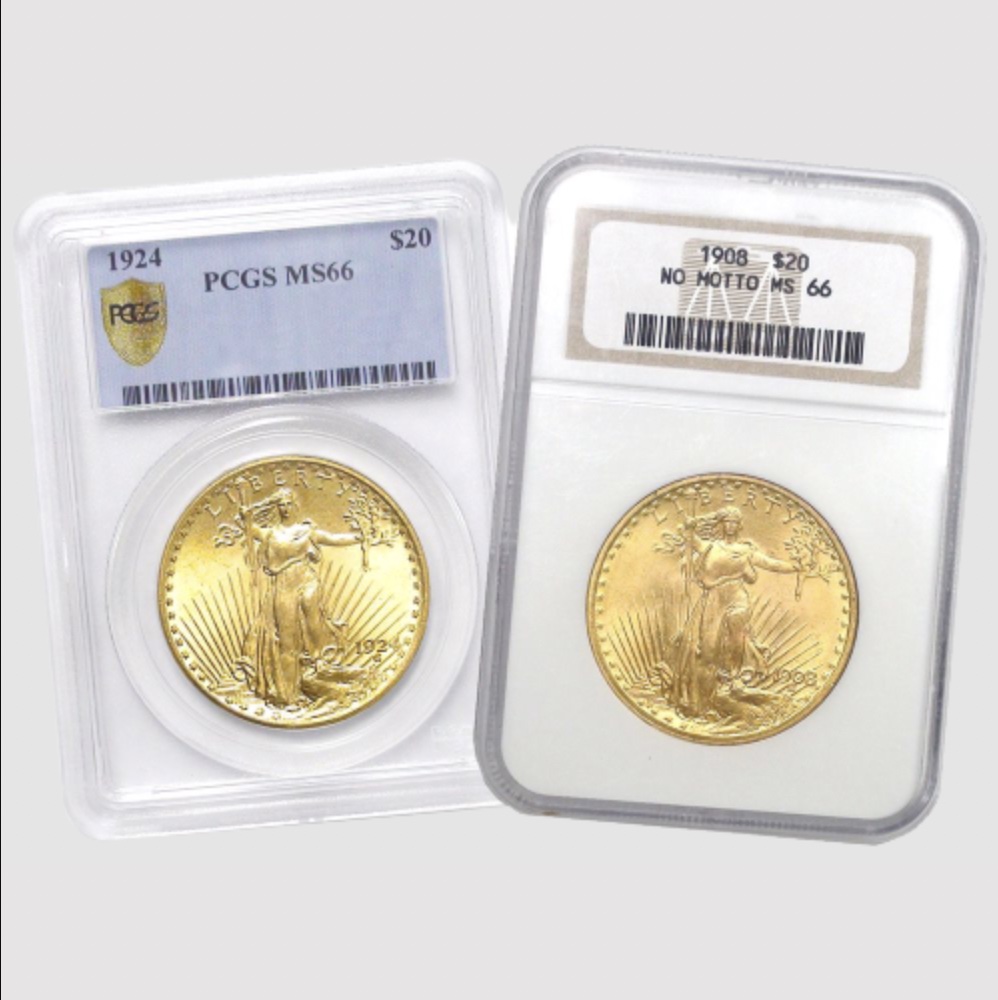
The Numismatic Guaranty Company (NGC) and Professional Coin Grading Service (PCGS) are the two leading third-party grading services for coins. Professional graders evaluate each coin’s condition under controlled lighting and magnification, assign a numeric grade on the Sheldon scale (1–70), and seal it in a tamper-evident plastic holder — a “slab” — labeled with the grade, denomination, and a unique certification number verifiable online.

The Mint State Scale for Pre-1933 Gold
For pre-1933 gold coins sold through bullion dealers, you’ll almost exclusively encounter Mint State (MS) grades from MS-60 to MS-66. These are uncirculated coins — struck, stored, and never spent. Many of these coins were discovered in mint bags stored away in bank vaults for decades. Differences come down to strike quality, contact marks from storage, and overall eye appeal.
MS-60 / MS-61 — Entry-level uncirculated. Noticeable bag marks, scuffs, or weak luster in spots. Lowest premiums over melt for a certified coin. A $10 Liberty Eagle in MS-60 or an MS-61 $20 Liberty Double Eagle carries a modest premium above a raw, ungraded coin — but you get authentication and a standardized grade.
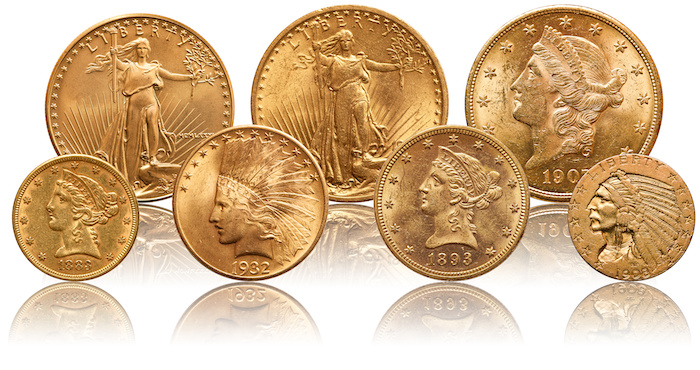
MS-62 — Fewer distracting marks, better luster. A popular sweet spot for bullion-oriented buyers who want certification without a steep numismatic premium. Available across denominations: $5 Indian Half Eagle MS-62, $20 Liberty Double Eagle MS-62, and $20 St. Gaudens Double Eagle MS-62.
MS-63 (Choice Uncirculated) — Attractive luster with only minor marks outside primary focal areas. Premiums climb noticeably here. A $20 St. Gaudens MS-63 jumps meaningfully over an MS-62, and the $10 Indian MS-63 and $20 Liberty MS-63 occupy similar tiers.
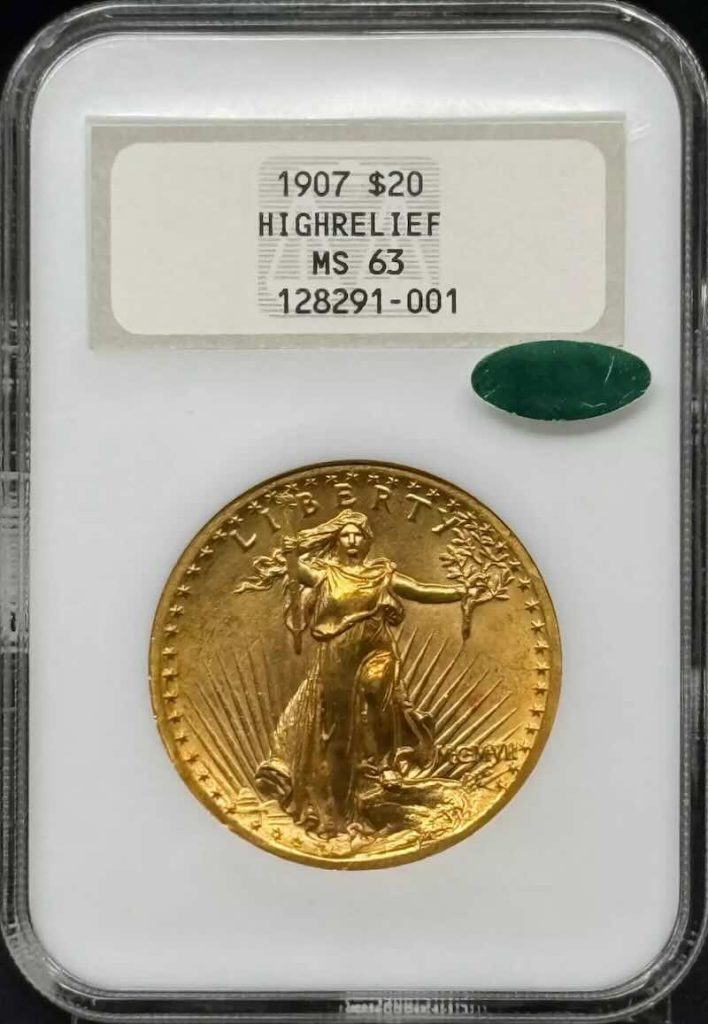
MS-64 (Near Gem) — Sharp strike, strong luster, minor imperfections visible only under magnification. Appeals to collectors as much as bullion buyers. An MS-64 St. Gaudens $20 or MS-64 Liberty $20 commands a clear premium over MS-63 — the surviving population thins out at this level.
MS-65 (Gem Uncirculated) — Strong luster, sharp strike, outstanding eye appeal with only trivial imperfections. Far fewer coins survive at this grade, and premiums jump accordingly. An MS-65 St. Gaudens and MS-65 Liberty both trade at substantial premiums over MS-64.
MS-66 (Gem+) — Exceptional quality, virtually no marks visible to the unaided eye. Pre-1933 coins at this grade are scarce with significant numismatic premiums. An MS-66 St. Gaudens $20 represents the high end of what most bullion dealers carry.
NGC vs. PCGS: Does It Matter?
Both services are widely respected and their grades are considered interchangeable. A PCGS MS-63 and NGC MS-63 of the same coin type trade at the same price. Some collectors have a preference — PCGS is popular with longtime U.S. collectors, NGC is the official grading service of the American Numismatic Association — but for bullion buyers, either provides the same value: guaranteed grade and verified authenticity.
When a listing says “NGC or PCGS,” the dealer ships whichever slab they have in stock. Since grades are equivalent, this keeps premiums lower than restricting to one service.
Which Grade Makes Sense for You?
MS-61 / MS-62 — Best for buyers focused on gold content with authentication security. Lowest premiums over melt.
MS-63 / MS-64 — Middle ground: stronger eye appeal, liquid market, and coins that hold numismatic premium over time.
MS-65+ — For buyers who value rarity and condition as much as the gold. Higher premiums, but potential for numismatic appreciation independent of spot price.
Regardless of grade, every certified pre-1933 gold coin carries the same gold content for its denomination. A $20 Double Eagle contains 0.9675 troy ounces of gold whether it’s graded MS-61 or MS-66. The grade determines the premium — the gold determines the floor.
Browse our full selection of Pre-1933 U.S. Gold Coins to compare live dealer prices across every denomination and grade.
Related Guides: