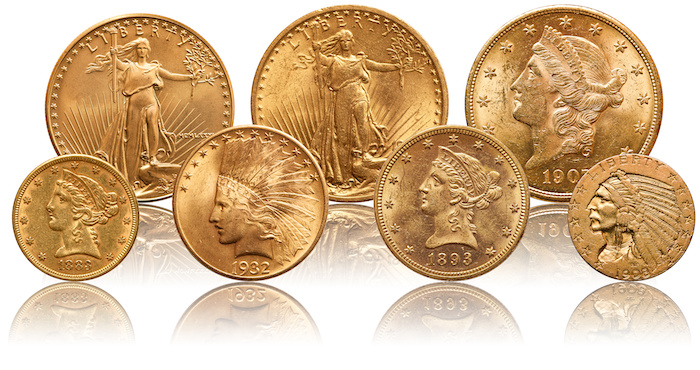
The American Gold Eagle and the American Gold Buffalo are the two gold bullion coin programs the U.S. Mint produces. Both are legal tender, both are IRA-eligible, both are recognized at every dealer in the country. They’re not interchangeable — purity, premium, design, and program history differ in ways that matter for investors and collectors. This guide is a 2026 refresh of the comparison, updated for the Semiquincentennial issues released this year and the April 2026 supply-chain reporting that affects both programs.
Quick comparison
| Spec | American Gold Eagle | American Gold Buffalo |
|---|---|---|
| First year | 1986 | 2006 |
| Authorization | Gold Bullion Coin Act of 1985 | American Buffalo Bullion Coin Program (Public Law 109-145, 2005) |
| Purity | .9167 fine (22-karat) | .9999 fine (24-karat) |
| Pure gold content | 1 troy oz | 1 troy oz |
| Total weight (1 oz coin) | 33.93 g | 31.10 g |
| Sizes available | 1 oz, 1/2 oz, 1/4 oz, 1/10 oz | 1 oz only |
| Designer (obverse) | Augustus Saint-Gaudens (1907) | James Earle Fraser (1913) |
| Designer (reverse) | Jennie Norris (since 2021) | James Earle Fraser (1913) |
| Mint mark | None (bullion); W (proof) | None (bullion); W (proof) |
| 2026 Semiquincentennial issues | Yes — proofs in all 4 sizes | Yes — 2026-W proof, 15,000 cap |
| IRA-eligibility | Statutorily named in 31 U.S.C. § 408(m) | Meets IRS purity standard |
| Typical bullion premium | $80–$130 over spot | $120–$170 over spot |
Purity: the headline difference, with a caveat
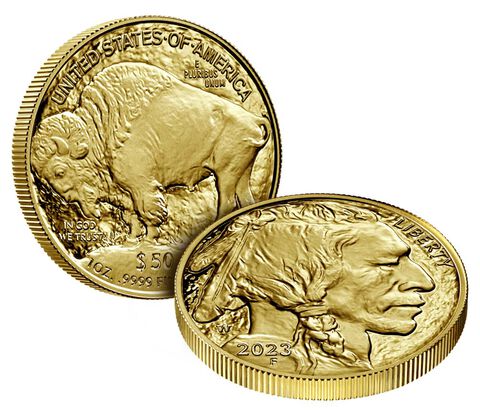
The Gold Eagle is 22-karat, alloyed with copper and silver to harden the coin against scratching. The Buffalo is 24-karat (.9999 fine), the highest gold purity the U.S. Mint produces.
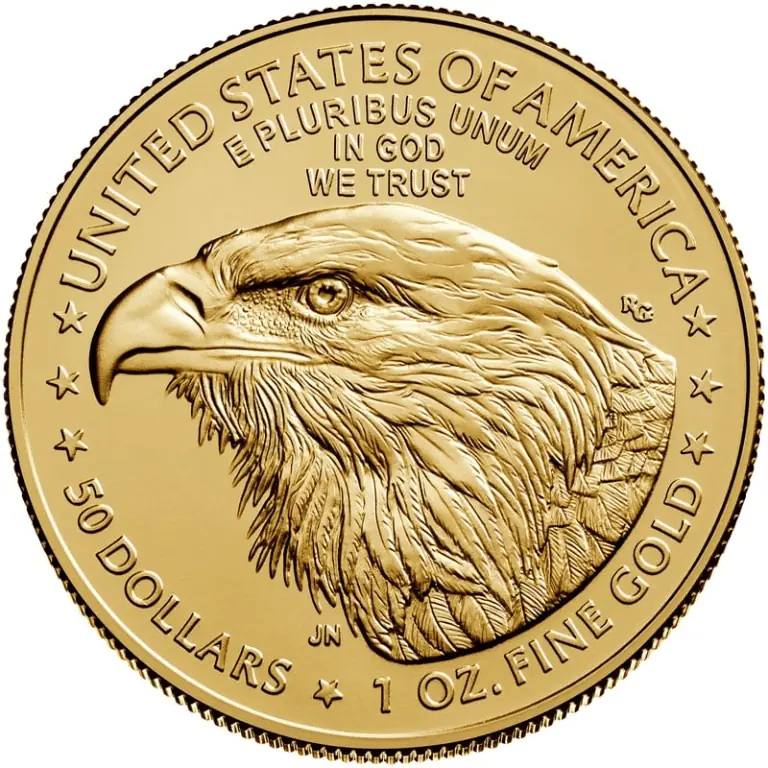
Important: both coins contain exactly one troy ounce of pure gold if you buy the 1 oz size. The Eagle’s lower fineness doesn’t mean less gold — it means the same gold plus alloy weight. A 1 oz Gold Eagle weighs 33.93 grams total because of the alloy; a 1 oz Buffalo weighs 31.10 grams because it’s nearly pure gold.
What the purity difference actually affects:
- Durability. The Eagle’s harder alloy resists handling damage better. The Buffalo is softer and shows scratches more easily — important for handling and storage.
- Refining efficiency. Buffalos refine into pure gold more directly. For investors who plan to eventually sell to refiners (rare in practice), the Buffalo carries a small advantage.
- International recognition. .9999 gold is the global bullion standard (Maple Leaf, Philharmonic, Britannia all run .9999 since recent revisions). The Eagle’s 22-karat alloy is unusual internationally — it doesn’t matter for U.S. dealer transactions but can come up in cross-border sales.
Premium: the Eagle is usually cheaper
Eagles generally trade at lower premiums than Buffalos by $20–$50 per coin at most major dealers. Two reasons:
- Higher mintages and deeper market liquidity. Annual Gold Eagle production runs 800,000–1,500,000 ounces vs. Buffalo’s 200,000–400,000 ounces. More coins, more secondary-market depth, tighter spreads.
- Domestic brand recognition. Eagles are the default U.S. bullion gold coin in the same way Silver Eagles are the default silver. That brand equity supports the premium even where Buffalos are objectively rarer.
The Buffalo’s premium gap is partial compensation for its higher purity and lower mintages. Whether that gap is worth it depends on what you value — pure gold content per dollar (lean Eagle) or numismatic optionality from the lower mintage and 24-karat purity (lean Buffalo).
For current premium ranges across dealers, see our Lowest Premium Gold and Silver Coins in 2026 guide.
2026 Semiquincentennial issues — both programs got special treatment
This is the first comparison cycle in the series’ shared history where both coins carry significant Semiquincentennial design changes:
2026 American Gold Eagle Semiquincentennial Proofs
- Released March 5, 2026
- All four sizes (1 oz, 1/2 oz, 1/4 oz, 1/10 oz) available individually and in a four-coin proof set
- 1776–2026 dual date and Liberty Bell “250” privy mark on every variety
- Only the second time Gold Eagles have ever carried a privy mark
- All 2026 varieties use new laser-engraved master dies (replacing the old hubbing process) — a production change that affects strike quality and counterfeit-detection signatures
2026-W American Gold Buffalo Proof
- Released May 7, 2026
- 1 oz only, 15,000 product limit
- Same 1776–2026 dual date and Liberty Bell “250” privy mark
- First-ever dual date and first-ever privy mark in the Buffalo’s 20-year history
- Issue price: $4,070
The Buffalo is the more constrained of the two issues by mintage and the more historically significant for its program. The Gold Eagle’s appeal is in its multi-size four-coin proof set as a complete Semiquincentennial collection. Full coverage in our dedicated 2026-W Gold Buffalo Proof guide and 2026 Gold Eagle Semiquincentennial guide.
IRA eligibility
Both coins are eligible for inclusion in a precious-metals IRA. The legal pathway differs:
- Gold Eagle is specifically named in U.S. statute as IRA-eligible under 31 U.S.C. § 408(m). The Eagle’s 22-karat purity is below the standard IRS bullion threshold, but the Eagle gets a statutory exemption.
- Gold Buffalo is not statutorily named, but its .9999 fine purity easily exceeds the IRS minimum for precious-metals IRAs. It qualifies on purity grounds.
For most IRA-holders this is a distinction without a difference. Both clear the bar. Confirm eligibility with your custodian before purchase.
Proofs are technically IRA-eligible on purity grounds but are usually held outside IRAs because the numismatic premium isn’t recoverable through IRA structures and the capital gains treatment differs from bullion.
Supply chain: a 2026 consideration that didn’t exist before
The April 2026 New York Times investigation traced gold in U.S. Mint coins to Colombian cartel-controlled mines, with a Texas refiner blending foreign-origin material with domestic gold. This affects both Eagle and Buffalo programs — both are subject to the statutory domestic-source requirement (31 U.S.C. § 5112(a)(7)–(10) for Eagles; § 5112(q) for Buffalos).
The May 2024 Treasury OIG audit (OIG-24-027) had already concluded the Mint had not verified gold origin documentation from refiners for over 20 years. Treasury has said it’s reviewing procurement.
What this means in practice:
- Resale value of existing Eagles and Buffalos in your safe is unaffected.
- The “brand premium” — the extra you pay over generic gold for the U.S. Mint imprimatur — is the part that’s structurally at risk if the supply-chain question is not addressed.
- For ESG-conscious buyers, neither program currently offers refiner-level origin disclosure. LBMA Good Delivery bars from named refiners with published Responsible Gold disclosures are a stronger proposition on that dimension.
Full investor analysis: Cartel Gold in U.S. Mint Coins: What It Means for Investors.
Which one should you buy?
Three honest framings rather than one universal recommendation:
If you’re optimizing for cost per ounce of gold and liquidity — Eagle. The premium gap covers the alloy difference with margin to spare, and Eagles are the most liquid U.S. gold coin in dealer networks. Stick with the 1 oz unless fractional size has a specific use case (estate planning, divisibility for partial liquidation).
If you’re prioritizing purity and lower mintage — Buffalo. .9999 fine, smaller annual production, and the Buffalo has a stronger track record of generating modern key-date issues (2008-W Reverse Proof, 2026-W Semiquincentennial) than the Eagle.
If you’re collecting — both. The Eagle’s four-size availability lets you build a multi-size set; the Buffalo’s annual single-size structure makes year-by-year date sets cleaner. Most serious collectors hold both.
For new buyers, a pragmatic split is 70% Eagle / 30% Buffalo — captures the Eagle’s liquidity and lower premium for the bulk of the position while including Buffalos for purity and key-date optionality.
Once you have decided between the Eagle and Buffalo, the next question is how they compare to foreign sovereign coins. See our sovereign gold coin comparison.
FAQ
Which has more gold in a 1 oz coin — Eagle or Buffalo? Identical. Both contain exactly one troy ounce of pure gold. The Eagle weighs more total because of its 22-karat alloy.
Why is the Eagle alloyed and the Buffalo pure? The Eagle was designed to compete in the international bullion market in 1986 against the Krugerrand (also 22-karat) and the Maple Leaf (24-karat). 22-karat made the coin more durable and easier to handle. The Buffalo was launched in 2006 to give the Mint a 24-karat option to compete with the Maple Leaf at peer purity.
Are 2026 Semiquincentennial Eagles worth the premium? The proof versions, especially the four-coin set, will likely hold collector premium given the dual date and “250” privy. Bullion-finish 2026 Eagles will track gold spot more closely. The 2026-W Buffalo Proof at 15,000 cap has the strongest case as a future modern key date.
Can I hold both Eagles and Buffalos in the same IRA? Yes. There’s no restriction on holding multiple eligible coin types in a single precious metals IRA.
What about counterfeits? Counterfeits exist for both programs but are more common for high-value graded examples than for raw coins. Buy from established dealers, verify slab serial numbers against PCGS or NGC databases, and be cautious on classified marketplaces.
Related
- American Gold Buffalo: Complete Guide to America’s Purest Gold Bullion
- 2026-W Gold Buffalo Proof: First Dual Date, First Privy Mark
- American Buffalo Gold Coin Mintage Charts and History
- Lowest Premium Gold and Silver Coins in 2026
- Cartel Gold in U.S. Mint Coins: What It Means for Investors
- Gold Eagles for Sale – Compare Prices
- Gold Buffalos for Sale – Compare Online Prices