Silver spot: $66.59/oz · Updated September 21, 2026 7:59 AM ET · Live silver spot chart
"War Nickel" Melt Value
Determining the current price of "War Nickel" is a straightforward process once you know the silver content, the weight, and the current market rate, often referred to as the spot price.
Coin Specs
| Series | "War Nickel" |
|---|---|
| Years | 1942-1945 |
| Composition | 35% silver |
| ASW | 0.0563 troy oz |
| Weight | 5.00 g |
| Diameter | 21.2 mm |
| Face value | $0.05 |
| Melt at current spot | $3.75 |
Key Dates & Mintage
Key dates / varieties: Wartime silver issues identified by large mint mark above Monticello
Mintage note: Struck 1942–1945 to conserve nickel for wartime industry.
Melt value is the silver floor. Numismatic premiums apply when rarity, grade, or variety demand exceeds bullion pricing — common circulated dates usually track melt most closely.
Dealer price vs melt
At today's silver spot, melt for a "War Nickel" is $3.75 (0.0563 oz ASW). Compare live dealer asks against that melt floor to see the current premium spread.
"War Nickel" Melt Value Melt Calculator
War Nickel Melt Value
The Wartime Jefferson Nickel — commonly called the War Nickel — was produced from mid-1942 through 1945 as a wartime measure to conserve nickel for military use. To make up the composition, the U.S. Mint replaced nickel with silver, resulting in coins containing 35% silver. Unlike the 90% silver coins in circulation at the time, War Nickels carry a lower silver content per coin — but their low face value and distinctive identification make them a popular and accessible component of junk silver holdings.
Each War Nickel contains 0.05626 troy ounces of pure silver. This guide covers how to identify them, calculate their melt value, and understand their collector and investment potential.
Quick Facts About the War Nickel
| Specification | Details |
|---|---|
| Designer | Felix Schlag |
| Minted Years (Silver) | Mid-1942–1945 |
| Silver Content | 35% silver, 56% copper, 9% manganese |
| Actual Silver Weight (ASW) | 0.05626 troy ounces |
| Weight | 5.00 grams |
| Diameter | 21.21 mm |
| Edge | Plain (no reeds) |
| Face Value | $0.05 |
| Melt Value | 0.05626 × Spot Price of Silver |
How to Identify a War Nickel
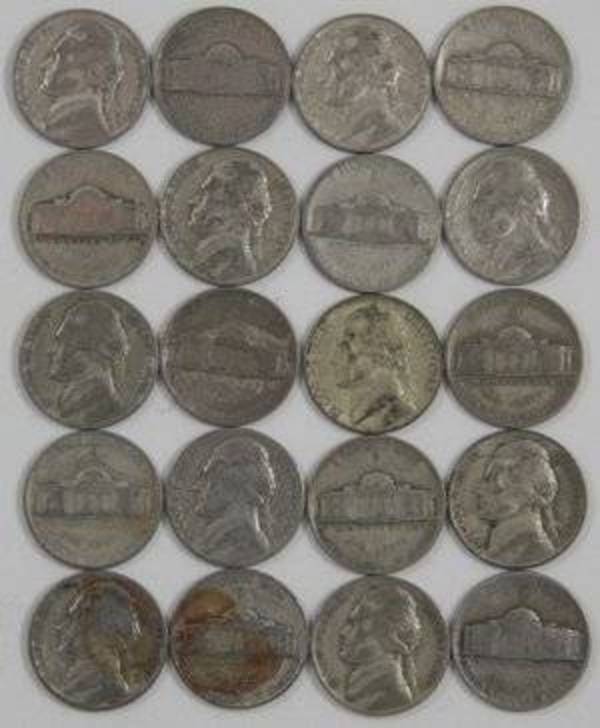
This is the single most important thing to know about War Nickels: look for the large mint mark above the Monticello dome on the reverse.
- Large "P," "D," or "S" above Monticello = silver War Nickel
- No mint mark, or small "D" on the right side of Monticello = regular (non-silver) nickel
Philadelphia had never used a mint mark before 1942. The introduction of the large "P" was specifically created to distinguish the silver composition, making identification straightforward even for new collectors. Any Jefferson nickel dated 1942–1945 with a large mint mark above Monticello is a War Nickel and contains silver.
Design Overview
- Obverse: Left-facing portrait of Thomas Jefferson, the same Felix Schlag design used for all Jefferson nickels. "IN GOD WE TRUST" and "LIBERTY" appear alongside the date.
- Reverse: Monticello, Jefferson's Virginia estate, with "MONTICELLO," "FIVE CENTS," and "UNITED STATES OF AMERICA." The large mint mark above the dome is the defining visual feature of the silver wartime issues.
Understanding War Nickel Melt Value
Each War Nickel contains 0.05626 troy ounces of pure silver — significantly less than 90% silver coins of the same era, reflecting the 35% silver composition. Calculate current melt value using the live spot price of silver:
Silver Melt Value = 0.05626 × Current Silver Spot Price
- Roll (40 coins): 2.250 troy oz silver
- $1 face value (20 coins): 1.125 troy oz silver
- $100 face value bag: 112.52 troy oz silver
War Nickels typically trade at modest premiums above melt for common dates. The lower silver content per coin means larger quantities are required to accumulate significant silver weight compared to 90% silver coins.
Key Dates and Notable War Nickel Issues
| Date / Mint | Notable Details |
|---|---|
| 1942-P | First War Nickel issued; Philadelphia's first-ever use of a "P" mint mark. Historically significant as the start of the wartime silver series. |
| 1943-P | Highest mintage of the series; most common War Nickel in collector holdings |
| 1945-P Doubled Die Reverse | Sought-after variety with visible doubling on the Monticello reverse; commands premium in higher grades |
| 1942-S | San Francisco War Nickels began in 1942 alongside the Philadelphia issues; first-year S-mint silver nickel |
| Full Steps (FS) Designation | Like Full Bands on Roosevelt Dimes, the "Full Steps" designation on Monticello's steps significantly increases collector value across the wartime series |
Investment Potential of War Nickels
- Lowest Face Value Entry into Junk Silver: At $0.05 face value, War Nickels are the smallest denomination of U.S. silver coin, making individual pieces inexpensive to acquire.
- Easy Authentication: The large mint mark above Monticello makes identification instant — no need for testing or verification beyond a visual check.
- Historical Context: Produced during a period of wartime material rationing, War Nickels carry a tangible piece of WWII-era American history.
- Full Steps Premium: High-grade examples with sharp Monticello step detail (Full Steps) offer numismatic upside well above melt value.
Final Thoughts
Minted during World War II as a direct result of wartime material priorities, War Nickels occupy a unique place in U.S. coinage — a 35% silver coin hiding in plain sight within the Jefferson nickel series. For collectors and silver stackers alike, the combination of low cost, easy identification, and genuine silver content makes them a practical and historically interesting addition to any holding.
For current melt values based on live silver prices, use our silver coin melt value calculator.
Related Articles
- Junk Silver: A Smart and Affordable Way to Invest in Physical Silver
- Prepping with Silver
- Silver Coin Values Guide with Coin Value Calculator
Frequently Asked Questions
What is the melt value of a "War Nickel" today?
At a silver spot of $66.59/oz (updated September 21, 2026 7:59 AM ET), a "War Nickel" with 0.0563 troy oz ASW is worth about $3.75 at melt.
How is "War Nickel" melt value calculated?
Multiply the coin's actual silver weight (0.0563 troy oz) by the current silver spot price. That product is the melt floor before any numismatic premium.
When is a "War Nickel" worth more than melt?
Key dates, high grades, and scarce varieties can trade well above melt. Common circulated dates in the "War Nickel" series usually track silver content most closely.