Silver spot: $66.59/oz · Updated September 21, 2026 7:59 AM ET · Live silver spot chart
Mercury Dime Melt Value
Determining the current price of Mercury Dime is a straightforward process once you know the silver content, the weight, and the current market rate, often referred to as the spot price.
Coin Specs
| Series | Mercury Dime |
|---|---|
| Years | 1916-1945 |
| Composition | 90% silver |
| ASW | 0.0715 troy oz |
| Weight | 2.50 g |
| Diameter | 17.9 mm |
| Face value | $0.10 |
| Melt at current spot | $4.76 |
Key Dates & Mintage
Key dates / varieties: 1916-D is the premier key; Full Bands examples command strong premiums
Mintage note: Popular type coin; many worn survivors still price near melt in common dates.
Melt value is the silver floor. Numismatic premiums apply when rarity, grade, or variety demand exceeds bullion pricing — common circulated dates usually track melt most closely.
Dealer price vs melt
At today's silver spot, melt for a Mercury Dime is $4.76 (0.0715 oz ASW). Compare live dealer asks against that melt floor to see the current premium spread.
Mercury Dime Melt Value Melt Calculator
Mercury Dime Melt Value
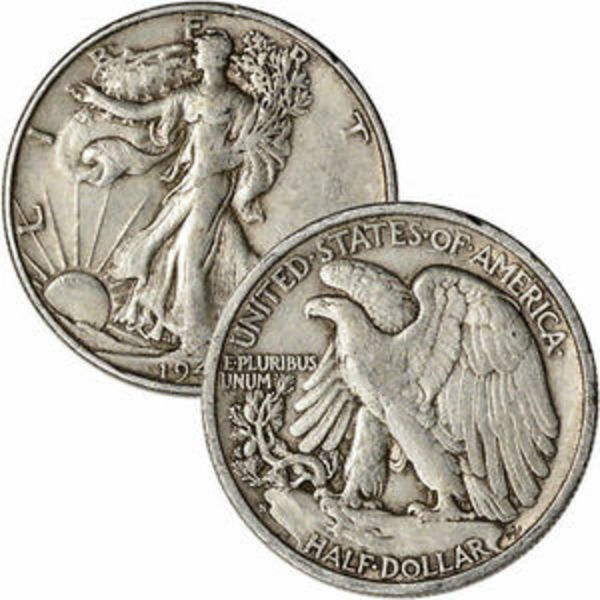
The Mercury Dime — officially the Winged Liberty Head Dime — was struck from 1916 to 1945 and is widely considered one of the most beautifully designed coins in U.S. history. Designed by sculptor Adolph A. Weinman, the same artist behind the Walking Liberty Half Dollar, the coin's graceful obverse depicts Liberty wearing a winged cap — a design commonly mistaken for the Roman god Mercury, giving the coin its enduring nickname.
Each Mercury Dime contains 0.07234 troy ounces of pure silver, identical to the Roosevelt Dime that replaced it in 1946. This guide covers silver content, melt value, key dates — including the rare 1916-D — and the Full Split Bands designation that drives collector premiums.
Quick Facts About the Mercury Dime
| Specification | Details |
|---|---|
| Designer | Adolph A. Weinman (also designed the Walking Liberty Half Dollar) |
| Minted Years | 1916–1945 |
| Silver Content | 90% silver, 10% copper |
| Actual Silver Weight (ASW) | 0.07234 troy ounces |
| Weight | 2.50 grams |
| Diameter | 17.91 mm |
| Edge | Reeded (118 reeds) |
| Face Value | $0.10 |
| Melt Value | 0.07234 × Spot Price of Silver |
Design Overview
- Obverse: Liberty facing right, wearing a winged Phrygian cap symbolizing freedom of thought — commonly mistaken for Mercury's winged helmet. Inscriptions include "LIBERTY," "IN GOD WE TRUST," and the date. Weinman's monogram "AW" appears below the date.
- Reverse: A Roman fasces — a bundle of rods bound around an axe — representing unity and strength, crossed by an olive branch symbolizing peace. "UNITED STATES OF AMERICA" and "ONE DIME" complete the reverse. The horizontal bands on the fasces are central to the Full Split Bands grading designation.
Where Were Mercury Dimes Minted?
The mint mark appears on the reverse, to the left of the fasces base. Three facilities produced Mercury Dimes:
- Philadelphia (no mint mark) — Largest mintages most years
- Denver ("D") — Active throughout the series; the 1916-D is the premier key date
- San Francisco ("S") — Lower mintages in several years; multiple S-mint dates are collectible
Understanding Mercury Dime Melt Value
Each Mercury Dime contains 0.07234 troy ounces of pure silver — the same silver content as the Roosevelt Dime. Calculate current melt value using the live spot price of silver:
Silver Melt Value = 0.07234 × Current Silver Spot Price
- Roll (50 coins): 3.617 troy oz silver
- $1 face value (10 coins): 0.7234 troy oz silver
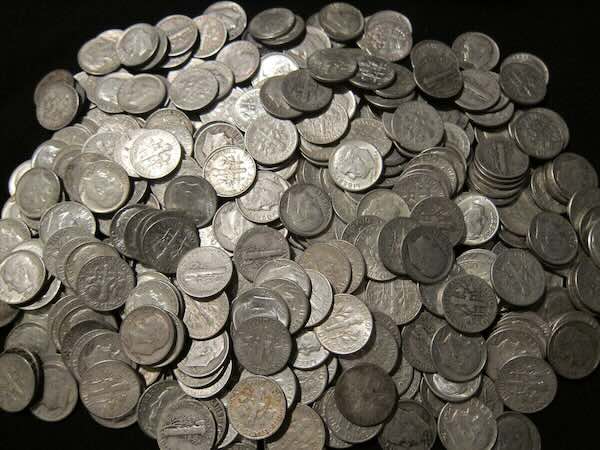
- $100 face value bag: 72.34 troy oz silver
Full Split Bands (FSB) — The Key Grading Designation
For Mercury Dimes, the "Full Split Bands" (FSB) designation refers to complete, unbroken separation of the horizontal bands crossing the fasces on the reverse. FSB requires a sharp, well-centered strike — many coins in otherwise uncirculated condition fail to achieve it. Certified FSB examples command premiums that can be multiples of standard uncirculated values, particularly for scarce dates.
Key Dates and Rare Mercury Dimes
| Key Date / Variety | Notable Details |
|---|---|
| 1916-D | The most famous key date in the Mercury Dime series. Mintage of only 264,000 — the lowest in the series. Highly valuable in any grade; counterfeits exist (altered 1916 Philadelphia dimes with added D mint marks). Always purchase certified examples. |
| 1921 | Low mintage (1,230,000); key date in the series in all grades. Philadelphia issue only. |
| 1921-D | Low mintage Denver issue from the same year; equally sought-after as the 1921-P |
| 1942/1 Overdate | Extremely rare overdate variety from Philadelphia; one of the most prized varieties in 20th century U.S. coinage. Always purchase certified. |
| 1942/1-D Overdate | Denver version of the same overdate; equally rare and valuable. Purchase certified only. |
| 1931-S | Scarce late-series San Francisco issue; commands modest premium in circulated grades |
Investment Potential of Mercury Dimes
- Collector Premium Above Melt: Mercury Dimes command slightly higher premiums than Roosevelt Dimes for common circulated examples due to collector interest in the pre-war series and Weinman's prestigious design.
- FSB Upside: High-grade Full Split Bands specimens offer significant numismatic premium potential, particularly for 1930s and 1940s dates with historically sharp strikes.
- Same Silver Content as Roosevelt Dimes: At 0.07234 oz ASW, Mercury and Roosevelt Dimes carry identical silver weight — but Mercury Dimes typically trade at a modest premium for equivalent circulated grades due to collector demand.
- Shared Designer with Silver Eagles: Adolph Weinman's Walking Liberty Half obverse was revived for the American Silver Eagle. Collectors who appreciate Weinman's work often seek both the Mercury Dime and the Walking Liberty Half as natural companions.
Final Thoughts
Produced from 1916 to 1945, the Mercury Dime is one of the most artistically celebrated coins in U.S. history and a staple of 90% silver junk silver holdings. Common dates trade near melt with a modest collector premium, while the 1916-D and overdate varieties rank among the most valuable 20th century U.S. silver coins. Always purchase key date Mercury Dimes in certified holders from reputable dealers.
For current melt values based on live silver prices, use our silver coin melt value calculator.
Related Articles
- 1916-D Mercury Dime and Other Valuable Winged Liberty Dimes
- What Dimes Contain Silver
- 1945 Dime Values
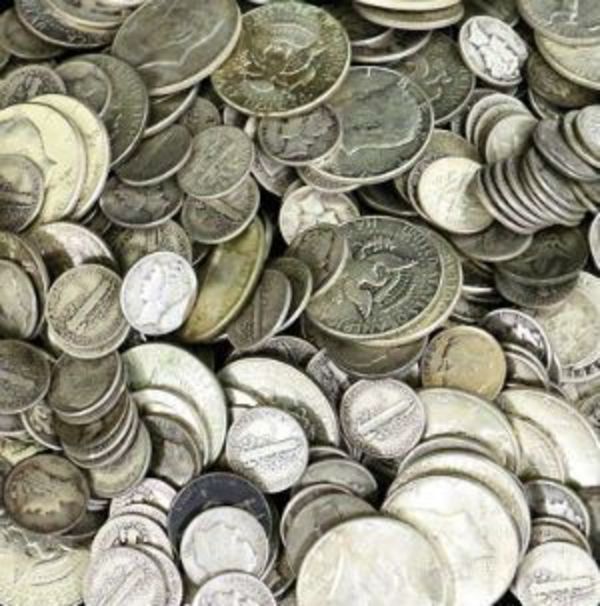
- Junk Silver: What You Need to Know About 90% Silver Coins
- Silver Coin Values Guide with Coin Value Calculator
Frequently Asked Questions
What is the melt value of a Mercury Dime today?
At a silver spot of $66.59/oz (updated September 21, 2026 7:59 AM ET), a Mercury Dime with 0.0715 troy oz ASW is worth about $4.76 at melt.
How is Mercury Dime melt value calculated?
Multiply the coin's actual silver weight (0.0715 troy oz) by the current silver spot price. That product is the melt floor before any numismatic premium.
When is a Mercury Dime worth more than melt?
Key dates, high grades, and scarce varieties can trade well above melt. Common circulated dates in the Mercury Dime series usually track silver content most closely.