How Much Is a Goldback Worth?
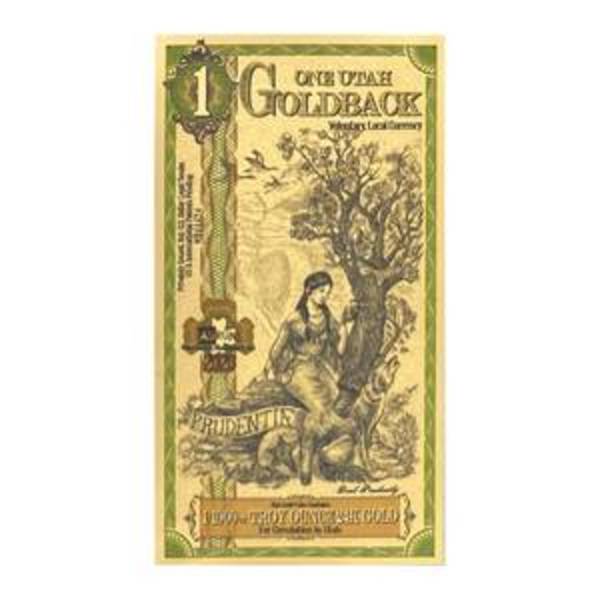
That is the gold content alone. Goldbacks sell for more than that, because they are made to be spent as currency, not bought as bullion. The full denomination table and the reason for the premium are below.
What Is a Goldback?
A Goldback is a physical note with a thin layer of pure gold sealed inside a polymer film. Each note states how much gold it holds, from 1/4000 of an ounce up to 1/10 of an ounce. The gold is .9999 fine, 24-karat. The format lets people hold and spend gold in amounts far smaller than a coin or bar allows.
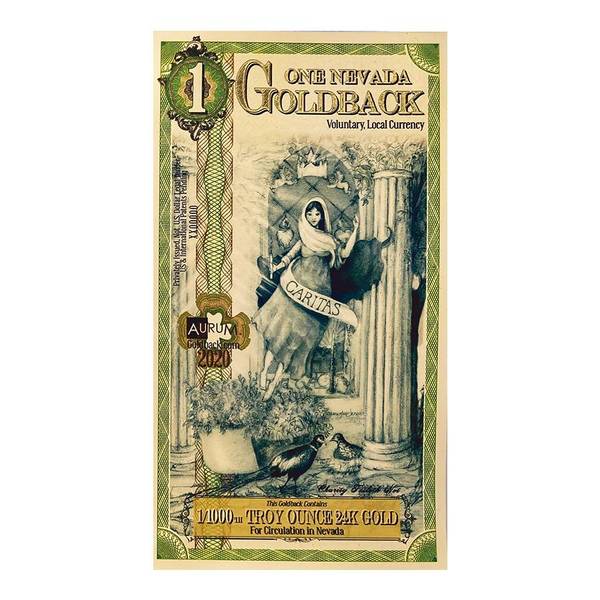
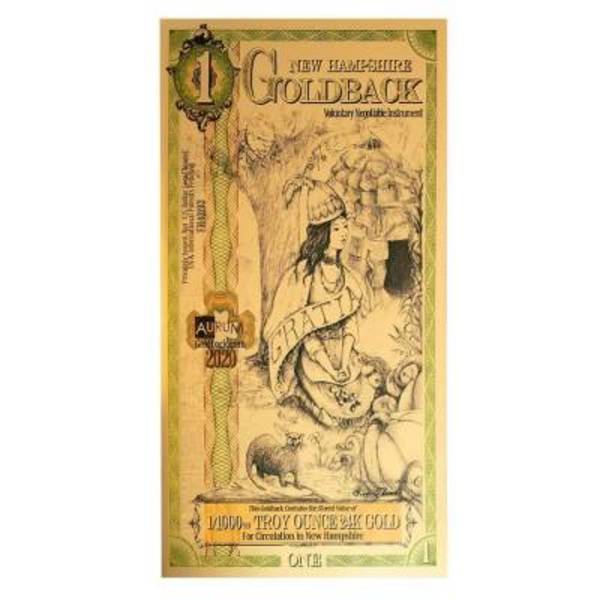
Goldbacks are issued as state series, each with its own artwork. Utah released the first series in 2019, followed by Nevada, New Hampshire, Wyoming, South Dakota, Florida, Oklahoma, Arizona, and Idaho. Notes from any series hold the same gold content for a given denomination.
Goldbacks cost more than their gold content, and the gap is larger than on any bullion product. A 1 Goldback holding about $4.37 of gold usually sells for several dollars. The premium commonly runs from about 90% to over 200% above melt, depending on denomination, state series, and dealer.
That premium pays for more than metal. The gold is applied through a patented process that seals it in a spendable, verifiable note. The notes carry security features and state-specific artwork, and they are produced in far smaller runs than coins or bars. They also function as usable currency at participating merchants in Goldback states. Buyers pay for that utility and design, not only for the gold. If your goal is the most gold per dollar, a small gold bar such as 1 gram is a lower-premium option. If you want spendable, divisible gold, that premium is the cost of the format.
To compare current Goldback prices across dealers, see all Goldbacks and foil notes or compare Goldback prices. For a deeper guide, see what Goldbacks are.
Selling Goldbacks: Goldbacks resell through the collector and currency market rather than the standard bullion buyback market. Some dealers and participating merchants accept them at a negotiated value. Because the premium is part of the price, resale depends more on demand for the specific series and denomination than on the gold spot price alone. Start by comparing what dealers currently list for the same notes. See where and how to sell gold.
Goldback Melt Values by Denomination
Each Goldback denomination holds a fixed amount of gold. The melt values below update with the live gold price.
| Goldback | Gold Content | Melt Value (at $4,367.24/oz) |
|---|---|---|
| 1/4 Goldback | 1/4000 oz | $1.09 |
| 1/2 Goldback | 1/2000 oz | $2.18 |
| 1 Goldback | 1/1000 oz | $4.37 |
| 2 Goldback | 1/500 oz | $8.73 |
| 5 Goldback | 1/200 oz | $21.84 |
| 10 Goldback | 1/100 oz | $43.67 |
| 25 Goldback | 1/40 oz | $109.18 |
| 50 Goldback | 1/20 oz | $218.36 |
| 100 Goldback | 1/10 oz | $436.72 |
What You'll Actually Pay for a Goldback
Goldbacks cost more than their gold content, and the gap is larger than on any bullion product. A 1 Goldback holding about $4.37 of gold usually sells for several dollars. The premium commonly runs from about 90% to over 200% above melt, depending on denomination, state series, and dealer.
That premium pays for more than metal — the spendable note format, security features, artwork, and small production runs. If your goal is the most gold per dollar, see 1 gram of gold. To compare current Goldback prices, browse all Goldbacks and foil notes or compare Goldback prices.
-
-
-
-
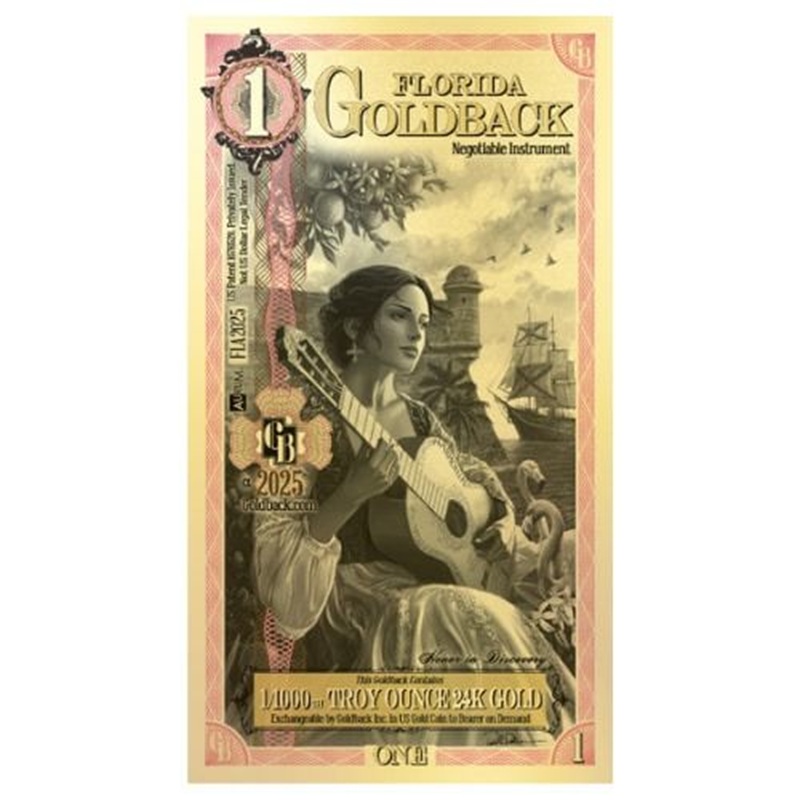 Florida 1 Goldback Note (24K) - $8.40
Goldback Value: Common Questions
How much is a Goldback worth?
A 1 Goldback holds 1/1000 of a troy ounce of pure gold, worth $4.37 at the current spot price of $4,367.24 per ounce. Goldbacks sell for more than their gold content because they are made as spendable currency, so the retail price is typically several times the melt value.
How many Goldbacks equal one ounce of gold?
It takes 1,000 one-Goldback notes to equal a troy ounce of gold, since each 1 Goldback holds 1/1000 of an ounce. In larger denominations, ten 100-Goldback notes hold one ounce, because each 100 Goldback holds 1/10 of an ounce.
Why do Goldbacks cost more than their gold value?
The premium covers the process that seals gold into a spendable note, the security features and artwork, the small production runs, and the note's use as currency in participating states. Those costs typically push the price to somewhere between about 90% and over 200% above the gold content.
Are Goldbacks real gold?
Yes. Each Goldback contains .9999 fine, 24-karat gold, layered inside a polymer note. The denomination printed on the note is the amount of gold it holds, from 1/4000 of an ounce up to 1/10 of an ounce.
Which states have Goldbacks?
Goldbacks are issued as state series: Utah, Nevada, New Hampshire, Wyoming, South Dakota, Florida, Oklahoma, Arizona, and Idaho. A given denomination holds the same amount of gold regardless of which state series it comes from.
Are Goldbacks a good way to buy gold?
Goldbacks carry much higher premiums than coins or bars, so they are an expensive way to buy gold by weight. Their value is in being spendable and easy to divide into very small amounts. For the lowest cost per ounce of gold, a small gold bar is a better choice; for divisible, spendable gold, Goldbacks are built for that purpose.
