
Silver Quarters for Sale - Compare Dealer Prices
90% Silver Quarters - Washington, Standing Liberty, and Barber
Compare Silver Quarters Prices
Silver Quarters Quick Facts
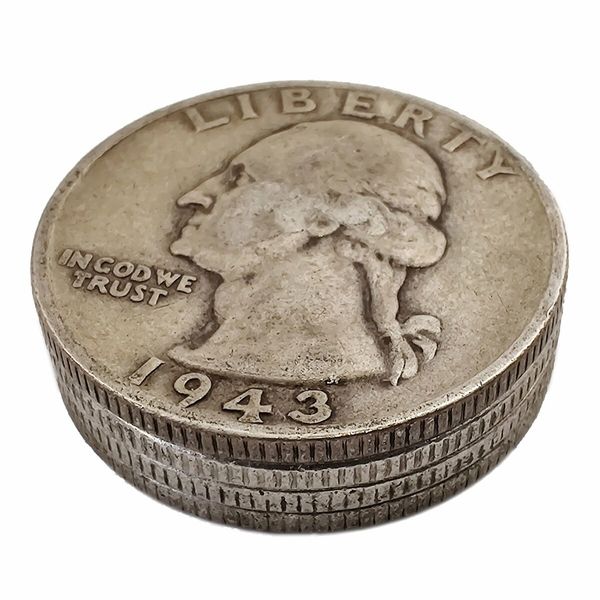
Pre-1965 Silver Quarters: 90% Silver Content
Every U.S. quarter minted from 1796 through 1964 contains silver. From the Barber and Standing Liberty series through the familiar Washington design, these coins were struck in an alloy of 90% silver and 10% copper (.900 fineness) — the same standard used across all U.S. silver coinage of the era.
Each pre-1965 quarter weighs 6.25 grams and contains approximately 0.1808 troy ounces of fine silver. A standard $10 face value roll (40 coins) holds roughly 7.15 troy ounces of silver, making rolls and bags of silver quarters one of the most efficient ways to accumulate physical silver in small, recognizable increments.
These coins are commonly known as "junk silver" — not because they lack value, but because they carry little or no numismatic premium above their metal content. Their worth is driven primarily by the current silver price and melt value. For a more detailed explanation of junk silver as an investment category, see our guide to what you need to know about 90% silver coins.
Why Investors Buy Silver Quarters
Pre-1965 silver quarters serve a specific role in a precious metals holding. Their small unit size — each coin worth a fraction of a troy ounce — makes them one of the most divisible forms of physical silver available. Unlike a 10 oz bar or even a 1 oz round, silver quarters allow holders to sell or trade precise amounts without liquidating a larger position.
Several characteristics make these coins practical for silver buyers. They are instantly recognizable as U.S. legal tender, which simplifies verification and resale with any coin dealer. Their 90% silver content is a known, standardized specification that doesn't require assay. And because tens of millions were minted across decades of production, they remain widely available and liquid in the secondary market.
Premiums on junk silver quarters fluctuate with market conditions. During periods of strong demand, premiums can rise well above spot; in quieter markets, junk silver occasionally trades at or near melt value. Comparing prices across dealers is the most effective way to find favorable premiums — that's what the product grid above is designed to help you do.
Silver Quarter Designs by Era
- Draped Bust (1796–1807): The first U.S. quarter, designed by Robert Scot, featuring Lady Liberty on the obverse and a bald eagle on the reverse. These coins were struck in 89.24% silver — a slightly different standard than the 90% composition that became standard in later decades. Surviving examples are scarce and carry substantial numismatic premiums; they are rarely encountered in junk silver lots.
- Capped Bust (1815–1838): No quarters were minted between 1808 and 1814. The Capped Bust design resumed production in 1815, featuring Liberty wearing a cap. Like the Draped Bust, these are collector coins rather than junk silver — few circulate in the bullion market.
- Seated Liberty (1838–1891): Liberty depicted seated on a rock, holding a shield and liberty pole. Produced across more than 50 years with multiple design variations (no motto, arrows, rays, and motto added), the Seated Liberty is the longest-running silver quarter design. Circulated examples appear in the secondary market but are far less common than later issues.
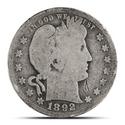
- Barber (1892–1916): Designed by Chief Engraver Charles E. Barber, these quarters feature a profile of Liberty on the obverse and an eagle on the reverse. Barber quarters are the earliest design commonly found in junk silver lots, though many also carry collector value — particularly key dates and mint marks. Calculate the melt value of any Barber quarter using our quarter melt value calculator.
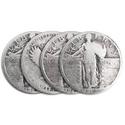
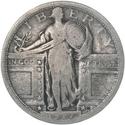
- Standing Liberty (1916–1930):Designed by Hermon A. MacNeil, these quarters depict a standing Liberty on the obverse and an eagle in flight on the reverse. The 1916 issue — with a mintage of just 52,000 — is one of the most valuable quarters in the entire series. A design modification in 1917 (Type 2) covered Liberty's exposed breast and added three stars below the eagle. Standing Liberty quarters appear in junk silver lots, though circulated examples often show significant date wear. Use our quarter melt value calculator to check current values.
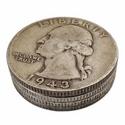
- Washington (1932–1964): The most familiar silver quarter design, featuring George Washington's profile on the obverse. Washington quarters make up the vast majority of junk silver quarters available in the market today. The series includes notable key dates — the 1932-D and 1932-S — which are the lowest-mintage regular issues and can be worth hundreds of dollars even in circulated condition. Check the melt value of any Washington silver quarter with our quarter value calculator.
Collecting Silver Quarters
Modern Silver Quarters
Junk Silver Coins
Frequently Asked Questions
Where to find the cheapest Silver Quarters
FindBullionPrices.com compares prices from trusted and reputable online precious metals dealers to help you find the lowest premiums when shopping for Silver Quarters. The prices on our site are updated hourly and adjusted for silver spot price, providing a tool that helps investors compare silver prices.
We help find the cheapest Silver Quarters when you're ready to buy.
You can find a large assortment of silver coins at FindBullionPrices.com. If we don't list prices for something you're looking for Contact Us and let us know so we can add it.
Compare Silver Quarters prices
FindBullionPrices.com compares Silver Quarters prices from top-rated and trusted bullion dealers. Our product listings compare the online prices to help you buy the cheapest Silver Quarters.
