Silver Certificates are paper money that was once literally backed by silver. Every note represented a specific amount of physical silver on deposit at the US Treasury, and for most of their history, you could walk into a Treasury office and redeem them for silver dollars or silver bullion.
That redemption window closed in 1968. But the notes survive in enormous numbers, and they span one of the widest value ranges in all of US currency collecting, from a 1957 $1 Silver Certificate worth $2-$3 to an 1896 $5 “Educational Series” note worth $10,000+ in top grades.
For silver investors and bullion collectors, Silver Certificates represent the historical intersection of paper money and physical metal. For currency collectors, they are one of the deepest and most rewarding series to pursue.
This guide is part of our US Paper Money Value Guide.
What Is a Silver Certificate?
Silver Certificates were authorized by the Bland-Allison Act of 1878 and the subsequent Silver Certificate Act of 1878. The US government issued them in denominations of $1, $2, $5, $10, $20, $50, $100, $500, and $1,000 between 1878 and 1964. Each note bore the promise: “This certifies that there is on deposit in the Treasury of the United States of America [X] Silver Dollar(s) payable to the bearer on demand.”

You can identify a Silver Certificate by its blue Treasury seal and blue serial numbers. Federal Reserve Notes (modern bills) have a green seal; United States Notes (Legal Tender) have a red seal. If the seal is blue, you have a Silver Certificate. Their gold-backed counterpart, the Gold Certificate, used a gold seal.
Notes with a red seal are United States Notes, a different type entirely.
Silver Certificates fall into two broad categories:
- Large-size notes (issued before 1928) measure approximately 7.4″ × 3.1″, noticeably bigger than modern bills. They include some of the most artistically ambitious designs in US currency history.
- Small-size notes (1928–1957) are the same dimensions as modern bills. They are far more common and affordable, making them the typical entry point for new collectors.
Silver Certificate Value Chart
| Series | Denomination | Design / Nickname | Circulated Value | Uncirculated Value |
|---|---|---|---|---|
| Large-Size | ||||
| 1886 | $1 | “Martha Washington” | $200-$600 | $1,500-$5,000+ |
| 1896 | $1 | “Educational Series” | $250-$750 | $1,500-$5,000+ |
| 1896 | $2 | “Educational Series” | $500-$1,500 | $3,000-$8,000+ |
| 1896 | $5 | “Educational Series” | $700-$2,000 | $4,000-$10,000+ |
| 1899 | $1 | “Black Eagle” | $75-$200 | $300-$800+ |
| 1899 | $2 | “Mini Porthole” | $200-$500 | $800-$2,500+ |
| 1899 | $5 | “Chief” (Running Antelope) | $150-$400 | $700-$2,000+ |
| 1923 | $1 | “Horse Blanket” | $40-$100 | $150-$400+ |
| 1923 | $5 | “Porthole” (Lincoln) | $200-$500 | $1,000-$3,000+ |
| Small-Size | ||||
| 1928 | $1 | (First small-size) | $20-$50 | $75-$250 |
| 1928A | $1 | $20-$50 | $75-$200 | |
| 1928B | $1 | $20-$50 | $60-$175 | |
| 1934 | $5 | $6-$12 | $25-$60 | |
| 1934 | $10 | $12-$25 | $40-$100 | |
| 1935 | $1 | (multiple sub-series) | $2-$4 | $8-$20 |
| 1935A | $1 | $2-$3 | $6-$15 | |
| 1935B-H | $1 | $2-$3 | $5-$12 | |
| 1953 | $5 | $6-$10 | $20-$50 | |
| 1953A-B | $5 | $6-$10 | $18-$40 | |
| 1957 | $1 | $2-$3 | $5-$10 | |
| 1957A-B | $1 | (Last Silver Certificates) | $2-$3 | $5-$10 |
Star notes command 2x-10x premiums over regular issues depending on the series and print run.
Large-Size Silver Certificates (1886–1923)
Large-size Silver Certificates are where the real money, and the real artistry, lives. These oversized notes feature ornate designs that modern currency does not attempt.
1896 “Educational Series”: The Most Beautiful US Notes
The 1896 Educational Series is universally regarded as the most artistically accomplished US currency ever produced. The three denominations, $1 (“History Instructing Youth”), $2 (“Science Presenting Steam and Electricity to Commerce and Manufacture”), and $5 (“Electricity as the Dominant Force in the World”), feature allegorical figures in neoclassical designs that were controversial in their day (some critics objected to the partially draped female figures).
The $1 is the most affordable of the three, starting around $250 in well-circulated grades. The $5 is the rarest and most expensive, with Fine-condition examples bringing $700-$2,000 and choice uncirculated notes exceeding $10,000.
Educational Series notes do not surface cheaply, but they are the type of note that anchors a collection.
1899 “Black Eagle” $1 Silver Certificate
The Black Eagle is one of the most iconic designs in US currency: a spread-wing bald eagle dominates the face of the note, with portraits of Lincoln and Grant below. The combination of dramatic design and relatively affordable pricing ($75-$200 circulated, $300-$800+ uncirculated) makes it one of the most popular large-size notes among collectors.
Multiple signature combinations exist within the 1899 $1 series, and some are significantly scarcer than others. The Napier-McClung combination is common; Speelman-White pairs are common. The Vernon-McClung and Parker-Burke varieties command premiums.
1899 “Chief” $5 Silver Certificate
The “Chief” note features a portrait of Ta-To-Ka-In-Yan-Ka (Running Antelope), a Hunkpapa Lakota leader, in the center of the face. It is one of only a handful of US currency designs featuring a Native American portrait and is prized by collectors for its visual impact. Circulated examples run $150-$400; uncirculated notes reach $700-$2,000+.
1923 “Horse Blanket”: Last Large-Size Issue
The 1923 $1 Silver Certificate earned the “Horse Blanket” nickname because of its large size; it is the last large-format note the Treasury produced before switching to the small-size format in 1928. It features a large portrait of George Washington.
Horse Blankets are among the most affordable large-size notes ($40-$100 circulated), making them an accessible way to own an oversized bill from the pre-1928 era.
Small-Size Silver Certificates (1928–1957)
The 1928 through 1957 small-size Silver Certificates are the notes most people encounter in inherited collections, estate finds, and pocket change from decades past. They are the same size as modern bills and much more common than their large-size predecessors.
1928 Series
The 1928 $1 Silver Certificates were the first small-size silver notes and are considerably scarcer than the 1935 and 1957 series that followed. Circulated examples start around $20-$50, a notable premium over later issues. The 1928 series was printed at lower volumes as the Treasury transitioned from the large-size format.
1935 Series
The 1935 series ($1 denomination, sub-series A through H) is the most heavily printed Silver Certificate series. Hundreds of millions were produced across its multiple sub-series. Circulated examples are worth $2-$4, barely above face value. Uncirculated notes bring $5-$20 depending on the sub-series.
The 1935A series includes experimental “R” and “S” notes (printed on slightly different paper for testing) that are worth $30-$100+, even in circulated condition.
1957 Series
The 1957, 1957A, and 1957B are the last Silver Certificates the US government issued. They are the most common Silver Certificates in existence and the least expensive to acquire ($2-$3 circulated, $5-$10 uncirculated). For pure collecting purposes, they are a $3 way to own an authentic blue-seal Silver Certificate.
Despite their low individual value, 1957 Silver Certificates remain popular because they are accessible, authentic, and carry the historical weight of government-guaranteed silver backing.
Silver Certificate Star Notes
Star notes appear across every Silver Certificate series, and they consistently command premiums. The premium depends on two factors: the series and the star note print run.
On common small-size series (1935, 1957), star notes add a modest $5-$20 premium in circulated grades. On scarcer series (1928), star notes can multiply the value 3x-5x or more. On large-size issues, star notes are rare and command significant premiums. A 1899 Black Eagle star note in Fine condition can bring $1,000+.
Can You Still Redeem Silver Certificates for Silver?
No. The redemption of Silver Certificates for silver ended on June 24, 1968. Before that date, holders could exchange their certificates for silver bullion (not silver dollars; that ended in 1964) at the Treasury. After June 24, 1968, Silver Certificates became redeemable only for Federal Reserve Notes at face value.
Silver Certificates remain legal tender at their face value. A $1 Silver Certificate is still worth $1 as currency. But given that even the most common varieties trade at $2-$3, no one is spending them.
The historical connection to physical silver gives these notes a crossover appeal for precious metals investors. If you already collect silver coins or stack silver, Silver Certificates are a natural complement to a physical metal position. They are tangible artifacts from the era when paper money and precious metals were directly linked.
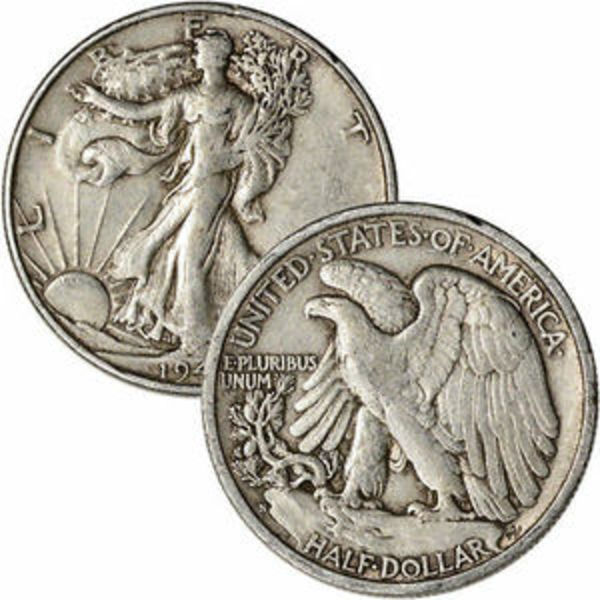
That same connection makes them a good conversation piece alongside a 90% silver coin collection. Junk silver coins were the silver that backed these certificates.
Where to Buy and Sell Silver Certificates
Common small-size notes (1935, 1957): Available from coin shops, bullion dealers like APMEX and JM Bullion, eBay, and even some bank tellers who set them aside. At $2-$5 each, these are impulse-buy collectibles.
Scarce small-size (1928) and large-size notes: eBay for mid-range examples. Heritage Auctions and Stack’s Bowers for high-grade and key-date notes. PMG or PCGS-graded notes are preferred for notes over $200. Third-party grading provides authentication and condition assurance, the same way NGC and PCGS grading works for coins.
Educational Series and other trophy notes: Major auction houses. These are the paper money equivalent of key-date Morgan Silver Dollars or Pre-1933 gold coins: significant acquisitions that benefit from auction competition and expert cataloging.
Related
- US Paper Money Value Guide – Complete overview of all collectible US currency
- 1957 Silver Certificate Values – What are they worth?
- Specie Money – What is it and why it matters to bullion investors
- $2 Bill Value Chart – Another accessible collecting category
- $500 Bill Value: How Much Is a 500 Dollar Bill Worth? – The most accessible high value currency note
- Silver Spot Price – Live silver pricing
- Best Silver Prices – Compare dealer silver premiums
- 90% Silver Coins Guide – The coins that backed Silver Certificates
- Closest to Spot Silver – Find the lowest-premium silver products
Disclaimer: This article is for informational and educational purposes only. It is not financial or investment advice. FindBullionPrices.com is a price comparison platform and does not sell bullion or currency notes.