The $2 bill is one of the most misunderstood denominations in US currency. People hoard them thinking they’re rare. They’re not. The Federal Reserve’s calendar year 2025 print order called for 307 million to 416 million new $2 notes, one of the largest orders in recent memory. They’re legal tender, they’re in active production, and most of them are worth exactly $2.
But “most” isn’t “all.” Certain $2 bills — specific years, star notes, red seal varieties, error prints, and bills with unusual serial numbers — are worth real money to collectors. A 1976 $2 bill with a solid serial number (F11111111A) sold at auction for $9,600. A 1928D star note brought $884.50 in June 2026. Even a common-looking 1953C star note fetched $353.80 in January 2026.
Here’s how to tell whether yours is worth $2 or $2,000.
This guide is part of our US Paper Money Value Guide, which covers all major types of collectible US currency.
How to Check if Your $2 Bill Is Worth Money
Here’s a quick five-step check you can do in under a minute.
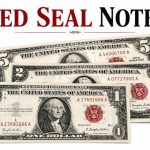
Step 1: Look at the seal color. Is it red or green? A red Treasury seal means your bill is a United States Note printed between 1928 and 1963. Red seal $2 bills start at $3-$6 in circulated condition and go up from there. A green seal means it’s a Federal Reserve Note from 1976 or later — most are worth face value, but keep checking.
Step 2: Find the series year. It’s printed on the front of the bill near the portrait. Certain series years are scarce. The 1928B, 1928C, and 1928E had low print runs and command premiums even in circulated condition.
Step 3: Check for a star in the serial number. A small star symbol (★) at the end of the serial number (or the beginning on older notes) marks it as a replacement note. Star notes had smaller print runs and are worth more than regular issues in every series.
Step 4: Examine the serial number itself. Low numbers (under 100), solid numbers (22222222), ladders (12345678), and other patterns carry collector premiums — sometimes hundreds or thousands of dollars, even on modern green-seal bills.
Step 5: Look for printing errors. Misaligned prints, double serial numbers, miscuts, ink smears, and inverted overprints are all collected. Even minor errors on common bills can be worth $50 to $400. Major errors like double prints on 1976 notes have sold for five figures.
If your bill passed all five checks with nothing unusual, it’s likely worth face value. If anything flagged, read on for specific values.
$2 Bill Value Chart by Year
Year / Series
Seal Color
Circulated Value
Uncirculated Value
Notes
1928
Red
$10-$25
$75-$250
First small-size $2
1928B
Red
$50-$200
$400-$2,500
Key date — low print run
1928C
Red
$20-$75
$150-$800
Scarce
1928D
Red
$8-$20
$50-$175
1928E
Red
$15-$40
$100-$350
Low print run
1928F
Red
$6-$15
$40-$125
1928G
Red
$5-$12
$30-$100
Most common 1928
1953
Red
$4-$8
$20-$50
1953A
Red
$4-$8
$18-$45
1953B
Red
$4-$8
$18-$45
1953C
Red
$4-$8
$18-$45
1963
Red
$3-$6
$10-$25
Last red seal $2
1963A
Red
$3-$6
$10-$25
1976
Green
$2-$3
$5-$15
First green seal $2
1995
Green
$2
$3-$6
2003
Green
$2
$3-$5
2003A
Green
$2
$3-$5
2009
Green
$2
$3-$5
2013
Green
$2
$2-$4
2017A
Green
$2
$2-$4
2021
Green
$2
$2-$3
Latest series printed
Star notes add a premium to every series. A 1953 $2 red seal star note in uncirculated condition might bring $50-$200, versus $20-$50 for a regular issue. Star notes on the 1928 series can be worth multiples of regular issues. See our Star Note Value Guide for how to identify and look up print runs.
Are $2 Bills Rare in 2026?
No. The myth persists because $2 bills don’t circulate as visibly as other denominations. People receive them and save them instead of spending them. Banks order them less frequently than $1s or $5s because demand is lower. The result is a self-reinforcing cycle: people think they’re rare because they rarely see them, and they rarely see them because people save them instead of spending them.
The BEP has printed over 1.4 billion $2 bills since the modern green-seal series began in 1976. The CY 2025 Federal Reserve print order called for 307 million to 416 million new $2 notes, up sharply from the 204.8 million produced in FY 2024. That 2025 order is one of the largest in the denomination’s history. The $2 bill is not going away, and current-year bills are worth exactly $2.
Where the value lies is in the older series — particularly the red seal notes printed from 1928 through 1963 — and in varieties like star notes, low serial numbers, and error prints.
Most Valuable $2 Bills Sold at Auction
These are real prices realized at major auction houses and verified sales platforms. They show what collectors actually pay for exceptional $2 bills, not what listing sites claim they’re “worth.”
Pre-1928 Large-Size Notes: An 1896 “Educational” $2 Silver Certificate graded PMG Superb Gem 67 sold for $40,800 in 2023 at Heritage Auctions. A Choice Uncirculated 63 EPQ example of the same design brought $8,540 in March 2026. The Educational series is widely considered the most beautiful US currency ever printed, and the $2 denomination is the most affordable entry point into the set.
Small-Size Red Seals: A 1928D $2 star note in collectible condition sold for $884.50 at auction in June 2026. A 1953C star note brought $353.80 in January 2026. These are accessible prices for genuine scarce notes — not the million-dollar clickbait figures that circulate on social media.
Modern Fancy Serials: A 1976 $2 bill with solid serial number F11111111A, graded PMG 64 EPQ, sold for $9,600. The bill itself had a face value of $2. What made it valuable was the serial number — eight consecutive identical digits is one of the rarest patterns possible.
The pattern is consistent: condition, rarity, and provenance drive value, not age alone. A beat-up 1928 $2 bill might be worth $10, while a crisp modern $2 with the right serial number brings thousands.
1976 $2 Bill Value
The 1976 $2 bill gets more questions than almost any other modern note. It was the first $2 bill with a green Treasury seal (replacing the red seal), redesigned with a new back featuring John Trumbull’s painting of the signing of the Declaration of Independence. It was released on April 13, 1976 — Thomas Jefferson’s birthday — as part of the Bicentennial celebration.
Many people took their new 1976 $2 bills to the post office that day and had them stamped with a first-day-of-issue cancellation. Those stamped notes have a small collector following but are worth $5-$10 in typical condition. The stamp has to be clean and legible to command any premium.
An unstamped 1976 $2 bill in uncirculated condition is worth $5-$15 depending on the Federal Reserve district. Circulated examples are worth face value. Over 590 million were printed — they are not scarce.
Exception: 1976 $2 star notes from certain Federal Reserve districts had low print runs and can be worth $25-$150+.
Error notes from 1976 are a different story. The 1976 print run produced a number of documented error varieties, including miscuts, misaligned overprints, and double serial number impressions. A miscut or misaligned 1976 $2 bill typically sells for $50-$400 depending on how dramatic the error is. Double serial number errors — where the serial number was printed twice in overlapping positions due to a press malfunction — are genuinely rare and have been valued in the five-figure range.
Red Seal $2 Bills (1928-1963): What They’re Worth
Red seal $2 bills are United States Notes (Legal Tender Notes) — a different type of currency than the green-seal Federal Reserve Notes used today. The red seal identifies them instantly. They were printed in several series from 1928 through 1963, and they’re the heart of $2 bill collecting.
1928 $2 Red Seal
The 1928 series was the first small-size $2 bill and comes in multiple sub-series (1928, 1928A through 1928G). Values range widely based on which sub-series you have.
The 1928B is the key date — with a print run under 800,000, it’s the scarcest small-size $2 bill in regular production. A circulated 1928B is worth $50-$200; uncirculated examples reach $400-$2,500+. The 1928C and 1928E are also relatively scarce and command premiums above other 1928 sub-series.
By contrast, the 1928G had the largest print run of the series and is the most affordable: $5-$12 circulated, $30-$100 uncirculated.
The 1953 series (1953, 1953A, 1953B, 1953C) is the most commonly encountered red seal $2 bill. Print runs were large across all sub-series, and many were saved in uncirculated condition. Circulated examples bring $4-$8; uncirculated $18-$50. The 1953 series is an excellent entry point for new collectors — genuine pre-1965 US currency at an accessible price.
1963 $2 Red Seal
The 1963 and 1963A are the last red seal $2 bills ever printed. The series ended when the Treasury transitioned the $2 denomination to Federal Reserve Notes in 1976. Values are similar to the 1953 series ($3-$6 circulated, $10-$25 uncirculated), but the “last of type” status gives them collecting appeal.
$2 Bill Star Notes: How to Identify and Value Them
A star note is a replacement bill printed when a defective note is detected during production. On modern bills, a star symbol (★) appears at the end of the serial number. On older series, it may appear at the beginning.
Star notes on $2 bills are more significant than on higher-denomination bills because $2 star note print runs tend to be smaller — the denomination’s lower production volume means replacement runs are correspondingly smaller.
Series
Regular Print Run
Star Note Print Run
Star Note Premium
1928B
~800,000
~8,000
5x-10x regular
1953
45,360,000
~720,000
2x-3x regular
1963A
13,600,000
~640,000
2x-3x regular
1976 (varies by district)
Varies
640,000-2,560,000
1.5x-5x regular
2013
Varies
Varies
Face value-$5
The key to star note value is the print run size. Our Star Note Value Guide covers how to look up your specific note’s print run using free online databases.
$2 Bills Worth Money by Serial Number
Beyond star notes, the serial number itself can make any $2 bill valuable — even a modern one worth face value. Collectors call these “fancy serial numbers” and pay significant premiums for them.
The most valuable patterns on $2 bills:
Low serial numbers (00000001-00000100): $50-$5,000+ depending on how low and the series
Solid numbers (22222222): $300-$9,600+ on a $2 bill (the F11111111A 1976 note sold for $9,600 at auction)
Ladders (12345678 or 87654321): $500-$2,000+
Radars (24688642): $15-$50 on modern $2 bills
Repeaters (20262026): $10-$30
Binary notes (only two digits, like 20002200): $20-$100
A crisp, uncirculated $2 bill with serial number 00000001 from any recent series could sell for $2,000-$5,000. That turns a $2 face-value note into a genuinely valuable collectible.
For a complete breakdown of every pattern type and current market values, see our Fancy Serial Number Guide.
$2 Bill Error Notes
Error notes are bills that left the Bureau of Engraving and Printing with a production mistake. The BEP catches most errors during quality control, which is why the ones that reach circulation are collected. Errors on $2 bills are particularly sought after because the denomination’s lower production volume means fewer error notes exist.
Common $2 bill errors and approximate values:
Miscuts / misalignment: The design is off-center or extends past where it should. Worth $50-$400 depending on how dramatic the shift is. A 50% or greater offset is significantly more valuable than a slight misalignment.
Ink smears: Excess ink creates a visible smear across part of the bill. Worth $25-$150.
Inverted overprints: The serial numbers and seals are printed upside down relative to the main design. These are scarce and can bring $300-$1,000+.
Double serial numbers: The serial number was printed twice in overlapping positions. These are rare and command high premiums, particularly on 1976 notes.
Gutter folds / butterfly errors: The paper was folded during printing, creating a blank stripe across the bill. Worth $75-$300.
If you think you have an error note, compare it carefully against a normal bill of the same series. Not every imperfection is a collectible error — wear, water damage, and post-production damage do not count. For errors worth $500 or more, professional grading from PMG (Paper Money Guaranty) adds liquidity and buyer confidence.
Where to Buy and Sell $2 Bills
For common $2 bills (1976-present, circulated): any bank will order them at face value. There’s no collector premium to pay.
For red seal and vintage $2 bills: online dealers like APMEX and JM Bullion carry curated selections. eBay has the deepest inventory — search completed listings to establish current market values before buying or selling. For notes worth $500+, consider Heritage Auctions or Stack’s Bowers for auction placement.
For star notes and fancy serials on modern $2 bills: eBay is the primary marketplace. The collector community for modern currency varieties is active there, and buy-it-now pricing is transparent enough to establish fair market value quickly.
For error notes: Heritage Auctions and eBay are the two main venues. Error notes benefit from professional grading more than most other categories, since the grading service’s attribution confirms the error is genuine and not post-production damage.
If you’re moving from coin collecting — Morgan Silver Dollars, Peace Dollars, or Pre-1933 gold – into paper money, $2 bills are a natural starting point alongside Silver Certificates. The price points are low, the variety is deep, and the red seal series offers genuine historical significance without a steep entry cost.
Disclaimer: This article is for informational and educational purposes only. It is not financial or investment advice. FindBullionPrices.com is a price comparison platform and does not sell bullion or currency notes.