The 1921 Peace Dollar holds a distinction that no other coin in the series can claim: it is the only Peace Dollar ever struck in high relief. That single fact shapes everything about the coin — its visual impact, its scarcity in high grades, and its persistent premium over every other date in the series. With a mintage of just 1,006,473 coins produced exclusively at the Philadelphia Mint, the 1921 Peace Dollar stands as both a one-year type coin and a first-year issue, two qualities that collectors prize above almost anything else.
Whether you are evaluating a 1921 Peace Dollar value for insurance purposes, considering a purchase, or trying to understand why this coin commands such strong premiums, this guide covers everything you need to know — from historical context and design details to current market values, VAM varieties, and practical buying advice.
Historical Context: Why the Peace Dollar Was Created
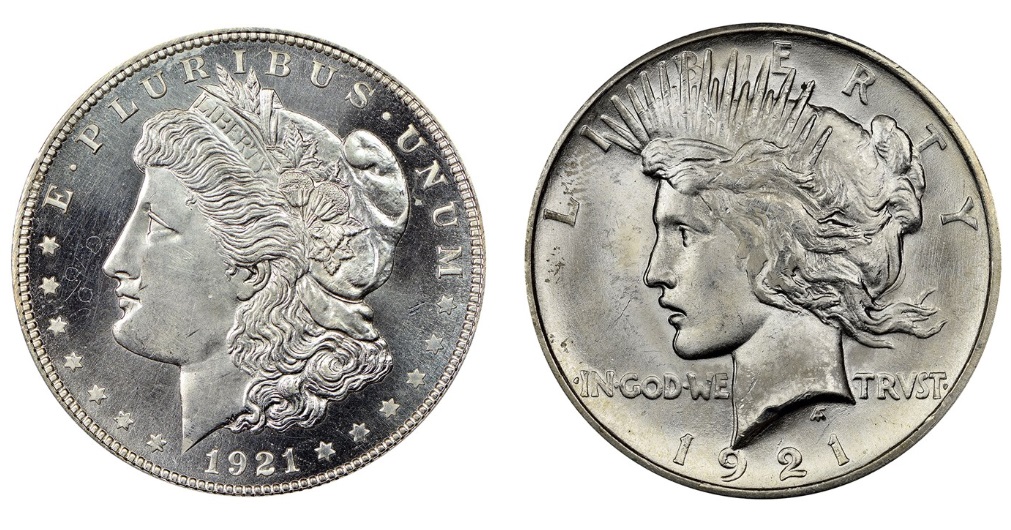
1921 Morgan and 1921 Peace Dollar Coins
The story of the 1921 Peace Dollar begins with the aftermath of World War I and a massive gap in the nation’s silver dollar supply. The Pittman Act of 1918 had authorized the melting of more than 270 million Morgan silver dollars to support wartime financial obligations, converting them into bullion that was sold to Great Britain. By the war’s end, the United States faced both a depleted silver dollar inventory and a public eager to commemorate the peace that had finally arrived.
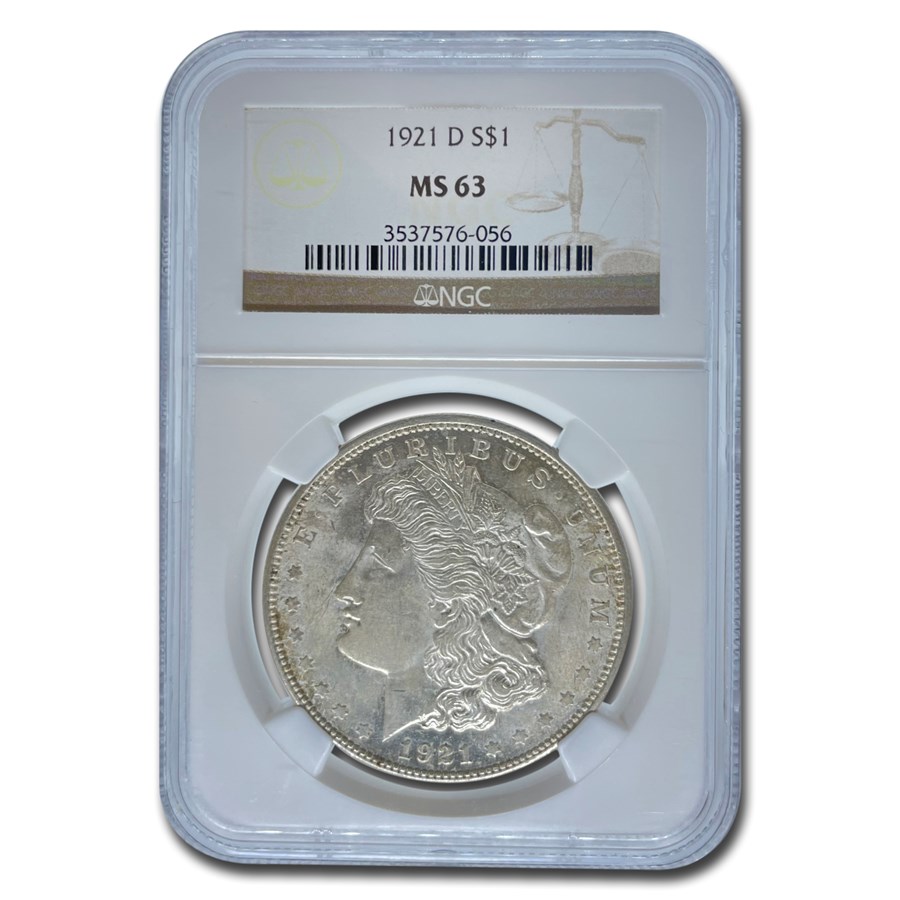
In early 1921, the Morgan Dollar returned briefly to fill the immediate need for silver dollars in commerce. But numismatists, politicians, and civic leaders pushed for something more meaningful — a new silver dollar that would mark the end of the Great War and symbolize American aspirations for lasting peace. Congressman Albert Henry Vestal introduced legislation authorizing the new coin, and the Commission of Fine Arts organized a design competition among prominent American sculptors and medalists.
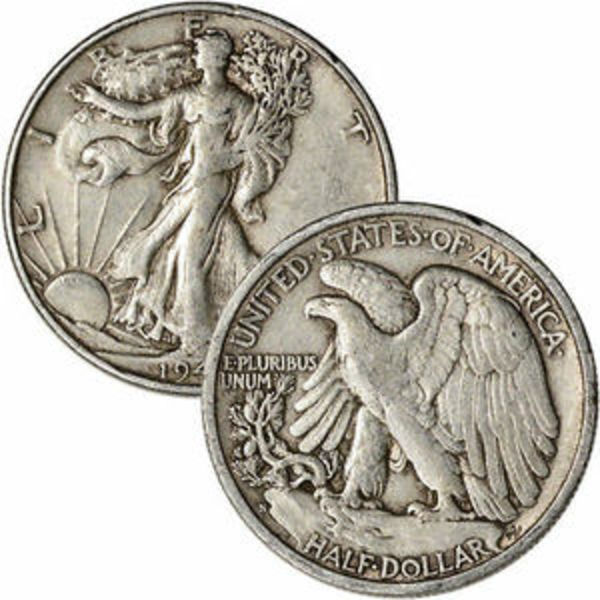
Anthony de Francisci, a 34-year-old Italian-American sculptor who had emigrated from Palermo, Sicily, in 1905, won the competition. De Francisci had apprenticed under some of the finest numismatic artists of the era, including James Earle Fraser (designer of the Buffalo Nickel) and Adolph Weinman (designer of the Walking Liberty Half Dollar and the Mercury Dime). His design for the Peace Dollar drew on deeply personal inspiration — the model for Lady Liberty was his wife, Teresa de Francisci, whose features he adapted into an idealized portrait of liberty and hope.
De Francisci’s original reverse design featured a bald eagle breaking a sword, symbolizing disarmament. Public reaction to the concept was swift and negative, with critics viewing the broken sword as a symbol of defeat rather than peace. The Mint revised the design before production began, replacing the broken sword with an olive branch held in the eagle’s talons. The final design — an eagle perched on a mountaintop with the rising sun behind it and the word “PEACE” inscribed on the rocky crag below — was approved by President Warren G. Harding. Production of the first Peace Dollars began in late December 1921.
Design and Specifications of the 1921 Peace Dollar
1921 Peace Dollar Obverse
The obverse of the 1921 Peace Dollar features Lady Liberty in left-facing profile, wearing a radiant crown or tiara with sunburst rays. Her hair is gathered in a loose bun with strands flowing naturally around her neck. The inscription “LIBERTY” arches across the upper rim, while “IN GOD WE TRVST” appears in split text before and behind her neck. The date “1921” is centered below the portrait, and de Francisci’s monogram “AF” is placed subtly beneath Liberty’s neckline.
1921 Peace Dollar Reverse
The reverse depicts a powerful eagle perched atop a mountain, clutching an olive branch. Rays of a rising sun extend behind the eagle, and the inscriptions “UNITED STATES OF AMERICA” and “E PLURIBUS UNUM” frame the upper portion. “ONE DOLLAR” appears at the bottom, and the word “PEACE” is inscribed on the rocky face beneath the eagle. No mint mark appears on any 1921 Peace Dollar — every example was struck at the Philadelphia Mint.
The 1921 Peace Dollar contains 0.7734 troy ounces of .900 fine silver (90% silver, 10% copper), with a total weight of 26.73 grams and a diameter of 38.1 mm. The edge is reeded. At today’s silver bullion spot price, the silver content alone is worth $48.96. You can track the current silver melt value of Peace Dollars and other 90% silver coins using our melt value calculator.
Why the High Relief Makes the 1921 Peace Dollar Special
Every 1921 Peace Dollar was struck in high relief. This is not a variety or a subset of the mintage — it is the defining characteristic of the entire year. The high relief design features noticeably deeper, more sculptural details than the low-relief coins produced from 1922 through 1935. If you hold a 1921 next to a 1922 or later Peace Dollar, the difference is immediately apparent. The hair detail on Liberty is bolder, the eagle’s feathers carry more depth, and the overall visual effect is closer to a medal than a typical circulating coin.
That sculptural quality came at a significant cost to production. The high relief design required substantially more striking pressure, which caused dies to break at an accelerated rate. The coins also stacked poorly because of their slightly concave fields, creating problems for banking and commerce. Mint technicians struggled with incomplete strikes, particularly on the eagle’s breast feathers and Liberty’s hair above the ear. These production difficulties limited the 1921 mintage to just over one million coins and led the Mint to lower the relief beginning with the 1922 production run.
For collectors, the high relief is the primary reason the 1921 Peace Dollar commands such strong premiums. It is a one-year type coin by design, not by accident. The visual difference from later issues makes it a must-have for type collectors, and the production challenges mean that well-struck, high-grade examples are far scarcer than the mintage number alone would suggest.
1921 Peace Dollar Value by Grade
The 1921 Peace Dollar value depends heavily on condition, strike quality, and whether the coin has been certified by a third-party grading service like PCGS or NGC. Because the high-relief design was difficult to strike fully, even mint-state coins frequently show areas of softness, and coins with sharp, complete strikes carry premiums at every grade level.
Below are approximate bullion retail market values for the 1921 Peace Dollar across the grading spectrum. These figures reflect recent auction results and dealer pricing as of late 2026, but values fluctuate with the silver market and collector demand.
Grade
Condition Description
Approximate Value
G-4 to VG-8
Heavily worn but all major design elements visible; date and lettering clear
$150 — $250
F-12 to VF-20
Moderate wear with visible detail in Liberty’s hair and the eagle’s feathers
$200 — $350
EF-40 to AU-50
Light wear on high points only; substantial original luster remains
$300 — $500
MS-60 to MS-63
Uncirculated with typical bag marks and contact marks; no wear
$400 — $800
MS-64
Above-average strike and eye appeal with minimal distracting marks
$800 — $1,500
MS-65+
Gem quality with exceptional luster, strike, and minimal blemishes
$2,500+
At the highest grades, values escalate rapidly. An MS-66 example can bring $6,000 to $12,000 depending on eye appeal and the grading service. Coins graded MS-67 are exceedingly rare and have sold at auction for $40,000 to well over $100,000. In 2018, a PCGS MS-67 example from the Anne Kate Collection realized $132,000 at Stack’s Bowers. These superb specimens represent the finest known surviving examples of the issue and attract intense competition whenever they appear at auction.
Circulated 1921 Peace Dollars in problem-free condition with original surfaces start around $150 — well above the melt value — reflecting the coin’s combination of low mintage, high relief, and first-year status. Even at the lowest collectible grades, the premium over silver content is substantial, which distinguishes the 1921 from most other dates in the Peace Dollar series where circulated coins often trade close to bullion value.
VAM Varieties Worth Looking For
VAM stands for Van Allen-Mallis, named after the two researchers — Leroy Van Allen and A. George Mallis — who cataloged die varieties across the Morgan and Peace Dollar series. Their classification system identifies specific die pairs and the distinctive characteristics each one produced, from minor die cracks and polishing lines to more dramatic features like doubled dies and repunched dates.
The 1921 Peace Dollar has over 50 VAM varieties recognized by PCGS and NGC, drawn from hundreds that have been identified by researchers. While most VAM varieties carry modest premiums, a few stand out for their visual appeal or rarity.
Notable 1921 Peace Dollar VAM Varieties
VAM-1F (Whisker Jaw): This variety shows a fine die scratch or polishing line extending from Liberty’s jaw, giving the appearance of a whisker. It is one of the more visually obvious varieties and attracts attention from collectors who specialize in Peace Dollar die studies.
VAM-1B (Ansacs Die Break): Features a notable die break on the reverse. Die breaks are especially common among 1921 Peace Dollars due to the extreme pressure required to strike the high-relief design, but certain breaks are more dramatic and collectible than others.
VAM-1AA (Extra Hair): Displays additional hair detail caused by die polishing or doubling, creating what appears to be extra strands of hair near Liberty’s ear. Varieties with visible doubling or extra detail in Liberty’s hair tend to be popular with collectors.
Identifying VAM varieties requires careful examination under magnification, typically 5x to 10x. Key areas to inspect include Liberty’s hair above and behind the ear, the rays around the crown, the eagle’s wing feathers, and the lettering on both sides. A copy of the Van Allen-Mallis reference guide or access to the online VAM databases maintained by the major grading services can help with identification. Coins attributed to specific VAM varieties by PCGS or NGC carry their designation on the holder, which can add meaningful value for popular or scarce die pairings.
How to Grade and Authenticate the 1921 Peace Dollar
Grading a 1921 Peace Dollar accurately requires understanding where wear first appears on the high-relief design. On the obverse, the first areas to show friction are the hair above Liberty’s ear, the cheekbone, and the highest point of the crown. On the reverse, wear appears first on the eagle’s breast and the top of the wing. Because the high-relief design places these elements closer to the surface, even light contact from storage or handling can leave visible marks that affect the grade.
Strike quality is particularly important for the 1921 date. Many coins show weakness in the central hair detail or in the eagle’s breast feathers — not because of wear, but because the dies could not always fully impress the high-relief design into the planchet. A sharply struck 1921 Peace Dollar with full detail in these areas is notably scarcer than one with a softer strike, and the distinction matters at every grade level from AU through superb gem.
Counterfeits of the 1921 Peace Dollar do exist, particularly cast copies and more sophisticated die-struck fakes that have appeared in the market over the past decade. Warning signs include incorrect weight (should be 26.73 grams), mushy or indistinct details, seam lines along the rim (common in cast copies), and a wrong “ring” when the coin is gently tapped. The reeded edge should show sharp, evenly spaced lines. Any coin that feels slightly off in weight, surface texture, or visual sharpness deserves professional authentication before purchase.
For coins valued above a few hundred dollars, third-party certification from PCGS, NGC, or CAC provides a reliable assessment of authenticity and grade. The cost of grading is modest relative to the value of most 1921 Peace Dollars, and certified coins are significantly easier to buy and sell with confidence.
Buying Guide: What to Pay and What to Avoid
The 1921 Peace Dollar is widely available across the collector market, from circulated examples at a few hundred dollars to gem specimens commanding five figures. Here are some practical considerations for buyers.
Certified vs. Raw Coins
For circulated coins in the G-4 through VF-20 range, buying raw (uncertified) coins from reputable sources is common and reasonable. The value differential at these grades is modest enough that grading fees would represent a significant percentage of the coin’s worth. However, for any coin represented as EF or better — and especially anything claimed to be mint state — buying a PCGS or NGC certified example reduces risk considerably. The grade difference between an AU-58 and an MS-62 can mean hundreds of dollars, and that distinction is not always easy to make without experience.
Where the Value Is
The sweet spot for many collectors is the AU-50 to MS-63 range. These coins show the high-relief design to excellent effect, with enough surviving detail and luster to appreciate the artistry of de Francisci’s work. Prices in this range — roughly $300 to $800 — make the 1921 Peace Dollar accessible without requiring the budget for gem-quality pieces. Coins graded MS-64 represent the threshold where prices begin climbing steeply, making them a good target for collectors who want a high-quality example without paying the exponential premium that MS-65 and above demand.
When shopping for a 1921 Peace Dollar, comparing bullion retail prices across multiple sources helps ensure you are paying fair market value. Look for coins with strong eye appeal relative to their grade — original toning, clean fields, and a sharp strike all add to the desirability of a given example.
What to Watch Out For
Cleaned coins are common in the Peace Dollar market. Harsh cleaning removes original luster and leaves a distinctive dull, washed-out appearance that experienced collectors recognize immediately. Cleaned coins trade at significant discounts — sometimes 40% to 60% below the value of a problem-free coin at the same grade. If a coin looks unnaturally bright or lacks the subtle cartwheel luster that mint-state silver should display, examine it carefully or ask for a certified example instead.
Be cautious of coins described as “high relief” without the 1921 date. All Peace Dollars from 1922 onward were struck in low relief. If a seller describes a later-date Peace Dollar as “high relief,” that is either a misrepresentation or a misunderstanding of the series.
Frequently Asked Questions About the 1921 Peace Dollar
How much is a 1921 Peace Dollar worth?
A 1921 Peace Dollar value ranges from about $150 for a heavily circulated example to $2,500 or more for gem mint-state coins graded MS-65 and above. Most circulated examples fall in the $150 to $500 range, while uncirculated coins typically start around $400. The exact value depends on grade, strike quality, eye appeal, and whether the coin is certified by PCGS or NGC.
Are all 1921 Peace Dollars high relief?
Yes. Every 1921 Peace Dollar was struck in high relief. It is the only year of the series produced this way. Beginning in 1922, the Mint reduced the relief to improve striking efficiency and reduce die breakage. There is no low-relief version of the 1921 Peace Dollar.
Does the 1921 Peace Dollar have a mint mark?
No. All 1921 Peace Dollars were struck at the Philadelphia Mint, which did not use a mint mark. If you see a 1921 Peace Dollar with a mint mark, it is either a counterfeit or has been altered.
How much silver is in a 1921 Peace Dollar?
The 1921 Peace Dollar contains 0.7734 troy ounces of .900 fine silver (90% silver, 10% copper). The total coin weight is 26.73 grams. At current silver bullion spot price, the melt value is $48.96, though collector premiums ensure the coin always trades well above its silver content.
What is a VAM variety on a 1921 Peace Dollar?
VAM (Van Allen-Mallis) varieties identify specific die pairs and their unique characteristics — die cracks, polishing lines, doubled features, and other anomalies that distinguish one die pair from another. Over 50 VAM varieties are recognized for the 1921 Peace Dollar by PCGS and NGC. Some carry premiums, particularly those with visually dramatic features.
Is the 1921 Peace Dollar a good investment?
The 1921 Peace Dollar has historically held strong collector demand due to its low mintage, high-relief design, and first-year status. As a one-year type coin, it benefits from demand across multiple collecting categories — type collectors, date collectors, and silver dollar specialists all need one. However, like all collectible coins, values can fluctuate based on the precious metals market and shifts in collector preferences.
FindBullionPrices.com can help you compare online dealer prices for Peace Dollar silver coins:
The 1921 Peace Dollar occupies a rare intersection in American numismatics. It is a first-year issue, a one-year type coin, and a low-mintage silver dollar with direct ties to one of the most significant events of the twentieth century. The high-relief design — the source of so many production headaches in 1921 — is precisely what makes the coin so visually striking and collectible today. From the sculptural depth of Liberty’s portrait to the bold eagle perched against the rising sun, the 1921 Peace Dollar delivers an artistic experience that the later low-relief issues simply cannot match.
Whether you are adding a type coin to a broader collection, building a complete Peace Dollar set, or looking for a historically meaningful silver coin with enduring collector appeal, the 1921 Peace Dollar belongs on your short list.
This article is for informational purposes only and does not constitute investment advice. Coin values fluctuate based on precious metals markets and collector demand. Always verify current prices before making purchase decisions.