Goldbacks are one of the stranger products in the precious metals world — and one of the most interesting. They look like paper currency, feel like flexible plastic, and contain real 24-karat gold vacuum-deposited between polymer layers. Since launching in Utah in 2019, the series has expanded to nine states, built a growing network of ATM vending machines, and earned formal recognition as “specie legal tender” in every state where they’re issued.
They’ve also become genuinely popular with collectors. We track pricing on Goldbacks for sale across multiple dealers on FindBullionPrices.com, and they consistently rank among the most-browsed product categories on our site.
So what exactly are Goldbacks, and are they worth your money? That depends on what you’re after. This guide breaks down everything: how they’re made, what each denomination contains, what they cost (and why), where to buy them without overpaying, and whether they make sense as a collectible, a gold holding, or both.
What Are Goldbacks?
At their core, Goldbacks are privately issued currency notes containing .9999 fine 24-karat gold bonded between thin polymer layers. They’re produced by Goldback, Inc. using Valaurum’s patented Aurum technology — a vacuum-deposition process that permanently fuses a measured layer of pure gold onto a flexible polymer substrate.
Here’s what makes them different from everything else in the bullion market:
- They contain real gold — .9999 fine, the same purity standard as COMEX-deliverable bars
- They’re designed to be spent, not just stacked. Denominations range from 1/2 Goldback (containing 1/2000 oz of gold) up to 100 Goldbacks (1/10 oz)
- They carry legal recognition. Nine U.S. states currently recognize Goldbacks as “specie legal tender,” meaning merchants can voluntarily accept them for goods and services where state law allows. This is distinct from U.S. government legal tender — nobody is required to take them, but the legal framework exists for those who choose to
- They’re works of art. Each state series features allegorical designs depicting classical virtues, rendered in detailed intaglio-style line work. The artwork alone drives significant collector interest
Goldbacks sit in a category of their own — part fractional gold bullion, part alternative currency, part numismatic collectible. That unusual combination is exactly what makes them appealing to certain buyers and confusing to others.
How Goldbacks Are Made
The manufacturing process explains a lot about why Goldbacks cost what they do. It’s not a simple stamping or minting operation.
Goldbacks are produced using Valaurum’s Aurum technology, which works like this:
- Substrate preparation — A thin, flexible polymer base (roughly the thickness of quality paper currency) is prepared and cleaned
- Vacuum deposition — In a vacuum chamber, 24-karat gold is vaporized and deposited onto the polymer surface. This creates an extremely thin but durable gold layer that won’t peel or flake during normal handling
- Precision weighing — Each note is weighed and tested to confirm it contains the exact specified amount of gold. There’s no rounding here — a 1 Goldback must contain precisely 1/1000 of a troy ounce
- Security printing — This is where the artistry and anti-counterfeiting work happens. Intricate state-specific designs, microtext, guilloché patterns, and (starting with the 2025 series) UV-reactive inks are applied
- Serial numbering and QC — Each note receives a unique serial number and passes final quality checks before distribution
The security features are worth noting because they matter for authentication:
- Microtext visible under 10x magnification — sharp and precise on genuine notes, blurry on counterfeits
- Guilloché patterns — the complex geometric designs you see in the artwork are extremely difficult to reproduce
- UV-reactive ink — a newer feature (2025+ series) that glows under UV light. Goldback sells an official Penlight for this
- Unique serial numbers on every note
- Precise, verifiable gold weight per denomination
This production process is expensive per unit — which is the fundamental reason Goldbacks trade at high premiums over their melt value. More on that below.
Every State in the Goldback Series
The Goldback program has grown from a single state experiment into a nine-state movement, with more on the way. Each series tells its state’s story through allegorical figures representing classical virtues — and some early releases have become genuinely sought-after collectibles.
Utah (2019)
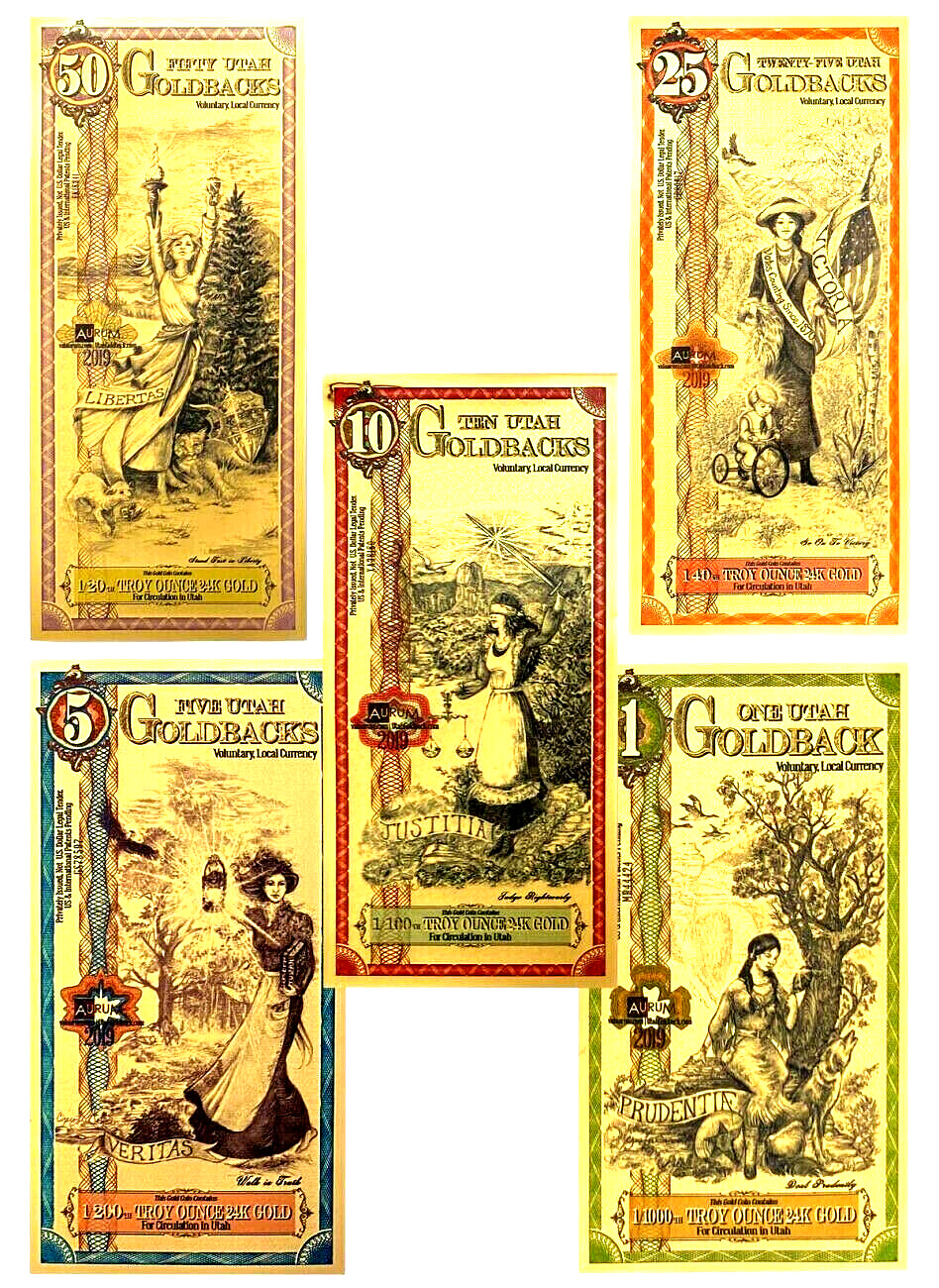
The one that started it all. Utah’s Goldbacks feature virtues like prudence, temperance, fortitude, and justice, fitting for the state that pioneered modern sound-money legislation. Early Utah notes — particularly limited releases and first printings — have appreciated meaningfully on the secondary market. If you’re building a collection, Utah is the cornerstone series. See our Utah Goldbacks Guide for the full breakdown.
Nevada (2020)
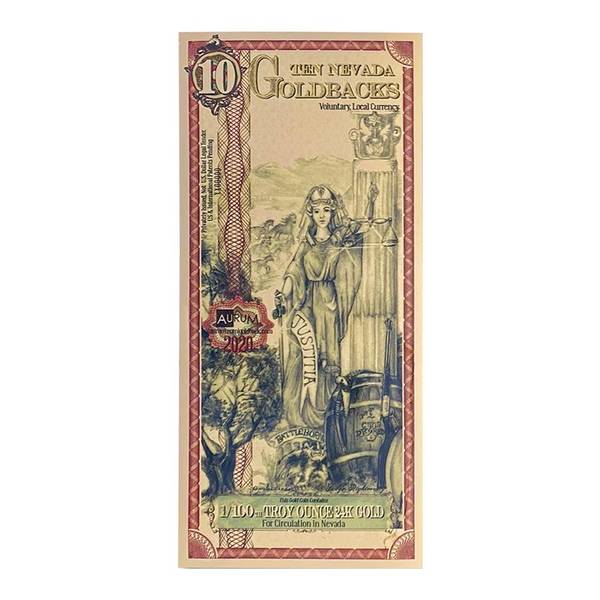
Nevada was a natural second state — a place with deep ties to mining, precious metals, and economic independence. The virtue themes reflect the Silver State’s frontier heritage. Nevada notes remain widely available and are a solid entry point for new collectors.
New Hampshire (2021)
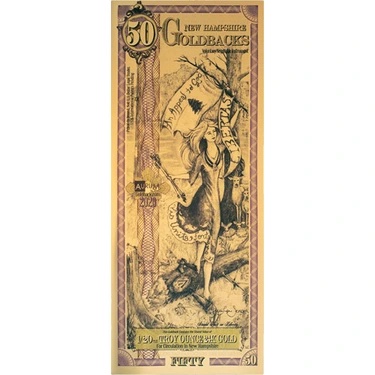
“Live Free or Die” and Goldbacks go together like you’d expect. New Hampshire’s series emphasizes liberty and self-governance, and the notes have found a loyal following among the state’s active sound-money community. The designs are some of the most distinctive in the lineup.
Wyoming (2022)
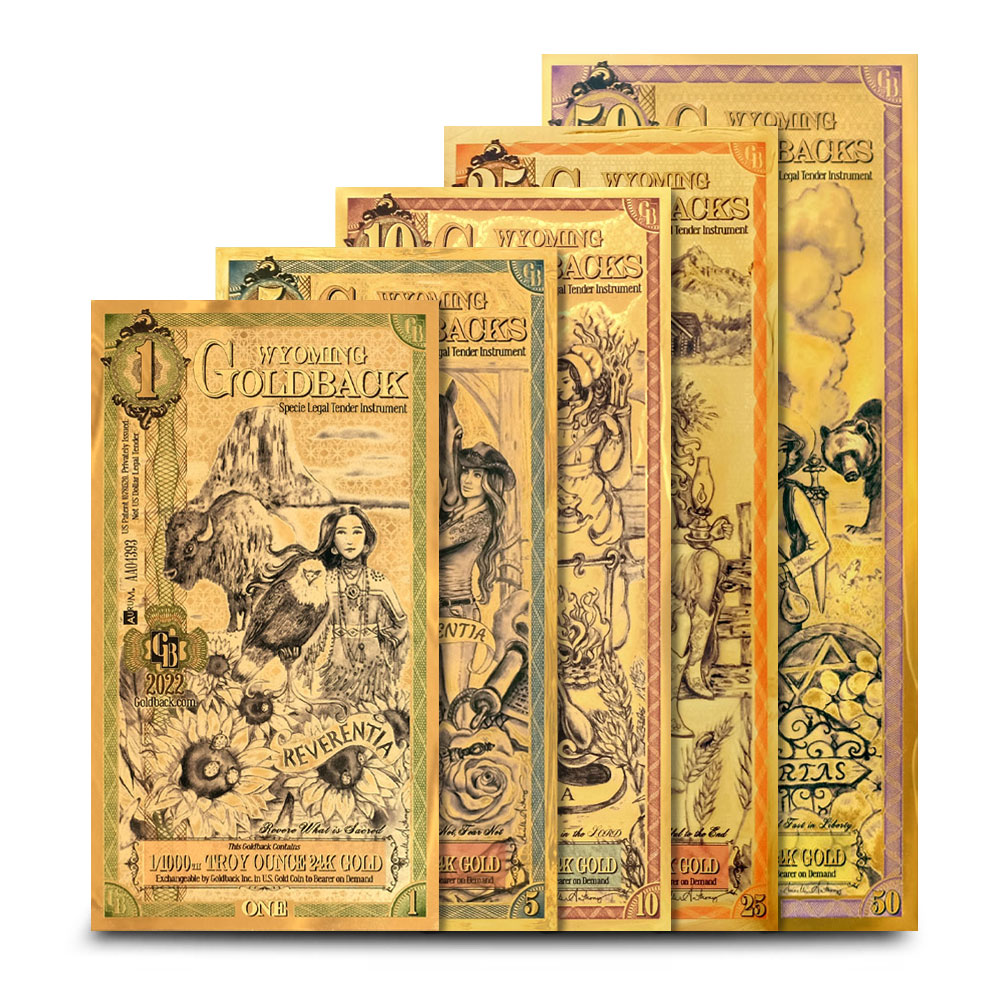
Wyoming brought frontier imagery and individual liberty themes to the series. The state’s small population but outsized commitment to personal freedom makes it a fitting addition — and Wyoming notes tend to be less widely held than Utah or Nevada, which some collectors view as an advantage.
South Dakota (2023)
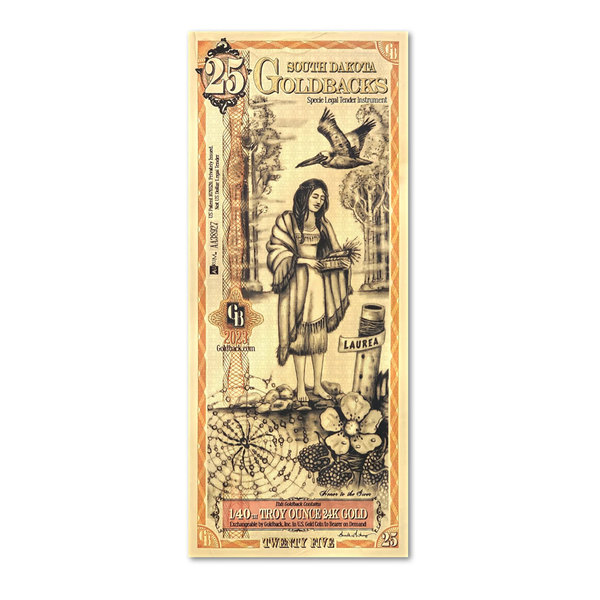
South Dakota expanded the Goldback movement to the Great Plains. The series emphasizes sound economic principles and state heritage. As a mid-run addition, South Dakota notes are readily available but haven’t built the same secondary-market premium as earlier states.
Florida (2024–2025)
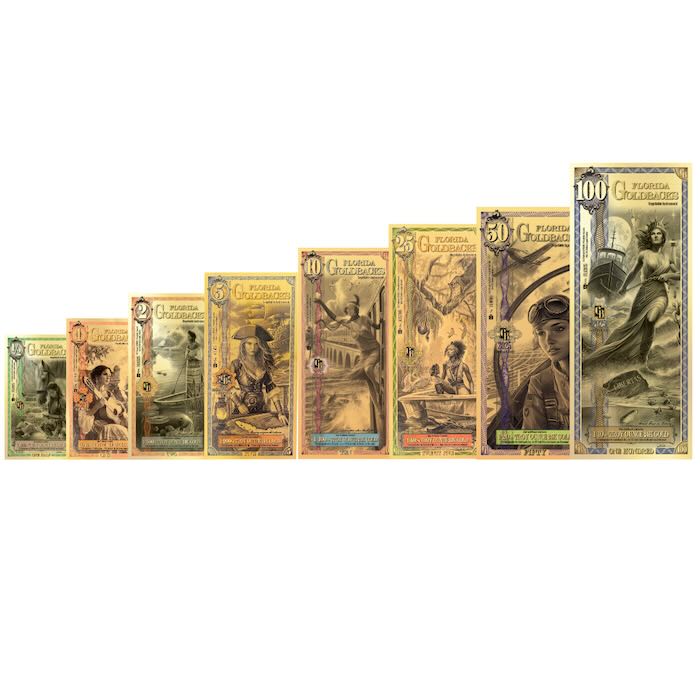
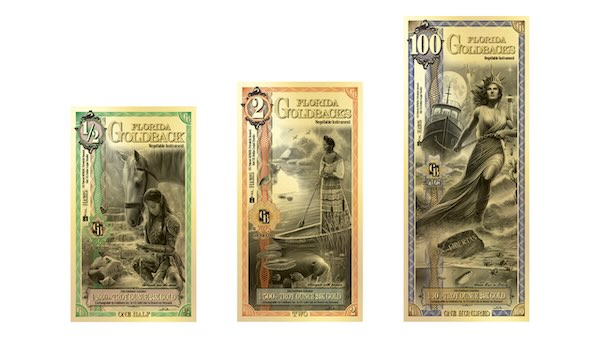
Florida was a milestone release for two reasons. First, it brought Goldbacks to a massive consumer market — Florida’s population and active precious metals buyer base made it the biggest audience a new series had reached. Second, it introduced three new denominations: the 1/2 Goldback, the 2 Goldbacks, and the 100 Goldbacks, expanding the denomination range significantly. Browse Florida Goldback pricing to compare current dealer offers.
Oklahoma (2025)

Oklahoma launched at the ANA World’s Fair of Money in Oklahoma City — a high-profile debut. The designs draw from the Chisholm Trail, the Land Run of 1889, Native American heritage, Route 66, and Tornado Alley. Oklahoma also introduced the limited-edition 3 Goldback (the Ingenium note), capped at just 4,000 pieces, making it one of the rarest Goldbacks produced. Our Oklahoma Goldback Series Guide covers every denomination and design in detail.
Arizona (2025)
Arizona Goldbacks began shipping in November 2025. The designs reflect desert landscapes, Native American heritage, and frontier history — virtues like Endurance, Strength, and Independence. Arizona follows the expanded eight-denomination structure introduced with Florida.
Idaho (2026)
The newest state in the lineup. Idaho Goldbacks are still building their collector base, but early interest has been strong. As the most recent series, Idaho notes are widely available at standard premiums — a good time to buy if you want to get in before any first-year collector premium develops.
Coming next: Colorado has been announced, and Goldback, Inc. has signaled continued expansion. Each new state means new designs, new collector interest, and a larger network where the notes carry legal recognition.
For live pricing on any state series, compare Goldback prices across dealers on our platform.
Goldback Denominations and Gold Content
Each Goldback denomination contains a precise, specified weight of .9999 fine gold. Knowing the structure helps you compare value across dealers and decide which notes fit your goals. For a deeper analysis of pricing and premium efficiency by denomination, see our Goldback Denominations Guide.
Complete Denomination Chart
| Denomination | Gold Content | Troy Oz | Notes |
|---|---|---|---|
| 1/2 Goldback | 1/2000 oz | 0.0005 oz | Introduced with Florida (2024). Smallest available. |
| 1 Goldback | 1/1000 oz | 0.001 oz | The standard entry-level note. |
| 2 Goldback | 1/500 oz | 0.002 oz | Introduced with Florida (2024). |
| 3 Goldback | 1/333 oz | ~0.003 oz | Limited edition only — e.g., Oklahoma’s Ingenium (4,000 minted). |
| 5 Goldback | 1/200 oz | 0.005 oz | Popular mid-range denomination. |
| 10 Goldback | 1/100 oz | 0.01 oz | Common standard denomination. |
| 25 Goldback | 1/40 oz | 0.025 oz | Larger collectible denomination. |
| 50 Goldback | 1/20 oz | 0.05 oz | High-value single note. |
| 100 Goldback | 1/10 oz | 0.10 oz gold | Introduced with Florida (2024). Same gold weight as a 1/10 oz Gold Eagle. |
A few things worth noting:
- The 1/2, 2, and 100 denominations didn’t exist before the Florida series. If you’re collecting pre-Florida states (Utah through South Dakota), the standard range is 1, 5, 10, 25, and 50
- The 3 Goldback is a limited early release (LER) denomination — it’s not part of the standard lineup. Oklahoma’s Ingenium edition is the most notable example
- Lower denominations carry higher percentage premiums but lower dollar premiums — we’ll get into why below
- For reference gold values, check gold price per gram or live spot charts
Understanding Goldback Premiums
If you’re new to Goldbacks, the pricing will surprise you. A 1 Goldback contains about $3 worth of gold at current spot prices, but it’ll cost you $6–8 at most dealers. A 100 Goldback contains roughly $300 of gold and sells for $550–650. Those premiums — typically 90% to 200%+ above melt — are the first thing every buyer notices.
Here’s why they exist:
Manufacturing is expensive. The Aurum vacuum deposition process, security printing, quality control, and per-note verification all cost money. Unlike gold bars that are poured in bulk, each Goldback requires individual production attention. That cost is relatively fixed per note regardless of denomination — which is why a 1 Goldback and a 100 Goldback cost roughly the same to produce, but the 100 has far more gold in it.
Collectibility adds value. Goldbacks aren’t purely bullion. The state-specific artwork, virtue themes, and limited editions create collector demand that pushes prices above what manufacturing costs alone would justify. Some early Utah notes trade at multiples of their original premium.
Currency utility has a price. In participating states, Goldbacks can be spent at merchants and exchanged at ATMs. That real-world usability — however limited — commands a premium over plain bullion that just sits in a safe.
Production volumes are small. Compared to the millions of American Gold Eagles or generic rounds minted annually, Goldback production runs are modest. Lower supply per product means higher per-unit cost.
What this means for buyers
The practical takeaway: shopping across dealers matters more for Goldbacks than for almost any other bullion product. We regularly see $3–4 per-note spreads on the same 1 Goldback across different dealers, and $20–50+ differences on the 100 denomination. On a 10-note purchase, that’s real money.
This is exactly what our Goldback price comparison is built for — live pricing from multiple dealers, updated regularly, so you can see who’s actually offering the lowest premium right now.
Also factor in shipping costs. A dealer showing $2 less per note can lose that advantage once $8 flat-rate shipping is added. Some dealers offer better pricing on bundled state sets or full denomination sets — always calculate your all-in cost.
Goldbacks as Currency: Where They’re Accepted
Goldbacks have achieved “specie legal tender” recognition in all nine states where they’re issued: Utah, Nevada, New Hampshire, Wyoming, South Dakota, Florida, Oklahoma, Arizona, and Idaho.
What “specie legal tender” actually means
This is a point that gets muddled online, so let’s be precise. Specie legal tender means a state has formally recognized that gold (in this case, in the form of Goldbacks) can be used to settle debts and conduct commerce within its borders. It does not mean Goldbacks are equivalent to U.S. government legal tender like Federal Reserve Notes.
The key differences:
- Acceptance is voluntary, not compulsory. A merchant can decline Goldbacks the same way they can decline a personal check
- There’s no fixed government exchange rate. Goldbacks are typically valued either at negotiated face value between parties or at spot-based pricing (gold price × gold content)
- Legal frameworks exist to protect transactions conducted with Goldbacks, but adoption is merchant-by-merchant
For more on how sound money legislation is evolving across states, see our coverage of sales tax laws on gold and silver and the Texas gold notes program.
Merchant acceptance in practice
The Goldback merchant network is growing, particularly in Utah and Nevada where the program has had the most time to develop. Participating businesses include restaurants, retail shops, service providers, and even some landlords. There are even merchants in Canada, Puerto Rico, Mexico, Costa Rica, an Panama that take Goldbacks! Goldback.com maintains a merchant directory on their website.
That said, merchant acceptance is still very niche. You’re not going to walk into a random gas station in Tampa and pay with Goldbacks. The currency works best in communities where sound money principles have an active following. Treating Goldbacks as your primary spending medium isn’t realistic today; treating them as a store of value that can be spent in certain contexts is more accurate.
Goldback ATMs
A growing network of Goldback ATM vending machines lets you buy (and sometimes sell) Goldbacks with cash. GoldATM has machines in Florida (Sawgrass Mills Mall in Sunrise), Utah, and Nevada, with expansion planned. These are convenient but typically carry higher premiums than online dealers — think 15–25% above dealer pricing. For locations and details, see our article on Goldback ATM machines in Florida.
Are Goldbacks a Good Investment?
This is the question everyone asks, and it deserves a straight answer — not a sales pitch.
The case for Goldbacks
Fractional gold access. The 1/2 Goldback contains roughly $1.50 worth of gold. There is no other legitimate bullion product that lets you own fractional gold in increments that small. For someone building a gold position gradually, that accessibility has real value.
Some early issues have appreciated. First-edition Utah Goldbacks and limited releases have developed meaningful collector premiums above their gold content. This isn’t guaranteed for newer series, but there’s a track record of first-year releases gaining value over time.
They hedge like gold does. The gold content provides the same inflation protection and portfolio diversification benefits as any physical gold holding. It just comes in a different format.
Growing legal infrastructure. Nine states and counting. As more states authorize Goldbacks and merchant networks expand, the utility argument gets stronger.
The honest concerns
Premiums are steep. You’re paying 90–200%+ above the gold value. If gold goes up 10%, your Goldback might go up 10% too — but you started from a cost basis that was double melt. Those premiums may not be fully recoverable on resale, particularly for common denominations from recent series.
Liquidity is thinner than mainstream bullion. Selling an American Gold Eagle is trivially easy — any dealer, any day, tight spread. Selling Goldbacks takes more effort. The secondary market is growing but it’s not comparable. Dealer buy-back spreads can run 5–10%, which eats into any appreciation.
They’re not the cheapest way to own gold. If your goal is accumulating gold weight at the lowest cost per ounce, Goldbacks aren’t the answer. Gold bars closest to spot or fractional gold coins will deliver substantially more gold per dollar.
Regulatory dependence. The entire Goldback ecosystem relies on continued state authorization, Valaurum’s manufacturing capacity, and merchant adoption. That’s more moving parts than a gold bar in your safe.
Where we come down
Goldbacks are best understood as a collectible with genuine gold content — not as a cost-efficient gold accumulation vehicle. They make the most sense for collectors who enjoy the artwork and state-by-state themes, sound money advocates who appreciate the currency aspect, people who want some gold in the smallest possible increments, and buyers who understand the premiums and are comfortable with them.
If you’re buying expecting to flip for a quick profit or recover full premium value on resale, you’ll likely be disappointed. If you’re buying because you appreciate what Goldbacks represent and enjoy collecting them, they’re a rewarding product. Just go in with clear expectations.
Collecting Goldbacks: Building a Set
The collecting side of Goldbacks is where a lot of the enthusiasm lives. There are several ways to approach it.
By state. One note from each state series (Utah through Idaho) gives you a nine-piece geographic collection. This is the most common starting approach and the easiest to expand as new states launch.
By denomination. Pick a favorite state and collect every denomination from 1/2 through 100. This showcases the full range of artwork and gold content within a single series.
By virtue theme. Each denomination depicts a different classical virtue — prudence, liberty, justice, perseverance, and so on. Some collectors follow a specific virtue across multiple state series.
Limited editions and LERs. Limited Early Releases and rare denominations (like Oklahoma’s 3 Goldback Ingenium, capped at 4,000 pieces) attract the most serious collectors. These notes trade at significant premiums and can be difficult to source after initial release.
First printings. Early Utah notes from 2019 remain the most avidly collected Goldbacks. Their historical significance as the first-ever Goldback series gives them lasting appeal.
Storage tips
Treat Goldbacks like you’d treat valuable currency or documents:
- Store flat — never fold, crease, or bend
- Use archival-quality, non-PVC protective sleeves
- Keep in a cool, dry environment away from humidity
- Catalog your collection with serial numbers, states, denominations, and purchase prices
- Insure significant collections and document with photographs
Secondary market
Active Goldback trading happens on eBay, WhatNot, Reddit’s precious metals communities (r/Pmsforsale), local coin shops, and peer-to-peer sales. Prices on the secondary market can swing based on rarity, state popularity, condition, and current gold spot. Tracking your collection’s value over time helps you understand which notes are appreciating and which are holding steady.
How to Verify Authenticity
With premiums as high as they are, counterfeit risk is worth thinking about — especially if you’re buying on secondary markets.
UV penlight test (2025+ series): Hold the note under UV light. Authentic notes from recent series contain UV-reactive ink that glows. This is the fastest first-pass authentication check. Goldback sells an official Penlight for this purpose.
Microtext examination: Under a 10x jeweler’s loupe, authentic Goldbacks show razor-sharp, cleanly printed microtext. Counterfeits will look blurry or uneven under magnification.
Weight verification: Each denomination has a precise gold weight. A scale accurate to 0.01 grams can confirm whether the note is within spec. Even small deviations from the expected weight are a red flag.
Serial number formatting: Authentic notes follow a consistent serial number format and print position. Inconsistencies suggest a closer look is warranted.
The simplest protection: Buy from established dealers. The dealers we track on FindBullionPrices.com have direct relationships with Goldback distributors and stand behind what they sell. That’s not a guarantee you’ll get on eBay.
Where to Buy Goldbacks
We’ve written a full guide on this: Where to Buy Goldbacks: Dealers, ATMs, and Online Marketplaces.
Online dealers offer the widest selection and usually the most competitive pricing. Major carriers include APMEX, SD Bullion, JM Bullion, Hero Bullion, BGASC, and Monument Metals — but prices vary noticeably between them. Compare live Goldback pricing before you buy.
Goldback ATMs in Florida, Utah, and Nevada offer instant over-the-counter purchasing. Convenient but pricier. See our Goldback ATM coverage for locations.
Local coin shops in participating states sometimes carry inventory. Premiums tend to be higher than online, but you get immediate availability.
Secondary marketplaces (eBay, forums, WhatNot) work well for limited editions and hard-to-find notes, but require careful seller vetting.
The bottom line: don’t buy from the first source you find. Premiums on the same product can vary 10–20% between sellers, and comparison shopping is the single easiest way to keep more money in your pocket.
Frequently Asked Questions
What are Goldbacks?
Goldbacks are privately issued currency notes containing .9999 fine 24-karat gold bonded between polymer layers using Valaurum’s Aurum technology. Nine U.S. states recognize them as specie legal tender, and they function as both collectible bullion and a voluntary medium of exchange.
Are Goldbacks made of real gold?
Yes. Every Goldback contains a precisely measured amount of .9999 fine gold — from 1/2000 oz in the 1/2 Goldback up to 1/10 oz in the 100 Goldback. The gold is vacuum-deposited onto the polymer substrate and is genuine, pure gold.
Which states have Goldbacks?
As of 2026: Utah, Nevada, New Hampshire, Wyoming, South Dakota, Florida, Oklahoma, Arizona, and Idaho. Colorado and additional states have been announced for future release.
Are Goldbacks legal tender?
They’re recognized as “specie legal tender” in participating states — meaning they can legally be used to settle debts where state law allows. They are not U.S. government legal tender, and acceptance is voluntary. A merchant can choose to accept or decline them.
How much gold is in a Goldback?
It depends on the denomination. A 1 Goldback contains 1/1000 oz. A 5 Goldback contains 1/200 oz. A 100 Goldback contains 1/10 oz — the same gold weight as a 1/10 oz American Gold Eagle, just in a very different format. See the denomination chart above for the full breakdown.
Are Goldbacks a good investment?
That depends entirely on your goals. For pure gold accumulation at the lowest cost per ounce, traditional bullion closest to spot is more efficient. For collectors who appreciate the designs, the alternative-currency aspect, and the fractional gold access, Goldbacks can be a rewarding addition. Just understand that the premiums you pay may not be fully recoverable on resale.
Can I spend Goldbacks?
In participating states, yes — at merchants who voluntarily accept them. The network is growing, particularly in Utah and Nevada, and Goldback ATMs provide another exchange option. Realistically, though, acceptance is still limited. Most holders treat them primarily as a collectible and store of value.
How do I verify a Goldback is authentic?
UV penlight test for 2025+ series, microtext examination under magnification, weight verification with a precision scale, and serial number formatting checks. Buying from reputable dealers tracked on price comparison platforms is the simplest way to avoid counterfeits.
What’s the most valuable Goldback?
Early Utah limited editions and first printings command the highest premiums. Limited Early Releases (LERs) and rare denominations like the Oklahoma 3 Goldback Ingenium are also highly sought after. Rarity, condition, state popularity, and collector demand all influence value beyond the gold content.
Disclaimer
This article is educational and informational only. It is not financial advice, investment advice, or a recommendation to buy or sell Goldbacks. The information here is based on publicly available sources and market conditions as of the publication date.
A few things to keep in mind:
- Premiums above spot gold prices may not be recoverable on resale
- The Goldback secondary market is smaller and less liquid than markets for sovereign bullion coins, which creates wider buy-sell spreads
- Regulatory changes could affect Goldback acceptance or value in any state
- Past appreciation of early releases does not guarantee future appreciation of newer releases
- Goldbacks are not a substitute for a diversified investment portfolio
- FindBullionPrices.com is a price comparison platform — we provide tools to help you compare dealer prices, not recommendations on what to buy
Always consult a qualified financial advisor before making significant precious metals purchases. Your decisions should be based on your personal situation, goals, and risk tolerance.
Last updated: March 2026
For current Goldback pricing, compare prices across dealers. Prices change daily with gold spot rates and dealer inventory.