Silver bars come in a much wider range of sizes than coins — from 1-gram fractional pieces to 1,000-oz institutional bars. Each size hits a different point on the same tradeoff: smaller bars give you flexibility and easy entry but cost more per ounce; larger bars compress your premium but require more capital, storage, and patience to sell.
This guide covers every common size, what makes each one distinctive, and which weights make sense for which strategies. For live pricing across every size, compare silver bar prices by weight.
Quick Reference: Silver Bar Sizes at a Glance
| Size | Weight | Typical Premium | Liquidity | Best For |
|---|---|---|---|---|
| 1g–5g fractional | 1–5 grams | 30–80% | Low | Gifts, starter purchases |
| 1 oz | 31.1 g | 5–20% | Very high | Most retail buyers |
| 5 oz | 155.5 g | 6–15% | Medium | Niche; usually skip |
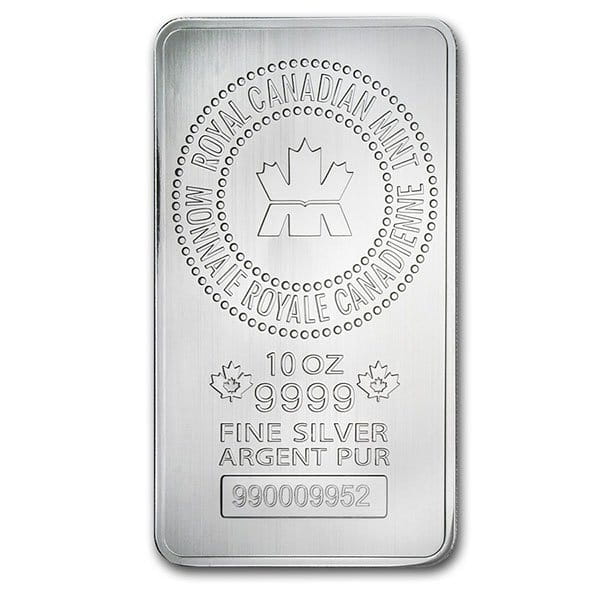
| 10 oz | 311 g | 4–12% | High | Intermediate stackers |
| 20 oz | 622 g | 4–10% | Medium | Niche; usually skip |
| Kilo (32.15 oz) | 1,000 g | 3–8% | High (branded) | Serious stackers |
| 100 oz | 3.11 kg | 2–7% | Medium | Long-term core holdings |
| 1,000 oz | 31.1 kg | 0.5–3% | Institutional only | COMEX / vault holdings |
Premium ranges reflect typical market conditions across cycles. As of April 2026, premiums are at the low end or below these ranges due to compressed wholesale margins.
Fractional and Gram Bars (1g–5g)
Fractional bars are the most expensive silver you can buy on a per-ounce basis — premiums of 30–80% are normal because dealer handling, packaging, and certification costs don’t scale down. They make sense as gifts, novelty items, or absolute-beginner purchases, but they’re a poor choice for accumulation. A 1 gram silver bar is roughly the size of a postage stamp; common producers include PAMP Suisse, Valcambi, and Heraeus.
1-Ounce Silver Bars
The retail standard. Liquid, instantly recognizable, easy to handle and store, and competitively priced at typical premiums of 5–20% over spot. Producers include Johnson Matthey, Sunshine Mint, Engelhard, Silvertowne, APMEX, and dozens of regional refiners. Vintage Engelhard and Johnson Matthey bars carry a small numismatic premium among collectors. The downside is the per-ounce premium is meaningfully higher than larger bars — fine for small positions, expensive at scale.
Compare 1 oz silver bars →
5-Ounce Bars
Less standardized than 1-oz or 10-oz, which paradoxically makes them less liquid in secondary markets despite their middle-of-the-road weight. The per-ounce savings over 1-oz bars are real but modest, and most stackers jump straight to 10-oz instead. Silvertowne and Sunshine Mint are the dominant producers found in the secondary market, with modern designs from Germania Mint, Golden State Mint, and others.
Compare 5 oz silver bars →
10-Ounce Bars
The intermediate stacker’s workhorse. Heavy enough to deliver real per-ounce savings versus 1-oz, light enough to handle and store without special equipment, and liquid enough to sell easily. A 10 oz silver bar weighs about 311 grams (~11 oz avoirdupois) and measures roughly 4.7 × 2.4 × 0.6 inches. Wide producer selection — Johnson Matthey, APMEX, Silvertowne, Sunshine Mint, and others. This is often the natural upgrade from 1-oz bars for growing portfolios.
Learn why 10 oz silver bars hit the sweet spot for investors →
Compare 10 oz silver bars →
20-Ounce Bars
A niche format. The per-ounce improvement over 10-oz is marginal, manufacturer selection is limited (such as the Scottsdale Mint 20 oz Long Pour, and vintage bars), and liquidity is weaker than either 10-oz or kilo bars. Most stackers skip past this size in favor of going directly to kilos.
Kilo Bars (32.15 Troy Ounces)
The first major step down the premium curve. A kilo bar (1,000 grams = 32.15 troy oz) typically trades at 3–8% over spot, which is meaningfully cheaper per ounce than 10-oz bars. PAMP Suisse, Valcambi, and Heraeus dominate the branded market and carry the tightest bid-ask spreads globally. The kilo is the format where casual collecting transitions into deliberate wealth preservation. Silver kilos are substantial enough to require secure storage but still hand-portable.
Compare Kilo silver bars →
100-Ounce Bars
The retail-accessible institutional format. Premiums compress to 2–7% over spot, and at current dealer pricing some 100 oz silver bars trade near spot. A 100-oz bar weighs about 3.1 kg (6.86 lbs) and measures roughly 9.8 × 2.8 × 1.4 inches. Johnson Matthey vintage 100-oz bars are particularly sought after. The tradeoffs: large capital commitment, real storage requirements (not a bedroom safe), and slower resale than 1-oz or 10-oz formats.
Compare 100 oz silver bars →
1,000-Ounce Bars (COMEX and Institutional)
The unit used in COMEX silver futures contracts. At 1,000 troy ounces (31.1 kg / 68.6 lbs), these bars are essentially commodities — premiums shrink to 0.5–3% over spot, but you need vault storage, insurance, industrial handling equipment, and the capital to deploy six figures into a single bar. Not relevant for individual investors unless you’re managing a multi-million-dollar precious metals allocation.
Compare 1000 oz silver bar prices →
Why Bigger Bars Are Cheaper Per Ounce
Dealer costs — packaging, assaying, certification, insurance, handling — don’t scale proportionally with bar weight. The cost to certify and ship a 1-oz bar is similar to the cost for a 5-oz bar, so spread across fewer ounces, the per-ounce markup grows. That’s why the premium curve tilts hard against small bars.
The math compounds at scale. At $80 spot silver, stacking 100 oz across formats:
- 100 × 1-oz bars at 12% premium: $960 over spot
- 10 × 10-oz bars at 8% premium: $640 over spot
- 1 × 100-oz bar at 4% premium: $320 over spot
Same 100 ounces of silver, but the largest format costs you $640 less in unrecovered premium. Over years of stacking, the differences run into thousands of dollars.
That said, premium isn’t the only factor: capital, storage, and liquidity needs matter too. A new investor can’t reasonably start with 100-oz bars; an institution shouldn’t waste time with 1-oz bars.
Choosing the Right Size for Your Portfolio
Most serious stackers run “laddered” portfolios — a base of kilo or 100-oz bars for core holdings, with 10-oz and 1-oz bars layered in for divisibility and flexibility. Use the silver bars comparison tool to see live premiums by weight, and check the closest-to-spot page for the cheapest silver bars sorted by lowest premium across dealers.
For more depth, see how to buy silver bars, which are the best silver bars to buy, or silver bars vs. coins if you’re comparing formats.
Frequently Asked Questions
What’s the most popular silver bar size? The 1-oz bar is the most popular by unit count for retail buyers. By total ounces purchased, 10-oz and kilo bars dominate — most serious stackers concentrate volume there to reduce per-ounce premium.
Should I buy one large bar or several smaller ones? Larger bars are cheaper per ounce; smaller bars are more flexible to sell. Most serious investors ladder both — a kilo or 100-oz core for cost basis, plus 10-oz and 1-oz bars for divisibility.
Are vintage bars worth more than new ones? Older Johnson Matthey, Engelhard, and other defunct-refiner bars carry a small collector premium (typically 2–5%) over current production. As pure silver content, they’re equivalent.
How do I store large silver bars? Home safes work for up to ~10–20 kilos. Beyond that, most stackers use bank safe deposit boxes or private vault services (typical fees: 0.5–1% annually). Insure stored silver against theft and loss either way.