Buying silver bars is straightforward once you understand four things: how premiums work, where to buy, how to authenticate what you receive, and how to size your purchases. This guide covers each.
How Premiums Actually Work
Spot silver is the wholesale commodity price set by COMEX futures. Every retail purchase adds a premium on top — the dealer’s cost of fabrication, distribution, marketing, and margin. Premiums are not fixed; they vary by:
- Bar size. Smaller bars carry higher per-ounce premiums because dealer handling costs don’t scale down. A 1-oz bar might trade at 5–15% over spot while a 100-oz bar trades at 2–7%.
- Market conditions. During tight supply in tight-supply periods premiums spike. During oversupplied markets (April 2026 right now), premiums compress to record lows — secondary market sovereign coins moving, some 100-oz bars at spot.
- Payment method. Wire transfer and ACH/check get the lowest dealer pricing. Credit cards add 2–4% in processor fees. Crypto varies by dealer; some offer crypto discounts, others don’t.
- Brand. Recognized refiners (PAMP Suisse, Valcambi, Johnson Matthey) carry small premiums over generic bars; the tradeoff is tighter resale spreads.
Compare live pricing across sizes and dealers to buy silver bars at the best price.
Where to Buy
Major online dealers (APMEX, JM Bullion, Bullion Exchanges, SD Bullion, Monument Metals, Provident) dominate retail volume. They offer wide selection, reliable shipping, established return policies, and competitive pricing on standard products. New-customer promotions and silver t spot deals run regularly. Usually, there are several silver-at-spot offers active across multiple dealers.
Smaller specialized dealers sometimes beat the majors on niche products, secondary-market bars, or specific refiners. They’re worth tracking if you buy silver bars regularly and want flexibility on payment terms or specific brands.
Marketplaces. eBay can produce strong prices from dealer storefronts and private sellers, but authentication risk is real — buy only from sellers with deep transaction histories and clear return policies. Costco regularly stocks silver and gold bars and surfaces competitive pricing for members, though selection is narrow and inventory is generally low.
Local coin shops. Higher premiums (typically 10–25% over spot) reflect retail overhead and limited local competition, but you handle the bar in person, take immediate delivery, and avoid shipping risk. Worth maintaining a relationship if you buy regularly or want quick verification on larger purchases. Pawn shops occasionally carry bars at lower prices but with higher authentication risk.
The cheapest dealer for a 1-oz bar today is rarely the cheapest for a 10-oz or kilo bar at the same moment. Use the closest-to-spot comparison tool to spot-check by weight before you buy.
Picking Your Bar Size
Bar weight controls your per-ounce cost and your divisibility when you sell. The fast version:
- 1-oz bars: Highest premium, maximum liquidity, easiest to sell partial positions.
- 10-oz bars: Best balance of cost efficiency and divisibility for most stackers.
- Kilo and 100-oz bars: Lowest premiums; large capital commitment per piece; slower resale.
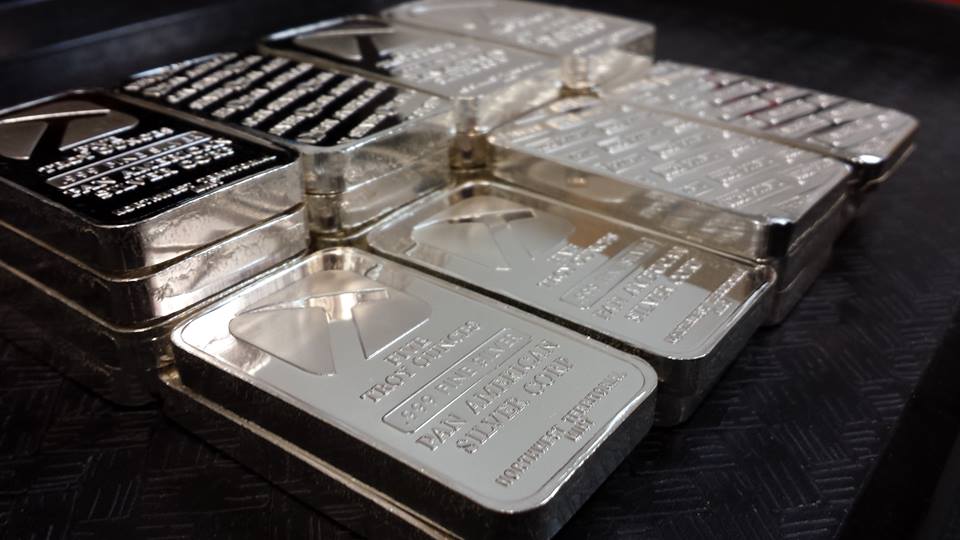
Most serious buyers ladder a few sizes — kilo or 100-oz for the cost-basis-efficient core, 10-oz for the working layer, 1-oz for divisibility. For a full size-by-size breakdown with weights, dimensions, and premium ranges, see silver bar sizes guide.
Verifying Authenticity
Reputable dealers guarantee authenticity, so for standard purchases the most important step is buying from established dealers with strong return policies. For self-verification on larger purchases or secondary-market bars:
- Weight and dimensions. Match against published specs for that bar’s brand and weight. A digital scale accurate to 0.1g and calipers are sufficient.
- Magnet test (slide test). Silver is diamagnetic — it weakly repels magnetic fields. A neodymium magnet placed on a tilted silver bar should slide down slowly, not stick or fall freely. If a magnet sticks, the bar is likely fake (steel core under silver plating).
- Ping test. Useful for coins, less reliable for bars — bars don’t ring as cleanly. Skip this for bars and rely on weight and the slide test.
- Specific gravity test. For high-value bars, this measures volume vs. weight against silver’s known density (10.49 g/cm³). A precision scale and a beaker of water are all you need.
- Sigma Precious Metals Verifier. Conductivity-based testing, used by most coin shops, definitive for any standard bar. Worth using for any purchase over a few thousand dollars.
Certificates of authenticity have minimal resale impact. The bar itself — weight, purity, recognizable refiner mark — is what carries value.
Storage
Up to ~10–20 kilos of silver, a quality home safe (TL-rated, bolted down) plus homeowner’s insurance with a precious metals rider is sufficient for most owners. Standard homeowner’s policies usually cap precious metals coverage at $1,000–$2,500 — get a separate scheduled rider if you’re storing more.
Beyond ~20 kilos, the math typically favors a private vault service (Brinks, Loomis, IDS) or a bank safe deposit box. Vault services charge 0.5–1% annually but include insurance; bank boxes are cheap but uninsured (and FDIC does not cover safe-deposit contents). For long-term core holdings, vault storage is usually the right call.
Buying in the Current Market
Silver premiums fluctuate with market conditions. During periods of tight supply, premiums spike — sometimes doubling or tripling normal levels. During oversupplied markets, premiums compress and spot-price deals appear across multiple dealers. Whatever the current conditions, the silver at spot deals page shows which promotions are active right now, and the closest-to-spot silver page identifies the lowest available premium at any given moment.
For systematic stacking, dollar-cost averaging removes timing decisions and works well across cycles. For lump-sum buys, premium compression matters as much as spot-price timing — a 5-percentage-point premium difference on a 100-oz bar is 5 oz of silver.
Frequently Asked Questions
What premium should I expect to pay? For 1-oz bars: typically 5–15% over spot in normal markets, lower right now. For 10-oz: 4–10%. For 100-oz: 2–7%. Pay by wire or ACH to avoid the 2–4% credit-card surcharge.
Is it safe to buy silver bars online? Yes, from established dealers. The major online bullion dealers process millions in orders annually with strong safety records. Stick to dealers with verified review histories, clear return policies, and insurance on shipments.
Should I buy 1-oz or larger bars? Depends on capital and timeline. New buyers usually start with 1-oz or 10-oz for ease of liquidity. Larger stackers concentrate in 10-oz, kilo, or 100-oz bars to compress per-ounce premium. Most experienced buyers run a ladder of sizes.
How do I verify a silver bar is authentic? Weight and dimensions against published specs, then a neodymium magnet slide test (a magnet should not stick — silver is non-magnetic). For high-value bars, specific gravity or a Sigma Verifier provides definitive confirmation. Buying from established dealers with guarantees handles this for you on standard purchases.