Should you buy gold coins or gold bars? It’s one of the most common questions new precious metals investors face, and the answer depends on what you’re optimizing for: lowest premium per ounce, maximum liquidity at resale, portfolio diversification, or some combination of all three. Both formats give you physical gold ownership, but they differ meaningfully in premiums, recognition, security features, and practical considerations like storage and divisibility.
This guide breaks down the practical differences to help you decide which format — or which combination — makes the most sense for your situation.
Premiums: Bars Generally Cost Less Per Ounce
Gold bars typically carry lower premiums over the spot price than gold coins. The reason is straightforward: bars are cheaper to produce. A 1 oz gold bar requires less die work, no edge reeding, simpler packaging, and fewer anti-counterfeiting features than a sovereign bullion coin. This production cost difference flows through to the buyer.
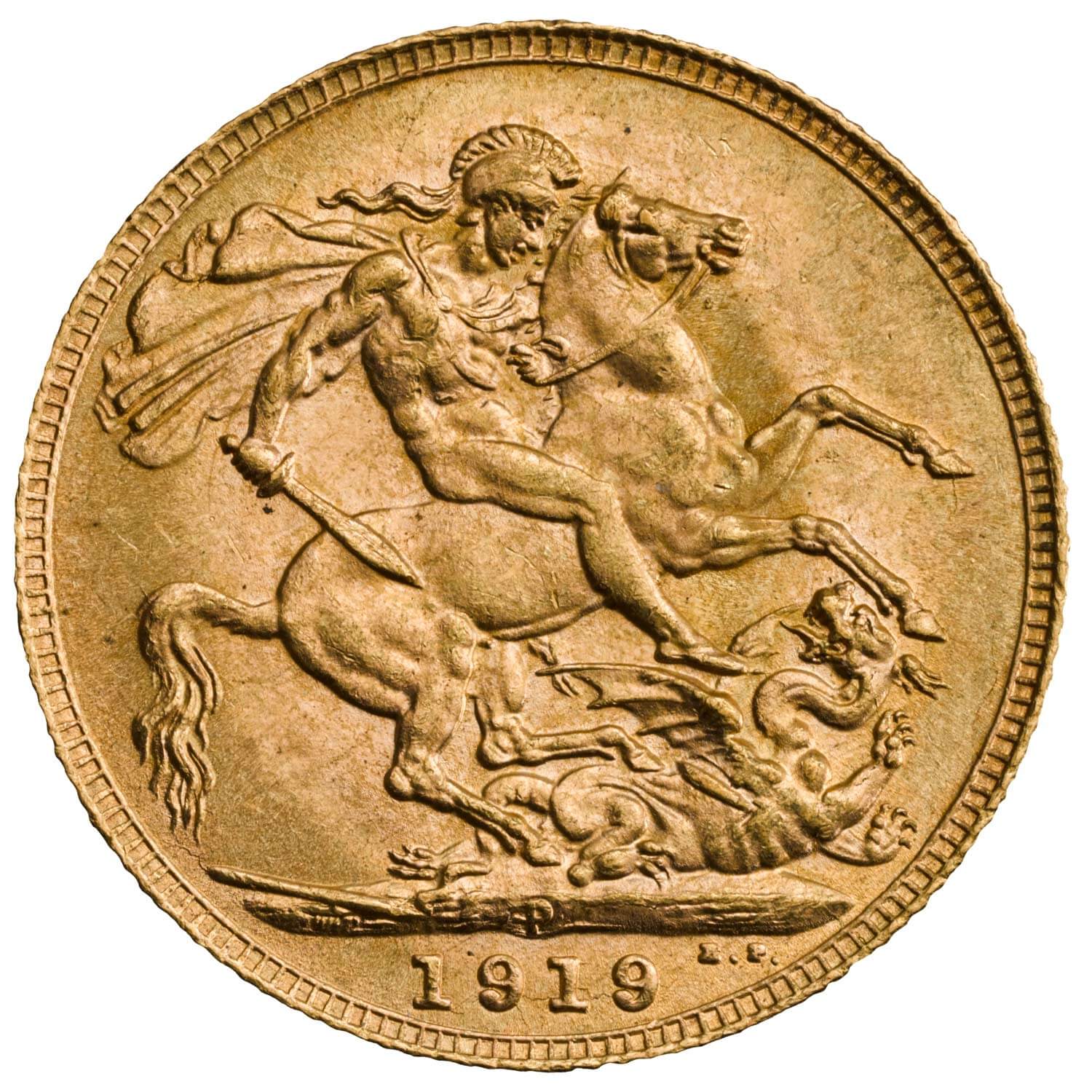
Among sovereign gold coins, premiums vary significantly. The American Gold Eagle tends to carry the highest premiums due to strong domestic demand. The Austrian Philharmonic and South African Krugerrand typically offer the lowest premiums among sovereign coins. The Canadian Maple Leaf and British Britannia fall somewhere in between.
Bars from major refiners like PAMP Suisse, Valcambi, and Argor-Heraeus generally price below all of these coins on a per-ounce basis. For investors whose primary goal is to acquire the maximum number of gold ounces for a given budget, bars offer a clear mathematical advantage.
However, the premium gap narrows significantly at the 1 oz size. The difference between a 1 oz gold bar and a 1 oz Gold Philharmonic or Krugerrand might be $20–40 — meaningful in aggregate but modest on a single purchase. The gap widens more dramatically at larger sizes: a 10 oz or kilo bar will carry a substantially lower per-ounce premium than the equivalent weight in coins.
Liquidity and Recognition at Resale
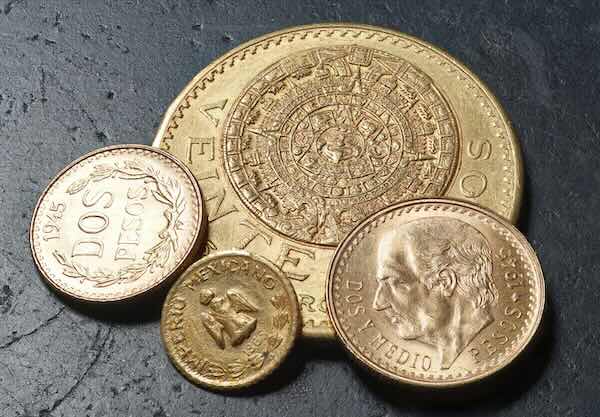
This is where sovereign coins hold their strongest advantage. A Krugerrand, Maple Leaf, or Gold Eagle is instantly recognized by every coin dealer, pawn shop, and private buyer in the world. The design, weight, purity, and government backing are known quantities. Selling is straightforward and typically commands a competitive buyback price.
Bars from major LBMA-accredited refiners (PAMP, RCM, Valcambi, Perth Mint) are also widely recognized and liquid, particularly when they remain in their sealed assay packaging with serial numbers intact. However, bars from lesser-known refiners or without assay cards may require additional verification at the time of sale, which could mean a slightly lower buyback price or a longer transaction.
For investors who plan to sell in smaller increments over time, 1 oz coins offer an inherent advantage: each coin is a self-contained, recognizable unit. A 10 oz bar can’t be easily divided if you only want to sell 2 ounces of gold.
Security and Counterfeiting Risk
Modern sovereign coins incorporate increasingly sophisticated anti-counterfeiting technology. The Canadian Maple Leaf’s micro-laser engraving, radial lines, and Bullion DNA database represent the current state of the art. The Britannia features surface animation technology. These features make counterfeiting significantly more difficult and authentication significantly easier.
Gold bars rely primarily on sealed assay cards, serial numbers, and the refiner’s reputation for authentication. PAMP’s Veriscan technology and the Perth Mint’s serialization offer additional verification options. However, as a general rule, coins from major sovereign mints are harder to counterfeit than bars, which may matter more for investors who buy in the secondary market or plan to resell to private parties rather than established dealers.
Storage and Portability
Bars are more space-efficient than coins, particularly at larger sizes. A 10 oz gold bar takes up significantly less room than ten individual 1 oz coins in tubes or capsules. For investors building larger positions who use vault storage or a safe deposit box, this can be a practical consideration.
Coins, on the other hand, are more portable in the divisibility sense. Traveling with or storing ten 1 oz coins gives you ten separate units you can access, sell, or gift individually. A single 10 oz bar is all-or-nothing.
IRA Eligibility
Both gold coins and gold bars can qualify for inclusion in a self-directed precious metals IRA, provided they meet the IRS purity requirements (.995 for gold). All of the major sovereign coins — Maple Leaf, Philharmonic, Britannia, Kangaroo, and Krugerrand — meet this threshold, as do bars from LBMA-accredited refiners like PAMP, Valcambi, and RCM. The American Gold Eagle is a special case: despite its .9167 fineness, it is specifically allowed in IRAs by statute.
For IRA purposes, the choice between coins and bars is primarily a premium and liquidity decision rather than an eligibility one.
Themed and Specialty Bars
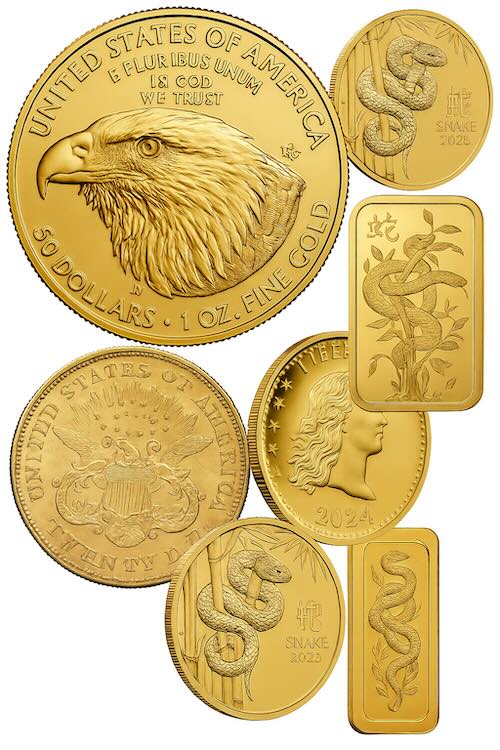
Some gold bars carry collectible premiums beyond their metal content. The PAMP Suisse and Royal Canadian Mint Year of the Horse bars are a current example — their lunar zodiac designs create collector demand that standard bars don’t generate. PAMP’s Lady Fortuna series similarly carries premiums above generic bars due to its iconic design. For investors interested in gold bars with a collectible dimension, these themed products bridge the gap between bars and coins.
Which Should You Buy?
The right answer depends on your priorities. Here’s a practical framework:
Choose bars if: Your primary goal is minimizing premium per ounce. You’re building a larger position (10+ oz) and want maximum gold for your budget. You have secure storage and don’t need the divisibility of individual coins. You’re buying from and plan to sell to established dealers (reducing authentication friction).
Choose coins if: You value maximum liquidity and global recognition at resale. You want the anti-counterfeiting security features that sovereign mints provide. You prefer the flexibility to sell in 1 oz increments. You may sell to private parties or in markets where instant recognition matters.
Consider both if: You want to diversify across format as well as metal. Holding a mix of sovereign coins for their liquidity and bars for their lower premiums can give you the advantages of each format.
Compare Prices Across Formats
The best way to evaluate the coins-vs-bars decision on any given day is to compare current premiums across products. The premium gap fluctuates with market conditions and dealer inventory.
Find the lowest-premium gold products available today →
Compare 1 oz Gold Bar prices →
For a detailed look at the most popular sovereign gold coins, see our guide to the top 10 gold coins for investors.
This article is for informational purposes only and does not constitute financial or investment advice. Precious metals carry market risk, and past performance does not guarantee future results. Always conduct your own research and consult with a qualified financial advisor before making investment decisions.