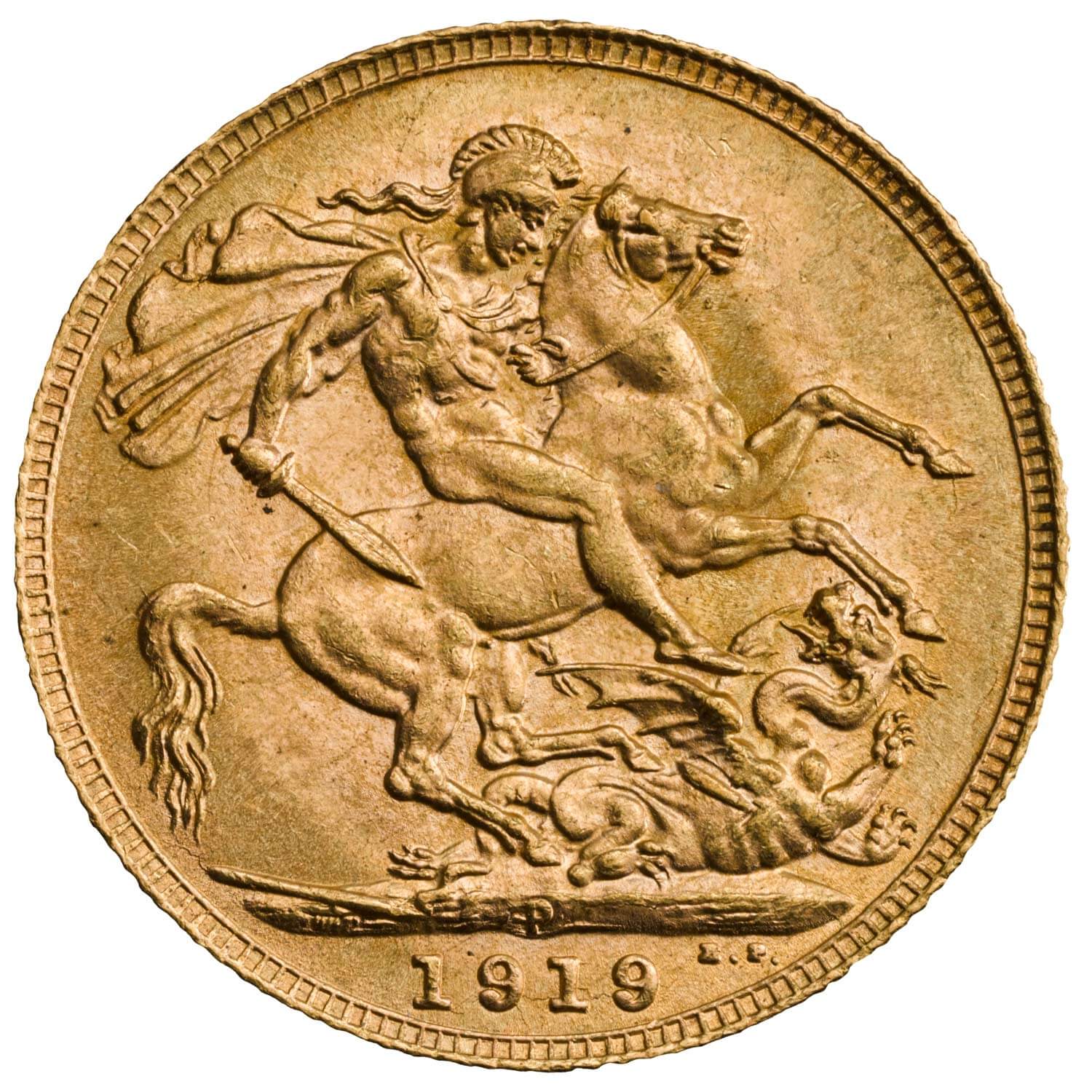
The idea is simple: buy a gold bar from Costco, earn 4% back in credit card and membership rewards, then sell the bar to a dealer or coin shop at or near the spot price. If Costco’s markup is 2% and your rewards are 4%, the math suggests you bought gold below spot and can sell it for an instant profit.
Thousands of people are running this trade. Third-party restock trackers scan Costco’s precious metals page every 30 seconds and push alerts the moment inventory appears. A subscription flip calculator tracks live dealer bids against Costco’s current price and tells you the exact margin on each product. The trade has gone from a Reddit curiosity to something with its own infrastructure.
But does the math actually work? The answer depends on a handful of specific variables, and getting any one of them wrong can turn a profitable trade into a loss. Here is the full breakdown with current numbers.
How the 4% Rewards Stack Works
The profit in a Costco gold flip does not come from Costco underpricing their gold. It comes from stacking two separate rewards programs that together return 4% of the purchase price.
Executive Membership (2%). Costco’s $130/year Executive tier earns a 2% annual reward on qualifying purchases, including precious metals. The reward is capped at $1,250 per year, which means it maxes out at $62,500 in total Costco spending. The reward is issued once per year as a certificate redeemable at any U.S. warehouse. It is not instant cash.
Costco Anywhere Visa by Citi (2%). This card earns 2% cash back on all Costco and Costco.com purchases. The cash back is issued as an annual reward certificate in February, redeemable at Costco through year-end. Certificates over $300 can be deposited to a bank account through the Citi app. Any flat-rate 2% cash back card (such as the Citi Double Cash) produces the same result.
Combined, the two programs return 4% of every gold purchase. For the detailed math on how this stack works, including the breakeven analysis, see the Costco rewards stacking guide.
The Flip Math on a 1 oz Gold Bar
With gold near $4,362 per ounce, here is what a single 1 oz bar flip looks like under favorable conditions.
Buy side. Costco lists a 1 oz PAMP Suisse Lady Fortuna bar at approximately 2% over spot: $4,449. Your 4% rewards return $178, bringing the effective cost to $4,271.
Sell side. An online dealer or bullion marketplace pays approximately 99% of spot for a sealed PAMP bar in its original assay card: $4,318. A local coin shop might pay 98% of spot: $4,275.
Net result. At the dealer price, the profit is $4,318 minus $4,271 = $47 per bar. At the coin shop price, $4,275 minus $4,271 = $4 per bar. On the 100 gram bar (3.215 troy ounces), the numbers scale up: at a 1.9% Costco premium and a 99% dealer bid, the profit can reach $200 to $330 per bar because the absolute dollar value of the 4% cashback is larger on a higher-priced item.
Without the rewards stack, there is no flip. Remove the 4% cashback and your effective cost is the full $4,449. Selling at 99% of spot ($4,318) produces a $131 loss. The entire trade depends on the rewards.
What Kills the Trade: Sales Tax
Sales tax is the single variable that determines whether the flip works or does not work. It is binary: in a tax-exempt state, the math can be profitable. In a state that taxes bullion, the math fails immediately.
Roughly 44 states exempt gold bullion from sales tax in some form. The states that still tax it include Vermont, Maine, Hawaii, Maryland (6%, added in 2025), Washington (6.5%, added January 2026), Virginia (exemption expired July 2026), and the District of Columbia.
On a $4,449 gold bar, a 6% sales tax adds $267. That wipes out the $178 in rewards and adds $89 in net cost on top of Costco’s premium. The trade goes from a $47 profit to a $220 loss. There is no way to make the flip work in a state with bullion sales tax.
California has a partial exemption: bullion purchases over $2,000 are exempt, so most Costco gold qualifies. Check your state’s specific rules before committing capital to this trade.
Bars vs. Coins: Which Flip Better?
Not all Costco gold products carry the same premium, and the premium determines the margin.
Gold bars (1 oz and 100 gram) are the best flip candidates. Costco’s premiums on PAMP Suisse and Argor-Heraeus bars typically run 2% to 3% over spot. The 100 gram bars occasionally appear at premiums as low as 1.1% to 1.9%, which produces the widest margins. On the sell side, these are commodity products with deep liquidity: every dealer and coin shop buys them at near-spot pricing.
Gold coins (Eagles, Buffalos, Maple Leafs) carry higher premiums at Costco, typically 4% to 6% over spot. While coins can command slightly higher bids on the sell side (Gold Buffalos in particular carry a modest numismatic premium), the higher buy-side cost usually eats into or eliminates the flip margin. Gold coins also face tighter purchase limits: 2 per 24 hours versus 4 for bars.
Multigram sets and fractional bars carry premiums of 4% to 7% or higher. These do not flip profitably. The premium reflects the manufacturing cost of producing smaller pieces, and no dealer bid comes close to recovering it.
For a full breakdown of what Costco currently sells and the limits on each product, see the complete Costco precious metals guide.
Where to Sell for the Best Price
The sell side of the trade matters as much as the buy side. A 1% difference in the bid price on a $4,362 bar is $44, which is close to the entire profit margin on a 1 oz flip.
Bullion marketplaces where multiple buyers compete on bids tend to produce the highest net payouts. Selling fees run around 0.75%, and free insured shipping labels are typically provided. The marketplace handles authentication (XRF and Sigma testing) before settling the transaction.
Online dealer buyback programs offer a structured process: lock a price by phone or online, ship the bar insured, receive payment in one to three business days after verification. Buyback bids on sealed PAMP and Rand Refinery bars generally run 97% to 99% of spot. The spread between dealers can be significant, so getting multiple quotes is worth the effort.
Local coin shops offer same-day cash with no shipping risk, but bids can vary widely. Get quotes from two or three shops. Keep the bar in its sealed assay card for the best offer.
For a detailed comparison of all selling channels, including peer-to-peer options and tax reporting thresholds, see the complete guide to selling Costco gold.
Purchase Limits and Practical Constraints
Costco has tightened purchase limits as the flipping trade has grown. Current limits as of September 2026:
| Product | Limit per 24 Hours |
|---|---|
| Gold bars (1 oz, 100g) | 4 units |
| Gold coins (Eagles, Buffalos, Maples) | 2 units |
| Silver coins (tube) | 10 units |
| Delivery to same address (all products) | 8 units across all memberships |
The address-level cap of 8 units per day across all memberships is an anti-arbitrage measure. Costco has also tightened limits several times since 2025 in response to rapid price appreciation and resale arbitrage. Orders exceeding these limits may be canceled.
Beyond the limits, the biggest practical constraint is availability. Costco gold bars sell out within minutes of restocking. Weekly restock data from third-party trackers shows products selling out in as little as 6 minutes. Without a restock alert service, catching inventory is largely a matter of luck and persistence.
The Fine Print That Flippers Miss
Rewards are not instant cash. Both the Executive 2% and the Citi Visa 2% are issued as annual certificates. Your “profit” from the rewards stack arrives months after the flip, not at the time of sale. If you are calculating a flip profit that depends on rewards you have not yet received, you are counting money you do not have.
Capital is locked up. A 1 oz gold bar ties up over $4,400 for the duration of the flip cycle: 3 to 5 business days for Costco to ship, plus 3 to 10 business days to sell and receive payment. During that window, you are exposed to a spot price decline. If gold drops 2% while your bar is in transit, your profit margin disappears.
Taxes apply. Profit from selling gold is taxable. The IRS classifies gold as a collectible, taxed at a maximum federal rate of 28% on long-term gains and ordinary income rates on short-term gains. A $47 profit on a quick flip is a short-term gain taxed at your marginal rate. Depending on your bracket, the after-tax profit may be in the single digits. For the full tax breakdown, see the selling guide tax section.
No returns. Costco’s precious metals are non-refundable. If spot drops between your purchase and arrival, you cannot return the bar. You either sell at a loss or hold and hope for a recovery.
Is It Worth It?
The honest answer is that it depends on the size of the trade and your time.
On a 1 oz bar netting $47 before taxes, the profit is real but thin. You are earning roughly $25 to $50 per hour of active work (monitoring restocks, purchasing, packaging, shipping, managing the sale). That is a reasonable side-hustle hourly rate, but it is not passive income, and the capital at risk ($4,400+) is significant relative to the return.
On a 100 gram bar, the math improves considerably. Profits of $200 to $330 per flip at current prices make the time investment more worthwhile, though the capital at risk rises to $14,000+ per bar.
The people for whom this trade makes the most sense are those who already have a Costco Executive Membership and a 2% cash back card, live in a tax-exempt state, and were going to buy gold anyway. For them, the flip is not really “flipping” in the speculative sense. It is buying gold at below-market cost and pocketing the spread. The rewards stack turns a competitive retail price into a below-spot acquisition cost, and any profit on the sell side is a bonus.
For someone signing up for an Executive Membership and a Citi Visa specifically to flip gold, the setup costs and the razor-thin margins make it a harder case. The better question might be whether you want to buy gold from Costco to hold and let the rewards reduce your cost basis over time, rather than chasing a quick turn.
How Costco Compares to Buying From Online Dealers
If the flip math does not work in your situation, or if Costco is out of stock (which is most of the time), the alternative is buying directly from online bullion dealers. Many dealers offer 1 oz gold bars from the same mints Costco carries at premiums of 1.5% to 3% over spot via ACH or wire payment. Without the credit card convenience or the rewards stack, but with consistent availability, real-time pricing, and a much wider product selection.
To compare pricing across dealers on the same products Costco sells, check the gold bullion price comparison page or the closest-to-spot gold rankings for the lowest available premiums today.
Frequently Asked Questions
Can you make money flipping Costco gold?
Yes, under specific conditions: you need the full 4% rewards stack (Executive Membership plus a 2% cash back card), a state that does not tax bullion, and a buyer who pays 98% or more of spot. On 1 oz bars, the profit per flip runs roughly $30 to $60 before taxes. On 100 gram bars, profits can reach $200 to $330. Without the rewards stack or in a state with sales tax, the trade loses money.
Which Costco gold product is best for flipping?
The 100 gram gold bars (PAMP Suisse Lady Fortuna) produce the best margins because Costco’s premium on them is often lower than on 1 oz products, and the larger dollar value amplifies the 4% cashback. Among 1 oz products, bars flip better than coins because bars carry lower premiums at Costco (2% to 3% vs. 4% to 6% for coins).
How often does Costco restock gold?
Costco restocks precious metals multiple times per week, with the heaviest restocking concentrated on Thursday and Friday mornings between 5 AM and 8 AM Eastern. Products sell out within minutes. Third-party restock alert services track inventory and send notifications, though most charge a subscription fee. For current availability details, see the Costco availability guide.
Does Costco cancel orders from flippers?
Costco has not publicly confirmed canceling orders specifically for resale activity. However, they enforce address-level delivery caps (8 units per day across all memberships) and have tightened purchase limits multiple times. Orders exceeding the stated limits may be canceled. Costco has also increased scrutiny of return-policy abuse across all product categories in 2026.
Do I have to pay taxes on gold flipping profits?
Yes. Profit from selling gold is a capital gain. Short-term gains (held under one year) are taxed as ordinary income at your marginal rate. Long-term gains are taxed at a maximum 28% federal rate because the IRS classifies gold as a collectible. You must report the gain regardless of whether the buyer files a 1099-B.
What is the breakeven premium for a Costco gold flip?
With the full 4% rewards stack and a dealer bid at 99% of spot, the breakeven Costco premium is roughly 3% to 3.5% over spot. Above that premium, the flip loses money. Below it, the trade is profitable. Flip calculator tools track this breakeven in real time against current dealer bids and Costco’s listed price.
Can I flip Costco silver the same way?
The same rewards math applies, but silver carries higher premiums than gold (both at Costco and across the market), which narrows the margin. Silver also has higher shipping costs relative to value and a wider dealer buy-sell spread. Some flippers target Costco silver tubes during low-premium windows, but the per-unit profit is smaller than gold. Compare current silver premiums on the best silver bullion prices page.
Related Reading
- Where to Sell Costco Gold Bars and Coins for Cash. Every selling channel, the comparison table, and the tax rules.
- How to Stack Costco Rewards on Gold Purchases. The full 4% rewards math with per-bar calculations.
- Costco Gold, Silver, and Platinum: Complete Guide. Everything Costco sells, current limits, and pricing context.
- How Do Costco Gold Bar Prices Compare?. Side-by-side premium analysis against online bullion dealers.
- Costco Gold and Silver: Complete Buyer’s Guide. Full product catalog and buying strategy.
- Compare Gold Bullion Prices. Real-time pricing across tracked online bullion dealers.
- Closest to Spot: Gold. Today’s lowest-premium gold products.
- Live Gold and Silver Spot Prices
This article is for informational purposes only and does not constitute financial, tax, or investment advice. Gold prices fluctuate constantly and past profitability does not guarantee future results. Consult a qualified professional before making buying or selling decisions.