Costco does not buy back precious metals. Gold bars, gold coins, silver coins, platinum: all sales are final, no returns, no exceptions. That is a significant departure from the retailer’s famously generous return policy, and it catches some first-time buyers off guard.
The good news is that gold is one of the most liquid assets on the planet. A 1 oz gold bar from PAMP Suisse or Rand Refinery purchased at Costco is the same bar every coin shop and bullion dealer in the country will buy from you. The process is simple once you know where to go, what to expect on pricing, and how to keep the round-trip cost as low as possible.
This guide covers every realistic selling channel, walks through the math on what you will actually net, and explains the tax rules so there are no surprises.
Before You Sell: Two Things That Protect Your Price
Keep the bar or coin sealed in its original assay card or Mint tube. PAMP Suisse, Rand Refinery, and Argor-Heraeus bars ship from Costco in tamper-evident assay packaging with a unique serial number and certificate of authenticity. That sealed card lets any buyer verify the bar without destructive testing. Opening it does not reduce the gold content, but it can reduce the offer you receive because the buyer now needs to re-assay the bar before reselling it. The same applies to Silver Eagle and Maple Leaf tubes: a sealed U.S. Mint or Royal Canadian Mint tube commands a better bid than loose coins.
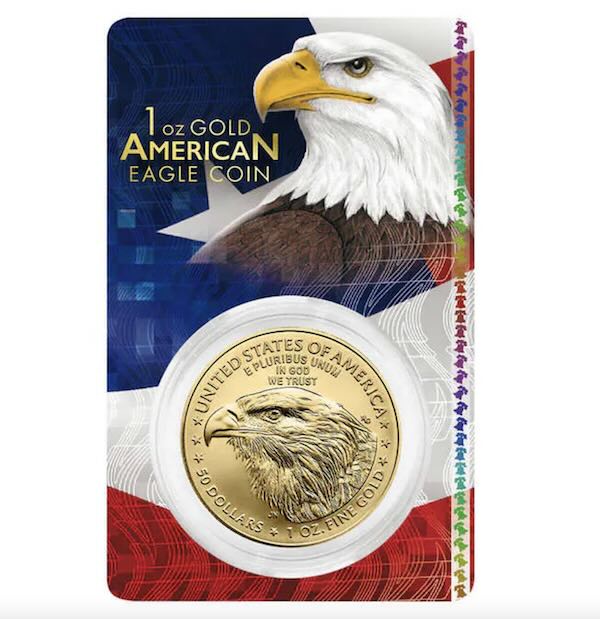
Know the current spot price before you call anyone. Every offer you receive will be expressed as a percentage of spot. If gold is trading at $4,362 per ounce and a dealer bids $4,275, that is roughly 98% of spot, which is a solid offer for a 1 oz bar. If you do not know the spot price, you cannot evaluate the bid.
Online Bullion Dealer Buyback Programs
Established online bullion dealers run formal buyback programs that purchase gold, silver, and platinum from individual sellers. This is the most common exit path for Costco gold because the process is structured, the pricing is competitive, and the dealers are accustomed to handling exactly the products Costco sells.
The typical process works like this: you contact the dealer by phone, email, or through a sell-to-us form on their website. Some dealers publish live buyback prices so you can see the current bid before reaching out. You agree on a price, which may be locked at the time of the call or locked when the dealer receives the shipment, depending on the firm. You ship the gold via insured mail (some dealers provide a prepaid shipping label, others require you to ship at your expense). On arrival, the package is opened on camera and each piece is tested on a Sigma Metalytics or XRF machine to verify authenticity. Once confirmed, payment goes out via ACH direct deposit, wire transfer, or check, typically within one to three business days.
Buyback pricing on a 1 oz gold bar in its sealed assay card generally falls between 97% and 99% of spot price. Government-minted coins like Gold Eagles and Gold Buffalos sometimes fetch a slightly higher bid than bars because of stronger secondary-market demand. The spread between dealers can be meaningful on a $4,000+ item, so getting two or three quotes is worth the phone calls. You can find dealers with active buyback programs through the sell gold page and the dealer directory.
Bullion Marketplaces
A newer category of selling channel has emerged alongside the traditional dealer model: bullion marketplaces that connect individual sellers directly with competing buyers. These platforms work more like a stock exchange than a pawn shop. Multiple buyers post bids, and the seller picks the best one.
The marketplace model can produce higher net payouts than selling to a single dealer because buyers compete on price. Selling fees run around 0.75% of the transaction value, which is lower than the typical dealer spread. Free insured overnight shipping labels are provided. The marketplace handles identity verification, and all items are tested (XRF and Sigma) before the transaction settles. Payment arrives via ACH within a couple of business days.
This channel works best for recognized products in sealed packaging, which describes most of what Costco sells. If you are selling a 1 oz PAMP Suisse bar in its assay card or a tube of Silver Eagles, you are listing exactly what marketplace buyers are looking for.
Local Coin Shops
A local coin shop is the fastest path to cash in hand. You walk in with the gold, the dealer inspects and tests it, makes an offer, and if you accept, you leave with payment. No shipping, no waiting, no counterparty risk.
Most coin shops price buybacks off the live spot market, so the offer will fluctuate throughout the day. A reputable shop will typically pay between spot and 2% below spot for standard 1 oz gold bars in sealed assay cards. Government-minted coins may command slightly more. The spread depends on local market conditions, the shop’s current inventory, and how quickly they expect to resell the piece.
A few practical tips for selling at a coin shop. Call ahead to confirm the shop buys gold and to get a rough quote. Visit two or three shops if you have options in your area, because the spread between offers can be meaningful. Bring the gold in its original Costco packaging with the assay card intact. Bring a valid ID, which most states require for precious metals transactions. And check the current gold spot price on your phone before you walk in so you can evaluate the offer in real time.
Cash transactions over $10,000 trigger Form 8300 reporting by the dealer. This is a federal requirement, not optional, and it applies whether you sell at a coin shop, a dealer, or any other business.
Peer-to-Peer: Reddit, Facebook Groups, and Direct Sales
Selling directly to another individual, whether online or in person, can net you the highest price because there is no dealer spread. The tradeoff is that you take on counterparty risk and the responsibility of handling the transaction yourself.
The most active online community for peer-to-peer precious metals sales is r/PMsForSale on Reddit. The community uses a flair and feedback system that identifies established sellers with a track record of completed transactions. Sellers typically price at or slightly below what dealers charge on the retail side, which is above what a dealer would pay you on the buyback side. There are no platform fees beyond payment processing (PayPal, Venmo, or Zelle). Shipping is the seller’s responsibility, and registered insured USPS is the standard practice.
The catch: building trust as a new seller takes time. If you have no transaction history, buyers will expect you to ship first, which means you are sending gold to a stranger before receiving payment. For experienced sellers with established reputations, this channel can consistently beat dealer buyback pricing. For first-time sellers with a single bar, the learning curve may not be worth it.
Facebook groups and other precious metals forums operate similarly, though with less structured reputation systems than Reddit. The same counterparty risk applies.
eBay
eBay is a large marketplace for precious metals, but the fee structure makes it a poor choice for selling commodity bullion like Costco gold bars. Non-store sellers pay a final value fee of approximately 10%, plus payment processing fees around 3%. On a $4,400 gold bar, that is roughly $570 in fees, which is more than the bar’s entire premium over spot.
eBay store subscribers pay lower rates (6.5% with a cap), but the math still works against individual sellers moving standard bullion. The platform makes more sense for collectible, numismatic, or unusual items where buyers will pay a premium above metal value. A sealed Costco PAMP Suisse bar is not that kind of product.
Pawn Shops: Why They Should Be Your Last Resort
Pawn shops buy gold, but they are not bullion specialists. Their business model requires wider margins than a coin shop or dealer, which means lower offers. A coin shop that pays 98% of spot might have a pawn shop down the street offering 70% to 85% of spot for the same bar. On a $4,362 gold bar, that difference is $567 to $1,134 left on the table.
The only scenario where a pawn shop makes sense is if you need cash today, right now, and there is no coin shop within driving distance. In every other case, a coin shop, online dealer, or marketplace will pay you significantly more.
The Round-Trip Math: What Costco Gold Actually Costs to Buy and Sell
Understanding the round-trip cost, what you pay to buy and what you give up to sell, is essential for evaluating whether a gold purchase makes sense. Here is the math at current prices with gold near $4,362 per ounce.
Buying at Costco. A 1 oz gold bar at a 2% premium costs approximately $4,449. If you are an Executive Member using a 2% cash back credit card, you earn roughly $178 in combined rewards, bringing your effective cost to $4,271. Without the rewards stack, your cost is the full $4,449. For the complete rewards breakdown, see the Costco rewards stacking guide.
Selling to a dealer. If a dealer pays 98% of spot when you sell, your payout at unchanged gold prices would be approximately $4,275. With the 4% rewards stack, your round-trip cost is roughly $4,271 minus $4,275 = effectively breakeven or a slight gain. Without rewards, the round-trip cost is $4,449 minus $4,275 = $174, or about 4% of the bar’s value.
If gold rises. A 10% increase in spot to $4,798 with a 98% dealer bid gives you $4,702 on the sale. Your gain (with the 4% rewards stack) is $4,702 minus $4,271 = $431 before taxes. The round-trip friction becomes a minor factor when the metal moves in your favor.
The takeaway: the 4% rewards stack is what makes Costco gold’s round-trip economics competitive. Without it, the buy premium plus sell spread adds up to real friction.
Tax Rules for Selling Gold
The IRS classifies gold as a collectible, not a standard capital asset. This matters because the tax rate is different from stocks.
Long-term capital gains (held more than one year): Taxed at a maximum federal rate of 28%. If your ordinary income tax bracket is below 28%, you pay at your bracket rate instead. This compares unfavorably to the 0%, 15%, or 20% long-term capital gains rates that apply to stocks and most other investments.
Short-term capital gains (held one year or less): Taxed as ordinary income, up to 37%. High-income earners may also owe the 3.8% Net Investment Income Tax on top of the capital gains rate.
Dealer reporting (1099-B): Dealers are required to file a 1099-B only in specific circumstances. For gold bars, the threshold is 1 kilo (32.15 troy ounces) or more of bars with at least .995 fineness. Selling a single 1 oz Costco bar does not trigger a dealer 1099-B. U.S. Mint coins (Gold Eagles, Silver Eagles) are always exempt from dealer 1099-B reporting regardless of quantity. Other coins (Maple Leafs, Krugerrands) trigger a 1099-B on sales of 25 or more coins.
Important: The absence of a 1099-B does not mean the gain is tax-free. You are legally required to report and pay capital gains tax on every taxable sale, whether or not the dealer files a form. Keep your Costco purchase receipt and the sale confirmation for your records. This is not tax advice. Consult a qualified tax professional for guidance specific to your situation.
Comparing Your Selling Options
| Channel | Typical Payout (% of Spot) | Speed | Fees | Best For |
|---|---|---|---|---|
| Online dealer buyback | 97% to 99% | 3 to 7 business days | Shipping (sometimes free) | Most sellers; structured, reliable |
| Bullion marketplace | 98% to 100% | 3 to 5 business days | ~0.75% selling fee | Sealed bars/coins; competitive bids |
| Local coin shop | 98% to 100% | Same day | None | Immediate cash; no shipping risk |
| r/PMsForSale | 99% to 101% | Varies | Payment processing only | Experienced sellers with reputation |
| eBay | 100%+ (gross) | 1 to 2 weeks | 10% to 13% in fees | Collectible/numismatic items only |
| Pawn shop | 70% to 90% | Same day | None | Emergency cash, no other options |
Frequently Asked Questions
Can I return gold to Costco?
No. All precious metals purchases at Costco are final. No returns, no exchanges, no price adjustments. This applies to gold bars, gold coins, silver coins, silver bars, and platinum. It is one of the few product categories excluded from Costco’s standard return policy.
How much will I get for a Costco gold bar?
Expect to receive between 97% and 99% of the current gold spot price when selling to a dealer or coin shop. On a 1 oz gold bar at $4,362 spot, that translates to roughly $4,231 to $4,318. Marketplace platforms with competing buyers may net slightly more. The exact amount depends on the buyer, the bar’s condition and packaging, and current market conditions.
Does it matter whether my Costco bar is PAMP Suisse, Rand Refinery, or Argor-Heraeus?
Not significantly. All three refiners are LBMA Good Delivery accredited and produce .9999 fine gold. On the retail side, PAMP bars sometimes carry a 0.5% to 1% premium over the others because of brand recognition and collector appeal. On the sell side, the difference largely disappears. Dealer bids on all three brands typically cluster within a few dollars of each other. Buy whichever is cheapest or in stock at Costco. The resale difference is negligible.
Should I open the assay card before selling?
No. Keep the bar in its original sealed assay card. The sealed packaging lets the buyer verify the bar without destructive testing, which streamlines the transaction and often produces a better offer. Opening the assay card may require the buyer to re-assay the bar, which adds cost and reduces your payout.
Do I have to pay taxes when I sell gold?
Yes, if you sell at a profit. The IRS treats gold as a collectible. Long-term gains (held over one year) are taxed at a maximum federal rate of 28%. Short-term gains are taxed as ordinary income. You are required to report the gain regardless of whether the dealer files a 1099-B. Consult a tax professional for guidance specific to your situation.
Is there a reporting threshold for selling gold?
Dealers must file a 1099-B when a customer sells 1 kilo or more of gold bars (.995+ fineness) in a single transaction, or 25 or more non-U.S.-Mint coins. Selling a single 1 oz Costco bar or a few Gold Eagles does not trigger dealer reporting. Cash transactions of $10,000 or more trigger a separate Form 8300 filing regardless of what is being sold.
What about selling Costco silver?
The same channels apply: online dealer buyback programs, local coin shops, marketplaces, and peer-to-peer. Silver Eagles in sealed Mint tubes are highly liquid and easy to sell. The 1099-B threshold for silver bars is 1,000 oz or more. For current silver bullion prices and the products that trade closest to spot, check the closest-to-spot silver page.
How do Costco gold bars compare to what online dealers sell?
Costco sells the same PAMP Suisse, Rand Refinery, and Argor-Heraeus bars that online bullion dealers carry. The products are identical. The difference is in pricing, selection, and availability. For a side-by-side comparison, see How Do Costco Gold Bar Prices Compare and the gold bullion price comparison page.
Related Reading
- Costco Gold, Silver, and Platinum: Complete Guide to What They Sell. Full product catalog, current limits, and pricing context.
- How to Stack Costco Rewards on Gold Purchases. The 4% rewards math that affects your round-trip cost.
- How Do Costco Gold Bar Prices Compare?. Side-by-side premium analysis against online bullion dealers.
- Flipping Costco Gold Coins for Profit. The arbitrage math and whether it still works.
- Costco Gold and Silver: Complete Buyer’s Guide. Everything in the current Costco bullion catalog.
- Compare Gold Bullion Prices. Real-time pricing across tracked online bullion dealers.
- Closest to Spot: Gold. Today’s lowest-premium gold products.
- Live Gold and Silver Spot Prices
This article is for informational purposes only and does not constitute financial, tax, or legal advice. Gold prices fluctuate constantly. Consult a qualified professional before making buying or selling decisions.