American Silver Eagles and 90% constitutional silver coins (commonly called “junk silver“) serve different purposes and appeal to different kinds of stackers. This guide breaks down the practical differences so you can decide which one — or both — belongs in your stack.
What Is Junk Silver?
“Junk silver” is the trade term for US coins minted before 1965 that contain 90% silver by weight. The standard denominations are:
- Dimes (Mercury and Roosevelt)
- Quarters (Standing Liberty and Washington)
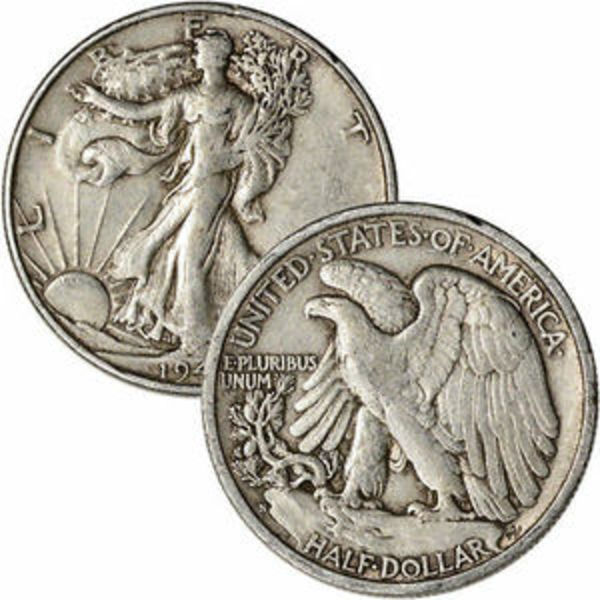
- Half dollars (Walking Liberty, Franklin, and 1964 Kennedy)
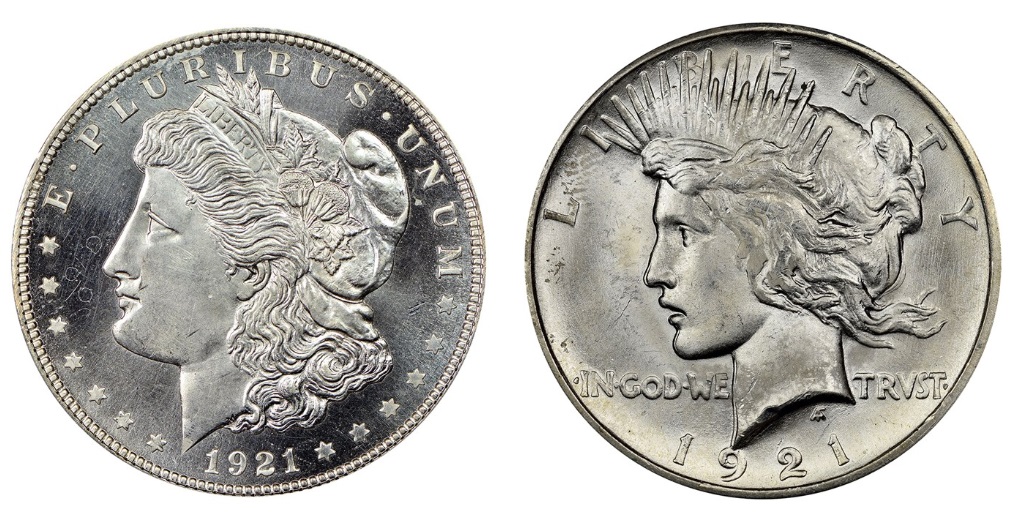
- Silver dollars (Morgan and Peace)
The name is misleading. These coins are legal tender, immediately recognizable, and contain a predictable amount of silver. “Junk” simply means they carry no numismatic premium: they are bought and sold for their metal content rather than their rarity or condition.
One common point of confusion is the Kennedy half dollar. Those dated 1964 are 90% silver, but the 1965 through 1970 issues contain only 40% silver. When dealers quote “junk silver” prices, they mean the 90% coins unless they say otherwise.
What Are American Silver Eagles?
The American Silver Eagle is the official US silver bullion coin, minted since 1986. Each coin contains one troy ounce of .999 fine silver and carries a $1 face value. Junk silver holds a different amount of silver in every denomination, but each Eagle is a clean one-ounce unit, which makes tracking your total stack weight straightforward. You can see live dealer pricing on the American Silver Eagles collection page.
Silver Content Comparison
| Coin Type | Silver Content | Face Value | Melt Value (at spot) |
|---|---|---|---|
| Pre-1965 Dime | ~0.0723 oz | $0.10 | 4.58 |
| Pre-1965 Quarter | ~0.1808 oz | $0.25 | 11.45 |
| Pre-1965 Half Dollar | ~0.3617 oz | $0.50 | 22.90 |
| Morgan/Peace Dollar | ~0.7734 oz | $1.00 | 48.96 |
| American Silver Eagle | 1.0000 oz | $1.00 | 63.31 |
The industry standard for pricing circulated 90% silver is 0.715 troy ounces per dollar of face value, a convention that accounts for average wear on circulated coins. By that measure, $100 of face value in junk silver contains roughly 71.5 troy ounces of silver, worth 4,526.67 at today’s spot price.
Premium Comparison
One of junk silver’s clearest advantages is its lower premium over spot.
American Silver Eagles typically trade at $3 to $6 per ounce above spot, depending on market conditions and on whether you buy current-year or secondary-market coins. That premium covers the US Mint’s production and distribution costs plus the dealer’s markup.
Junk silver often trades at $0.50 to $2.00 per ounce of silver content above spot. The lower premium reflects the fact that these are circulated coins with no fabrication cost, since the US Mint struck them decades ago.
Over a large position, that premium gap compounds. If your goal is the most ounces per dollar, junk silver’s lower premium can save you hundreds of dollars on the same quantity of pure silver.
The closest-to-spot silver page ranks both Eagles and constitutional silver by premium, so you can see which offers better value on any given day.
Liquidity
Both are highly liquid in the US, but they sell differently.
Silver Eagles are the easiest silver bullion to sell. Dealers buy them instantly, in any quantity, at a predictable premium over spot. When you need to convert silver to cash quickly, Eagles are the fastest path.
Junk silver sells well to dealers and to collectors who know constitutional silver, but it usually moves in bulk, by the roll or by the bag. Selling five loose dimes to a dealer is less efficient than selling five Eagles. For large lots ($100 to $1,000 in face value), junk silver is plenty liquid; for small, one-off sales, Eagles are easier.
Divisibility
Divisibility is where junk silver holds a structural advantage. A Silver Eagle is a one-ounce unit, and you cannot sell half of it. Junk silver breaks down naturally:
- A dime holds ~0.0723 oz of silver (4.58)
- A quarter holds ~0.1808 oz (11.45)
- A half dollar holds ~0.3617 oz (22.90)
- A silver dollar holds ~0.7734 oz (48.96)
If you are stacking partly for barter readiness or emergency use, junk silver lets you transact in small increments without giving up a full ounce. A few pre-1965 dimes are far easier to use in a small trade than a single one-ounce coin.
IRA Eligibility
IRA eligibility is a firm dividing line between the two.
Silver Eagles qualify for precious metals IRAs. They are explicitly named as an allowable investment under IRC § 408(m)(3), and their .999 fineness meets the standard the IRS applies to IRA-eligible silver.
Junk silver does not qualify. Its 90% silver content falls below the .999 fineness threshold the IRS requires. If you are building a retirement position in physical silver, Eagles (or other .999+ sovereign coins) are your only option.
Condition and Consistency
Silver Eagles are uniform. Every coin leaves the US Mint in brilliant uncirculated condition with the same weight, diameter (40.6 mm), and thickness (2.98 mm). Counting your stack is simple, because each coin is exactly one ounce.
Junk silver is variable. Coins range from heavily worn to about uncirculated, and they arrive in mixed denominations unless you buy sorted rolls. Wear does not meaningfully change the silver content, since the 0.715 oz per dollar convention already accounts for average circulation, but it does make inventory management messier. Some stackers prefer a single denomination, such as all quarters or all half dollars, for easier counting and storage.
Storage
Silver Eagles stack neatly in standard tubes of 20 coins and fit efficiently in boxes and safes. A single tube holds 20 troy ounces in a compact, uniform column.
Junk silver takes more space per ounce of silver. Mixed bags of dimes, quarters, and halves do not stack as cleanly, and the same 20 ounces of silver content requires far more coins by count. A $1,000 face value bag of 90% silver (roughly 715 troy ounces of silver, worth 45,266.65 at spot) weighs about 55 pounds and fills a canvas bag roughly the size of a bowling ball. Storage is not a deal-breaker, but it is a practical consideration at scale.
The Barter Argument
Beyond its lower premiums, junk silver’s strongest case is barter utility. Pre-1965 US coins are instantly recognizable to anyone old enough to have handled them, and their silver content is common knowledge. In a scenario where you need to trade silver for goods, a Mercury dime or a Walking Liberty half dollar communicates “real silver” without any need to explain what a bullion coin is or how to verify it.
Silver Eagles are recognizable too, and they carry the weight of US government backing, but their one-ounce denomination makes them less practical for small transactions.
Comparison Table
| Feature | American Silver Eagles | Junk Silver (90%) |
|---|---|---|
| Silver Content | 1.000 oz per coin | ~0.715 oz per $1 face (circulated) |
| Premium Over Spot | $3–$6/oz | $0.50–$2.00/oz |
| Divisibility | No (1 oz units only) | Yes (dime to dollar) |
| IRA Eligible | Yes | No |
| Liquidity | Very high (any quantity) | High (best in bulk) |
| Storage Efficiency | Good (uniform tubes) | Fair (mixed, bulkier) |
| Condition | Uniform BU | Variable (circulated) |
| Best For | IRAs, liquidity, simplicity | Budgets, barter, small denominations |
Which Should You Buy?
Choose Eagles if you are funding a precious metals IRA, want the simplest possible stacking experience, or expect to sell in small quantities where per-coin liquidity matters.
Choose junk silver if you are optimizing for the most silver per dollar, want barter-ready denominations, or are working to a budget where the premium savings add up to meaningful money.
For most experienced stackers, the answer is both: Eagles for the IRA and for core holdings they may need to sell quickly, with junk silver layered in when the premium spread is favorable or when fractional flexibility matters.
Frequently Asked Questions
How do I verify that junk silver is actually 90%? Any US dime, quarter, or half dollar dated 1964 or earlier is 90% silver by law. Kennedy half dollars dated 1965 to 1970 are 40% silver. Buying from a reputable dealer means this verification is already done. To check current melt values by denomination, see our silver coin melt value calculator.
Can I hold junk silver in an IRA? No. IRS rules require .999 fine silver for IRA-eligible bullion, and the 90% content of constitutional coins does not qualify.
Which is easier to sell? Eagles are easier to sell in any quantity. Junk silver is best sold in bulk (rolls or bags) to dealers who handle constitutional silver regularly. Both are liquid; Eagles are simply faster.
Should I sort my junk silver by denomination? It is not required, but it makes inventory easier, and some dealers pay a slight premium for sorted rolls over mixed bags. If barter readiness is part of your reasoning, dimes are the most practical small-denomination unit.
Updated: August 4, 2026 Related Reading: American Silver Eagle Mintages · Silver Eagles vs. Silver Bars · Silver Eagles vs. Silver Maple Leafs · Silver Eagles vs. Generic Rounds