- Mintage: 2.148 billion coins (record for the era) – Philadelphia, Denver, San Francisco
- Composition: 70% copper, 30% zinc due to WWII copper conservation efforts
- Common 1944 penny value: $0.02-$0.04 depending on condition
- MS-65 Red specimen value: $50-$100
- Rare 1944 steel penny error: $75,000-$408,000+ (extremely scarce)
- Key variants: 1944-D/S overmintmark errors, 1944-S steel penny (2 known)
- Best investment potential: Steel errors and certified MS-65+ red coins
- Identifying feature: Brassy/yellowish color distinguishes from pre-war copper pennies

1944 Penny Value by Mint Mark and Grade
| Grade | 1944-P | 1944-D | 1944-S |
|---|---|---|---|
| Good (G-4) | $0.02 | $0.02 | $0.02 |
| Fine (F-12) | $0.02 | $0.02 | $0.03 |
| Extremely Fine (EF-40) | $0.03 | $0.03 | $0.04 |
| About Uncirculated (AU-50) | $0.40 | $0.50 | $0.65 |
| Mint State 60 | $1.20 | $1.64 | $2.12 |
| Mint State 63 | $8.50 | $12.00 | $15.00 |
| Mint State 65 (Red) | $50-$100 | $65-$120 | $85-$150 |
Values based on current PCGS and NGC pricing data. Rare errors excluded from this table.
Historical Context: The Wartime Penny
Why 1944 Pennies Look Different
The 1944 penny represents a crucial moment in American numismatic history during World War II. With copper needed for military applications, the U.S. Mint made a strategic decision to produce pennies from recycled shell casings containing 70% copper and 30% zinc—significantly different from the pre-war composition.
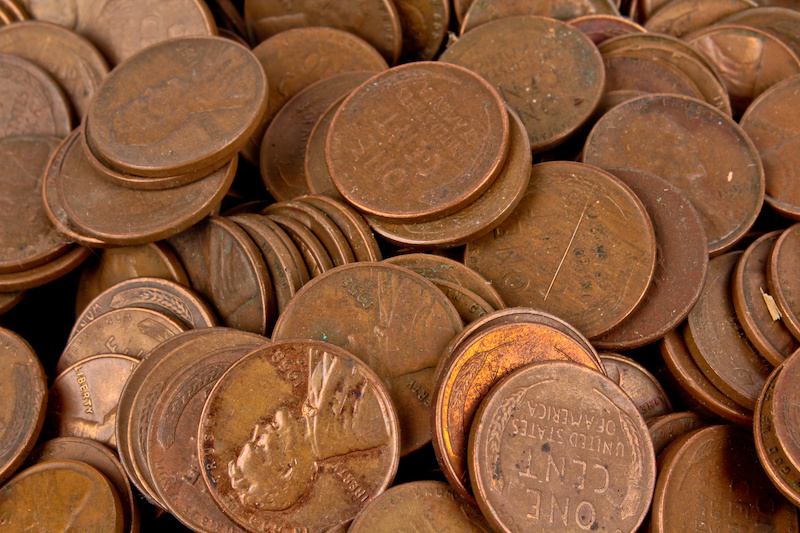
This wartime composition gives 1944 pennies their distinctive brassy or yellowish appearance compared to the bright red copper of earlier Lincoln pennies. The distinctive coloring is actually a reliable way to identify genuine 1944 specimens. See also our 1943 Penny Value Guide and 1940s Penny Value Guide for the complete wartime series.
Record Mintage Year
The 1944 penny holds the distinction of being minted in unprecedented quantities:
- Philadelphia (P): 1,435,400,000 coins
- Denver (D): 430,578,000 coins
- San Francisco (S): 282,760,000 coins
- Total: 2.148 billion coins
This represented a record mintage for any single year at that time, reflecting wartime demand for circulating currency. The sheer volume produced means most circulated specimens have minimal numismatic value today.
How to Identify a 1944 Penny
Visual Characteristics
Color: The most obvious identifier is the brassy or yellowish hue. Pre-war pennies (1941 and earlier) display bright red copper coloring, while 1944 pennies show the distinctive zinc-copper alloy tone.
Weight: Standard 1944 pennies weigh approximately 3.1 grams. This is slightly heavier than pre-war copper pennies due to the zinc content.
Year and Mint Mark: Look for “1944” clearly stamped on the obverse (front). The mint mark—if present—appears on the obverse below the date.
Common vs. Rare
- Common: Most circulated 1944-P specimens
- Moderately scarce: High-grade (MS-60+) specimens from any mint
- Rare: Red (RD) coins graded MS-65 or higher
- Extremely rare: Steel penny errors and overmintmark varieties
Mint Marks: Location and Identification
Where to Find Mint Marks
On 1944 pennies, the mint mark appears on the obverse (front side), directly below the date “1944” to the right of Lincoln’s bust.
Mint Mark Reference
- No mint mark: Philadelphia Mint (P) – 1,435,400,000 produced
- D: Denver Mint – 430,578,000 produced
- S: San Francisco Mint – 282,760,000 produced
San Francisco specimens are slightly scarcer than Philadelphia strikes, which were produced in unprecedented quantities.
The 1944 Steel Penny Error: A Million-Dollar Rarity
The Story Behind This Legendary Error
The 1944 steel penny represents one of the most valuable errors in the history of U.S. coinage and the most significant error among 1940s pennies. This error resulted from a rare mistake at the Mint: workers accidentally used leftover 1943 steel planchets (blank coin blanks) when striking 1944 pennies.
In 1943, the entire U.S. penny production switched to zinc-coated steel to conserve copper for WWII military use. When 1944 arrived, production was supposed to return to the copper-zinc alloy. However, some steel planchets from 1943 remained in circulation at the mint facilities and were inadvertently fed into coining presses, creating steel pennies bearing the 1944 date.
Identifying the Steel Error
Magnet Test: The definitive way to identify a 1944 steel penny is with a strong magnet. Steel pennies will stick firmly to a magnet, while copper-zinc 1944 pennies will not.
Weight: Steel 1944 pennies weigh approximately 2.7 grams, noticeably lighter than the standard 3.1-gram copper-zinc composition.
Visual Inspection: Steel pennies appear silvery-gray with a distinctive metallic sheen, contrasting sharply with the brassy color of normal 1944 specimens.
Extreme Rarity
Only an estimated 30 examples of the 1944 steel penny are known to exist across all three mints combined. These are among the most pursued errors by serious collectors.
Philadelphia Mint 1944 Steel Penny
Population: Approximately 10-12 estimated to exist
Value Range: $75,000-$140,000 depending on grade
The Philadelphia strikes are the most “common” of the three mint varieties, though still extraordinarily rare. Even well-circulated specimens command five-figure prices.
Denver Mint 1944-D Steel Penny
Population: Approximately 5-8 estimated to exist
Value Range: $100,000-$115,000
Denver specimens are scarcer than Philadelphia strikes and command premium pricing. The distinctive D mint mark adds to collector demand.
San Francisco Mint 1944-S Steel Penny
Population: Only 2 known to exist
Value Range: Record sale of $408,000 at Heritage Auctions (August 2021)
The 1944-S steel penny is the crown jewel of this error series. Only two authenticated examples are known, making it one of the rarest error coins in existence. The 2021 Heritage Auctions sale established the current record for this variety.
Investment Potential
Steel penny errors represent the ultimate prize for serious collectors. If you believe you’ve found a 1944 steel penny, have it professionally authenticated by PCGS or NGC—counterfeit strikes do exist, and authentication is essential.
1944-D/S Overmintmark Error
What Is an Overmintmark?
An overmintmark error occurs when a mint mark punch strikes a planchet that already bears a mint mark from an earlier striking. The result is a doubled or overlapping mint mark visible to the naked eye (though magnification helps).
Denver Over San Francisco (D/S)
The most sought-after 1944 overmintmark error features a D punched over an S, creating a distinctive doubling effect. This error indicates that a planchet originally marked for San Francisco was repunched with a Denver mint mark.
Value Range: $35-$49,938 depending on grade and eye appeal
A certified example graded MS-67+ RD (Red) brought $49,938 at auction in October 2020, demonstrating strong collector demand for this variety.
Identifying the Error
Examine the mint mark area closely with magnification (10x or higher). You’ll see traces of the underlying S punch beneath the D mark, creating a distinctive shadow or doubling effect.
Other Notable 1944 Penny Errors and Varieties
Doubled Die Errors
Doubled die errors occur when the obverse or reverse die receives multiple, slightly offset impressions during the hub-to-die transfer process, creating a doubled image on the struck coins.
Notable examples: Some 1944 obverse doubled dies show doubling visible in “LIBERTY” or Lincoln’s profile. These are substantially scarcer than the base coin and command premiums ranging from $50-$2,000+ depending on prominence and grade.
Off-Center Strikes
Off-center errors result from the coin blank not being perfectly centered under the dies when struck, creating an imbalanced design with blank areas on the rim.
Collector appeal: Off-center strikes are popular with error collectors. Premiums range from $25-$200+ depending on the degree of off-center displacement and overall eye appeal.
Misaligned Dies
Misaligned die errors show dramatic rotational differences between the obverse and reverse, often appearing upside-down or sideways. These are immediately recognizable and moderately scarce.
1944 Penny Grading Guide
Understanding coin grading helps you accurately assess value. The Sheldon Scale ranges from 1 (Poor) to 70 (Perfect Mint State).
Circulated Grades
- Good (G-4): Heavily worn, most design details barely visible
- Very Good (VG-8): Major wear, some detail remains visible
- Fine (F-12): Light to moderate wear, most major details visible
- Very Fine (VF-20-35): Light wear on high points, most details sharp
- Extremely Fine (EF-40-45): Light wear on highest points, details crisp
- About Uncirculated (AU-50-58): Traces of wear only on highest points
Uncirculated (Mint State) Grades
- MS-60-62: No wear, but bag marks and imperfections visible
- MS-63: No wear, few bag marks, attractive appearance
- MS-65: No wear, minimal bag marks, excellent eye appeal
- MS-67+: Exceptional examples with superior luster and minimal imperfections
Color Designation for Uncirculated Coins
The color of uncirculated 1944 pennies significantly impacts value:
- RD (Red): 95% or more original red copper color – commands premium pricing
- RB (Red-Brown): 50-95% red color – moderate premium
- BN (Brown): Mostly brown patina – minimal to no premium
An MS-65 RD (Red) can be worth 5-10 times more than an MS-65 BN specimen, making color preservation critically important for valuable examples.
Professional Grading and Authentication
For specimens potentially worth $50 or more, professional third-party certification from PCGS (Professional Coin Grading Service) or NGC (Numismatic Guaranty Company) is strongly recommended. For older U.S. coins with significant gold or silver content, professional grading is equally important — see our guide to Pre-1933 U.S. Gold coins for examples of how grade affects value.
These services provide:
- Expert authentication
- Grade determination
- Protective slabbed holders (plastic cases)
- Market-recognized value assessment
- Insurance documentation
For high-value specimens like steel errors, certification is essential to verify authenticity and establish provenance.
Building a 1940s Penny Collection
The 1944 penny fits into the broader 1940s Lincoln Wheat Penny series, which includes the famous 1943 steel penny and the transition back to standard copper composition in 1945. Collectors building a wartime set should also consider the 1941 and 1942 issues that preceded the composition change. See our complete 1940s penny value guide for the full series.
Frequently Asked Questions
How much is a 1944 penny worth?
Most circulated 1944 pennies have face value plus a small numismatic premium of $0.01-$0.05. An uncirculated MS-60 specimen might be worth $1-$2, while MS-65 RD examples can reach $50-$100. Rare errors like steel pennies can be worth $75,000-$408,000+.
Is my 1944 penny valuable?
Check your coin’s mint mark (if any), condition, and color. If it’s circulated with average wear, value is minimal. If it’s uncirculated with bright red coloring, it may have moderate value. Use the value table above to estimate. For potential errors, consult professional graders.
What’s the difference between 1944-P, 1944-D, and 1944-S?
The letter designation indicates which U.S. Mint produced the coin. P=Philadelphia (no mint mark), D=Denver, S=San Francisco. San Francisco specimens are slightly scarcer and typically worth 5-10% more in equivalent grades.
How can I tell if my 1944 penny is a steel error?
Use a magnet—steel errors will stick firmly to a strong magnet. Copper-zinc 1944 pennies are not magnetic. Steel errors also weigh 2.7 grams versus 3.1 grams for standard coins.
Where should I sell valuable 1944 pennies?
Options include Heritage Auctions, Stacks Bowers, PCGS TrueView, eBay, or local coin dealers. For extremely rare specimens, professional auction houses specializing in rare coins provide the broadest market reach and strongest pricing. For bullion-value pennies and other precious metals, compare current spot prices before selling.
Why is the 1944 steel penny so valuable?
The 1944 steel penny is valuable because only about 30 examples exist worldwide, making it one of the rarest U.S. error coins. The combination of extreme scarcity and high collector demand drives valuations into six figures.
Can I clean my 1944 penny to improve value?
No. Never attempt to clean or polish rare coins. Cleaning removes original patina and surface details, dramatically reducing value. Professional graders can identify and penalize cleaned coins. Leave your coin in its original state.
Are 1944 penny errors common?
No. While some errors exist (doubled dies, off-center strikes), truly valuable errors like steel pennies are extraordinarily rare. Most 1944 pennies are normal strikes with minimal error premium.
Related Guides and Resources
Explore the complete 1940s penny values:
External Resources
For additional research and pricing data:
- PCGS Price Guide – Current market valuations
- NGC Coin Grading – Professional authentication and grading
- Heritage Auctions Archives – Historical auction prices and sold lots
- USA Coin Book – Community pricing and database
Final Notes
The 1944 penny represents a fascinating intersection of numismatic history, wartime economics, and industrial error. While most examples circulating today have minimal value, certified high-grade specimens and rare errors like steel pennies continue to attract serious collectors and command impressive prices.
The key to maximizing value is understanding your coin’s mint mark, condition, color, and whether it represents a known error variety. When in doubt about potential value, consult professional graders or join numismatic communities for feedback.
Last updated: April 2026
Values reflect current market data. Coin values fluctuate based on market conditions, grade, and collector demand. Coin values fluctuate based on market conditions, grade changes, and collector demand. For transactions involving valuable specimens, consult professional numismatists or certified coin dealers.