Best Investment Grades: MS-65 and higher, especially red specimens
1941 Penny Value Chart by Mint Mark and Grade
Mint Mark
Good
Fine
EF (Extremely Fine)
AU (About Unc.)
MS-60
MS-63
MS-65
No Mark (P)
$0.03
$0.06
$0.14
$0.45
$2.10
$8.50
$28.00
1941-D
$0.03
$0.09
$0.25
$0.65
$4.20
$16.00
$52.00
1941-S
$0.03
$0.14
$0.35
$0.85
$5.06
$20.00
$65.00
Note: Values shown are approximate market prices and may vary based on current precious metals markets and collector demand. Red (RD) specimens in mint state command premiums of 25–50% over brown (BN) grades. Always consult recent sales data from PCGS, NGC, or auction records for current pricing.
Historical Context: The First Billion-Coin Year
The 1941 penny holds special significance in numismatic history: it marks the first calendar year in which total U.S. cent production exceeded one billion coins. With a combined mintage of 1,108,078,000 pieces across three mints (Philadelphia, Denver, and San Francisco), the 1941 cent represented an unprecedented manufacturing achievement.
This milestone occurred at a pivotal moment in American history. In April 1941, the United States was not yet officially at war, but the nation was rapidly mobilizing for conflict. Defense spending accelerated, industrial production expanded, and public sentiment shifted as the war in Europe intensified. The surge in penny production reflected booming economic activity and increased commercial transactions supporting military preparedness.
The 1941 penny was struck in the traditional pre-war copper composition: 95% copper and 5% zinc. This alloy, which had been standard since 1909, was highly prized by collectors for its rich aesthetic and durability. This would be one of the last years of this composition before wartime shortages forced a dramatic change to steel pennies in 1943.
Because 1941 pennies were produced in such enormous quantities and circulated extensively throughout the 1940s and beyond, finding heavily worn examples is straightforward. However, original uncirculated specimens—particularly those retaining the distinctive red luster of a freshly minted coin—have become increasingly scarce as collectors have recognized their value and preserved the finest examples.
How to Identify a 1941 Penny
Identifying a genuine 1941 wheat penny is straightforward for most collectors:
Obverse (Front):
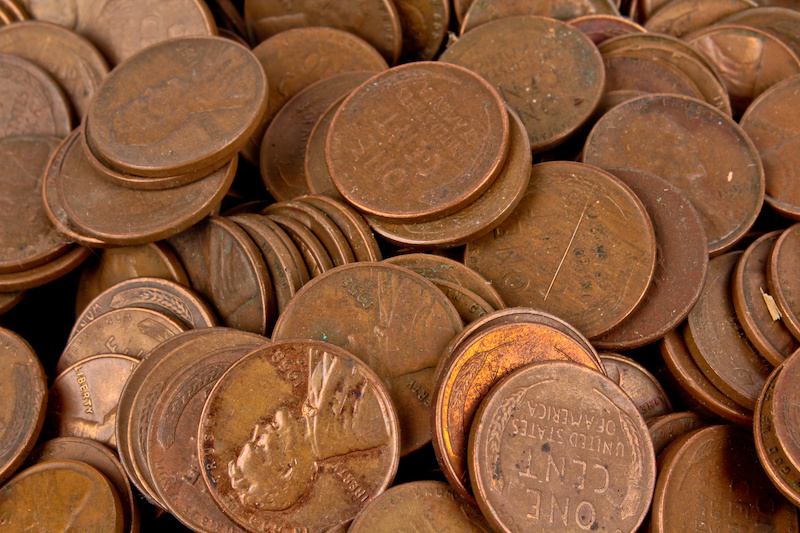
Shows a left-facing profile of Abraham Lincoln
The year “1941” is inscribed directly to the right of Lincoln’s neck
All 1941 pennies display “IN GOD WE TRUST” above and “LIBERTY” to the left side of Lincoln’s profile
Reverse (Back):
Features two wheat stalks flanking a wheat sheaf and denomination
“ONE CENT” is centered between the wheat stalks
“UNITED STATES OF AMERICA” arches across the top
“E PLURIBUS UNUM” appears on a banner above the wheat
Diameter & Weight:
19.05 mm in diameter
Weighs 3.11 grams (copper-zinc composition)
Color:
Original coins exhibit a bright reddish-brown to deep red color if never circulated
Circulated examples display degrees of brown patina
Never accept coins with a silvery, whitish, or greenish tone—these are damaged or counterfeit
Mint Marks: Location and Mintage
The 1941 cent was produced at three United States mints. The mint mark, when present, appears directly below the date on the obverse:
Philadelphia Mint (No Mint Mark)
Location of Mark: None (unmarked)
Mintage: 887,018,000
Characteristics: Most commonly encountered; highest total production
Collectibility: Common in all grades; easier to find in high mint state than D or S varieties
Denver Mint (D)
Location of Mark: Below the date on obverse
Mintage: 128,700,000
Characteristics: Scarcer than Philadelphia; moderately available in circulated grades
Collectibility: Moderately scarce in MS-65 and finer
San Francisco Mint (S)
Location of Mark: Below the date on obverse
Mintage: 92,360,000
Characteristics: Lowest total production of the three mints; least frequently encountered
Collectibility: Scarce in circulated grades; quite elusive in mint state
The dramatic difference in mintage between Philadelphia (887 million) and San Francisco (92 million) explains why 1941-S specimens command a premium even in lower grades.
Known Errors and Varieties
While the 1941 cent is relatively straightforward from a variety standpoint, two notable errors have attracted collector attention:
1941 Doubled Die Obverse (DDO) — Class I
The most significant variety is the 1941 Doubled Die Obverse, identified as Class I by die variety specialists. This error results from a counterclockwise hub rotation during the die-preparation process, causing the obverse to be struck twice with slight misalignment.
Identifying Features:
Clear doubling visible in “BER” of “LIBERTY” on the left obverse
Doubling also appears in “IN GOD WE TRUST” lettering above Lincoln
Most pronounced on higher-relief devices
The effect is strongest in the upper left portion of the obverse
Value Range:
Circulated Examples: $50–$200 depending on wear and eye appeal
MS-62 Brown: ~$288 (typical market pricing)
MS-66 Red: $9,200+ (Heritage Auctions example, August 2010)
MS-67 Red: Up to $35,000 for finest specimens (auction estimates)
The dramatic jump in value at high grades reflects the extreme rarity of 1941 DDO coins in original, pristine condition. Most examples encountered by collectors are well-circulated or in lower mint state grades.
Research Note: The 1941 DDO is catalogued in the Wexler Doubled Die Reference (WDDR) as one of the classic doubled dies of the wheat cent era. Certification from PCGS or NGC is highly recommended before making any significant investment in a suspected DDO.
1941-S/S Repunched Mint Mark (RPM)
A secondary, fainter “S” mint mark appears offset from the primary mark on certain 1941-S cents. This variety results from the mint mark punch being misaligned during the initial striking and then struck again in the correct position.
Value Range:
Circulated: $5–$75 depending on visibility of the repunch and eye appeal
Mint State: $100–$300+ for MS-63 and finer examples
Rarity: Moderately scarce; encountered by specialized collectors but not frequently seen in general circulation
High-Grade Auction Records
Recent and notable auction results demonstrate market values for exceptional 1941 cents:
Recent Sales (2024–2025)
1941-D MS-68 Red
Heritage Auctions, January 19, 2025
Hammer Price: $9,000
Notes: Exceptional preservation with original red luster; one of the finest known 1941-D examples
Significance: Demonstrates strong demand for high-grade Denver mint issues
Historical High-Water Marks
1941-S MS-65 Red (Various Sales 2018–2024)
Typical Range: $200–$600
Peak: $850+ for exceptional eye appeal and original color
1941 (P) MS-65 Red
Typical Range: $150–$350
Notes: Less rare than D or S varieties but still scarce in this grade
1941 Doubled Die Obverse MS-66 Red
Heritage Auctions, August 11, 2010
Hammer Price: $9,200
Notes: Landmark sale; established pricing benchmark for high-grade DDO examples
These auction records indicate that serious collectors value 1941 cents, particularly in grades MS-65 and above with strong original red coloring.
Grading Guide for 1941 Pennies
Understanding how pennies are graded is essential for accurately assessing value:
Poor (P-1)
Barely identifiable as a penny; almost completely worn and damaged.
Fair (FR-2)
Major details are nearly obliterated; date and mint mark may be difficult to discern.
About Good (AG-3)
Extremely worn; date and mint mark are visible but faint.
Good (G-4 to G-6)
All major design elements visible but heavily worn; date is clear; legends are readable but worn.
Very Good (VG-8 to VG-10)
Moderate wear on high points; Lincoln’s features are flat but distinct; all legend lettering is bold.
Fine (F-12 to F-15)
Moderate wear on design high points; Lincoln’s portrait shows detail in hair and jaw; wheat sheaves show distinct separation.
Very Fine (VF-20 to VF-35)
Light to moderate wear on highest points; Lincoln’s cheek and jaw show clear detail; wheat stalks retain good definition.
Extremely Fine (EF-40 to EF-45)
Light wear on highest points of design; Lincoln’s features are sharp; wheat details are nearly complete.
About Uncirculated (AU-50 to AU-58)
Traces of light wear visible only on the highest points; original mint luster may be partially visible; typically very attractive coins.
Mint State (MS-60 to MS-70)
Never entered circulation. Graded as follows:
MS-60 to MS-62: Heavy bag marks and abrasions; original luster partially visible
MS-63 to MS-64: Moderate bag marks; good portion of original luster retained
MS-65: Few bag marks; attractive original color; strong eye appeal
MS-66 and Higher: Exceptional preservation; minimal marks; vibrant original luster or attractive patina
MS-70: Perfect coin (exceptionally rare; likely never achieved for 1941 cents)
Color Descriptors
Red (RD): Original copper color maintained; most desirable for mint state examples
Red-Brown (RB): Mixed original red and brown patina
Brown (BN): Fully toned to brown; still original and desirable but less premium than red
Grading Tip: Always submit questionable high-value coins (especially potential DDO or error varieties) to a professional grading service (PCGS, NGC) before finalizing any purchase. The certification label adds credibility and resale value.
Frequently Asked Questions About 1941 Pennies
How much is a 1941 wheat penny worth?
The value depends on mint mark and condition. Heavily worn circulated examples trade for 3–35 cents, while uncirculated MS-60 examples range from $2.10 (Philadelphia) to $5.06 (San Francisco). High-grade examples (MS-65 and above) command $28–$65 or more.
Is my 1941 penny valuable?
Most circulated 1941 pennies have minimal numismatic value beyond face value, though they are collectible. Exceptions include:
Coins in MS-65 or finer condition
The 1941 DDO (doubled die obverse)
The 1941-S/S repunched mint mark
Examples retaining original red mint luster
Any coin with unusual die varieties or striking characteristics
Where is the mint mark on a 1941 penny?
The mint mark (D or S) appears directly below the date “1941” on the obverse (front) of the coin. Philadelphia-minted coins have no mint mark.
What is the 1941 Doubled Die Obverse?
The 1941 DDO results from a counterclockwise hub rotation during die preparation. The doubling is most visible in “BER” of “LIBERTY” and in portions of “IN GOD WE TRUST.” This variety is worth $50–$200+ depending on condition, with exceptional high-grade examples commanding thousands of dollars.
Are 1941 pennies pure copper?
The 1941 penny consists of 95% copper and 5% zinc—the composition used from 1909 through 1942. This was before the steel cent era (1943) and the 1944–1946 zinc-coated steel issues. The high copper content makes 1941 cents attractive to collectors who value the aesthetic of genuine copper coinage.
Should I clean my 1941 penny?
Never clean a 1941 penny, especially if it shows potential collector value. Cleaning dramatically reduces numismatic value and can permanently damage the coin. Professional conservators can safely stabilize problem coins, but this should only be undertaken for coins of significant value or historical importance.
What is the difference between 1941-D and 1941-S?
Both are scarcer than the Philadelphia-minted (no mint mark) version, but the 1941-S is rarer, with only 92,360,000 minted versus 128,700,000 for the 1941-D. The 1941-S typically commands a 10–20% premium over 1941-D in equivalent grades. Both have a “D” or “S” mint mark directly below the date on the obverse.
Is a 1941 penny a good investment?
High-grade 1941 cents (MS-65 and above) with original color and attractive eye appeal have demonstrated modest appreciation over the past decade. However, the 1941 cent’s huge mintage means most examples are not rare in circulated grades. Investment-grade coins should be:
MS-65 or finer
Certified by PCGS or NGC
Original and untouched
Purchased at fair market value
Coins in lower grades are better suited for collection building than investment.
Protecting Your 1941 Penny Collection
Proper storage and handling preserve your coins’ condition and value:
Store coins in acid-free holders or certified slabs
Maintain stable temperature and low humidity to prevent oxidation
Never use PVC-containing materials (older vinyl holders)
Avoid touching the coin’s surface with bare fingers
Keep coins in a secure location (safe deposit box or home safe)
Photograph high-value coins for insurance purposes
Have valuable specimens insured separately from general property policies
Related Guides and Internal Resources
Interested in other wheat penny values? Explore our complete guides:
U.S. Mint Historical Production Records — Official mintage figures
Disclaimer
This article provides general information for educational and collecting purposes. Values are approximate and subject to change based on market conditions, precious metals prices, and collector demand. Always consult multiple sources and professional graders before making significant purchases or investment decisions.