Wearable wealth only works when you buy the metal, not the markup. At 4,338.66 an ounce, a mall 14k chain is a worse store of value than it was a decade ago, and a 1 oz 24k bracelet from a bullion dealer is a different product entirely.
The old pitch for wearable gold was simple: coins and bars are awkward to travel with, so wear the ounces instead. That still has a place. What changed is the market around it. Record gold prices in 2026 crushed jewelry volumes even as spending in dollar terms held up, and the World Gold Council’s H1 data shows a clear substitution in Asia from jewellery into lower-premium bars and coins. If you are going to wear gold as savings, the premium you pay on the way in is the whole game.
What counts as wearable wealth
Wearable wealth is high-purity gold (sometimes platinum) formed into something you can wear, whose resale value is driven by weight and fineness, not by a designer logo. The test is simple: if you walked into a bullion dealer tomorrow, would they price it as metal?
That usually means:
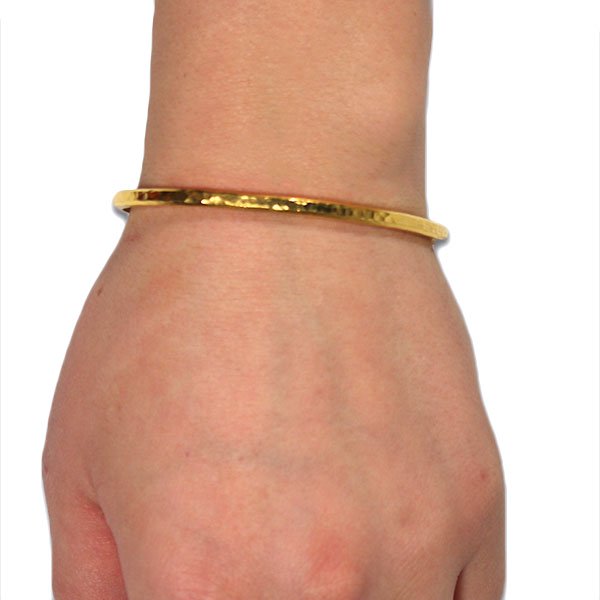
- 24k / .999+ gold sold by bullion dealers as “wearable bullion” (1 oz cuffs and bangles are the cleanest example)
- 22k / .916 gold in markets where that is the savings standard (India in particular). A 22k piece contains 91.6% gold; melt on a 1 oz item is 3,974.21, not a full ounce
- Weight-priced investment jewelry from specialists such as Menē (24k gold and pure platinum, not “24k platinum”) and Nebü, sold by gram plus a stated making premium
It does not mean 10k or 14k retail jewelry, gold-plated fashion pieces, or gem-set items where the stones and the brand are most of the ticket. Those can be beautiful. They are a lousy way to store ounces.
The premium is the product
Compare the buy-side premium, not the vibe.
| Form | Typical buy premium over melt | Wear it? | How you sell it |
|---|---|---|---|
| 1 oz gold bar | Often well under 1% on common 1 oz bars; compare gold prices | No | Dealers, high recognition |
| 1 oz gold coin | Live coin average recently around the mid-single digits; cheapest sovereigns can be much tighter | No | Dealers, pawn, wide bid |
| 1 oz 24k bullion bracelet | About 5–8% on FBP’s 1 oz 24k bracelet board as of mid-August 2026 (Hero Bullion ~4.7%, Money Metals Exchange ~7.7%) | Yes | Dealers + melt |
| Menē-style 24k jewelry | About 30% over metal value; Menē buyback is metal value minus a 10% fee | Yes | Brand buyback, then melt |
| Retail 10k / 14k / 18k | Often double to several times the gold inside | Yes | Scrap / pawn; large haircut |
A 1 oz 24k cuff at 6% over 4,338.66 sits near an average bullion coin and far above a 1 oz bar. A Menē piece at ~30% in and 10% out needs a large gold move before you break even. Mall karat jewelry rarely gets there. Wearable gold is cheap relative to jewelry stores, and expensive relative to bars.
Why wearable gold still works
Portability without a briefcase. A 1 oz 24k bracelet is one ounce you can keep on a wrist. For someone who travels and wants a small emergency reserve that is not a stack of Maples in a hotel safe, that is the actual use case. Local jewelers and precious-metals buyers in most cities will quote melt on 24k and 22k if the piece is hallmarked and testable.
It is a real savings form in large markets. Indian households still hold the bulk of the country’s private gold in jewellery (WGC and sell-side estimates put the stock in the tens of thousands of tonnes). 22k remains the dominant standard. Wedding gold, family transfers, and gold-backed loans are the liquidity path there, not a U.S. dealer bid. That is wearable wealth as a household balance-sheet item, not a travel hack.
A sleeve of a stack, not the stack. Coins and bars remain the cheapest way to own gold. Wearable pieces make sense for the ounces you might need on your person: a trip, a family event, a “if the cards fail” reserve. The rest should stay in low-premium bullion.
When it is not the right call
You are trying to minimize cost per ounce. Buy gold bars or common 1 oz coins. A 5–8% jewelry premium is a choice you pay for wearability.
The piece is fashion first. Cuban chains, branded 14k, anything plated or hollow, anything where the jeweler will not tell you gram weight and karat. Making charges on fashion gold often dwarf the metal. At today’s spot, that mistake is more expensive in dollars than it was when this article first ran.
You need dealer-grade liquidity tomorrow. A Maple or a 1 oz bar has a posted bid almost everywhere. A unique 24k design does not. Menē’s 10% buyback fee is honest and still a wide spread. Pawn quotes on jewelry are usually melt minus a deeper cut.
24k will get beat up. Pure gold is soft. Daily-wear rings and chains in 24k scratch and bend. 22k (91.6%) exists because the 8.4% alloy buys hardness. If you will actually wear the piece every day, 22k from a transparent dealer is often the better engineering choice, with the melt math adjusted for purity.
Travel is not a loophole. U.S. FinCEN Form 105 covers currency and monetary instruments over $10,000. Worn personal jewelry is generally not in that bucket. It is also not a free pass: declare articles acquired abroad, follow the destination country’s rules, and do not treat a stack of identical 1 oz cuffs as an outfit. Register high-value pieces with CBP before you leave if you will re-enter with them.
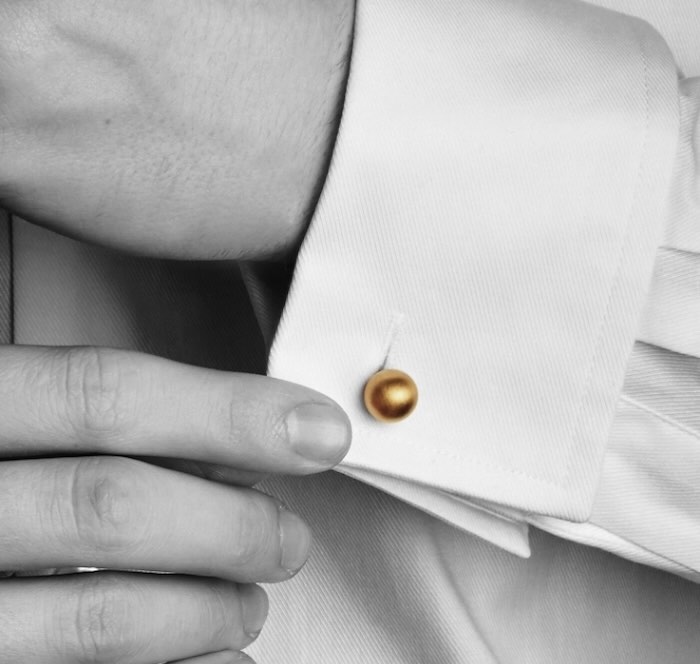
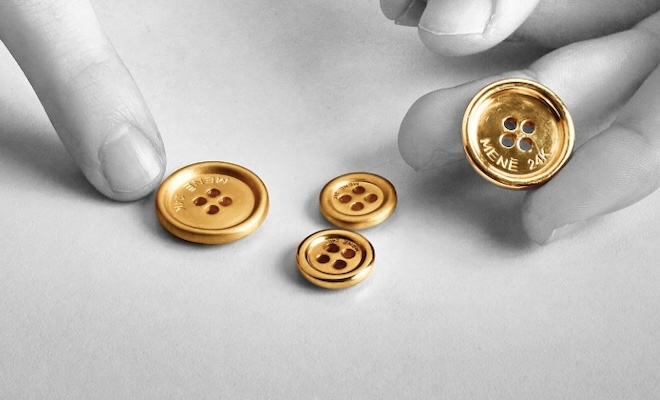
Silver, painted buttons, and gold watches are different products. Silver’s value density is too low. Hiding ounces in clothing is a theft problem, not a strategy. A Rolex trades as a collectible; melt is not the bid.
Dealer selection matters more than the design
The design is how you justify the premium. The dealer is how you keep it small.
For bullion-style 24k cuffs and bangles, shop the live board the same way you would a coin: 1 oz 24k gold bracelet prices. Money Metals Exchange still runs a dedicated 22k/24k investment-jewelry book. SD Bullion and APMEX-adjacent lines (including Nebü pieces) show up in the same category. For a longer product walkthrough, see 24k gold investment-grade jewelry.
Ask four things before you buy:
- Karat / fineness and exact gram weight (not “about an ounce”)
- Premium over live gold spot
- Whether the dealer will buy it back, and at what discount to melt
- Hallmark (22k/24k stamp, maker’s mark). Unmarked gold is a testing hassle on resale
If the seller cannot answer those, you are in a jewelry store, not a bullion counter.
Market context
The World Gold Council’s Q2 2026 jewellery report put global jewellery demand at 278 tonnes, one of the weakest second quarters in their series (down 17% year over year), while the value of that demand rose (about $40 billion, up 14%). Buyers adapted with lighter pieces, old-for-new exchanges, and a shift into bars and coins. High prices made fashion markup more painful. The wearable bid that still makes sense is the bullion-priced one: 24k or 22k, weight disclosed, premium in the same zip code as a coin.
Bottom Line
Wear gold as savings only when the piece is priced like bullion. A 1 oz 24k bracelet at mid-single-digit premium over 4,338.66 can be a rational travel and emergency sleeve. A 30% investment-jewelry brand, and especially 10k/14k retail, is a jewelry purchase that happens to contain gold. Keep the cheap ounces in bars and coins; put only the ounces you might need on your person into wearable form; compare dealers on premium, not on the clasp.
Related Guides
- 24k Gold Investment Grade Jewelry
- Storing Wealth in 24k Gold Jewelry
- 1 oz 24k Gold Bracelet prices
- Gold bullion prices
- Gold spot charts
- Money Metals Exchange
FindBullionPrices.com is a price-comparison site. Links to dealers may be affiliate links.