The U.S. Treasury Department announced today that the United States Mint surpassed $1 billion in numismatic product sales during fiscal year 2026 — a milestone the agency called a “20+ year high.” Treasury Secretary Scott Bessent credited the achievement to Treasurer Brandon Beach’s “ambitious challenge to more than double @USMint’s annual sales,” and praised Mint Director Paul Hollis for executing the vision. The surge was driven by the Semiquincentennial commemorative program celebrating the 250th anniversary of American independence, along with what the Treasury described as “strong demand for the President Donald J. Trump $1 Coin.”
To put this in perspective, the Mint’s numismatic revenue in FY2025 was $490.1 million. Reaching $1 billion means the Mint more than doubled its collectible product sales in a single fiscal year — consistent with Beach’s stated goal. This is separate from the Mint’s bullion coin programs, which generate billions more in revenue annually through products like American Silver Eagles and American Gold Eagles.
What Drove the $1 Billion Milestone
The Semiquincentennial — America’s 250th birthday — gave the Mint a once-in-a-lifetime product lineup. Congress and the Mint had years to plan for the anniversary, and the resulting program was the most ambitious slate of collectible coins and medals the Mint has released in decades. Nearly every product carried dual-dated “1776~2026” inscriptions and “250” privy marks, giving them a commemorative significance that resonated with both seasoned collectors and first-time buyers.
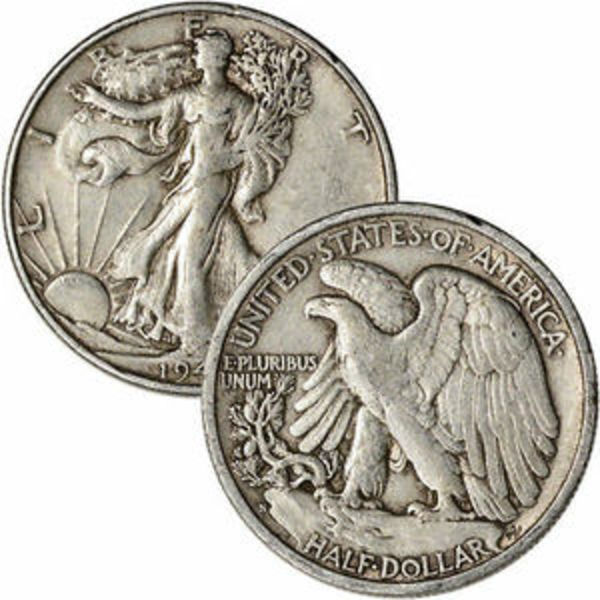
The centerpiece of the anniversary program was the Best of the Mint series, which reproduced five of the most beloved coin designs in American history as gold coins with companion silver medals. The five releases included the Standing Liberty Quarter, Walking Liberty Half Dollar, Indian Head $5 Gold, Buffalo Nickel, and the Saint-Gaudens Double Eagle. Each set paired a gold coin with a silver medal, and demand was strong across all five releases. The Saint-Gaudens High Relief gold coin in particular drew intense collector interest, echoing the legendary 1907 original that many numismatists consider the most beautiful coin ever produced.
Beyond the Best of the Mint series, the Mint’s standard annual products saw record-level debuts. The 2026 Silver Proof Set, with a mintage of 271,250 units, sold out almost immediately after release. The 2026 Proof Set moved 379,278 units in its first week alone — exceeding the first-week sales of the 2023, 2024, and 2025 proof sets. The 2026 Mint Set sold 292,204 in its opening week. These numbers reflect not just Semiquincentennial enthusiasm but also a broadening collector base drawn in by the anniversary program.
The FIFA World Cup 2026 Commemorative Coin Program added another revenue stream. With the United States co-hosting the tournament alongside Canada and Mexico, the Mint issued a series of commemorative coins tied to the global sporting event — a natural complement to the patriotic themes of the 250th anniversary.
Rounding out the high-demand releases, the 2026-W Palladium Eagle sold out its entire production run of 4,971 coins. Proof Silver Eagles and other premium products also contributed meaningfully to the total.
The Trump $1 Coin: Sales, Controversy, and Legal Basis
The Treasury Department specifically cited “strong demand for the President Donald J. Trump $1 Coin” as a factor in reaching the $1 billion milestone. The Semiquincentennial President Donald J. Trump $1 Coin was struck at the Philadelphia Mint on July 4, 2026, with 250,000 coins produced. The coin’s design was created by Chief Engraver Joseph Menna using an official White House photograph as reference.
The Mint offered the coins to the public in rolls of 25 at $61 and bags of 100 at $154.50 — significant premiums over the $25 face value of a roll and $100 face value of a bag, reflecting their collectible status.
The legal authority for depicting a sitting president on the coin comes from the Circulating Collectible Coin Redesign Act of 2020, codified at 31 USC 5112(y)(1)(C). Previous law had prohibited depicting living people on U.S. currency. The Act authorized the Mint to produce coins featuring the current president as part of the Semiquincentennial program.
The coin has not been without controversy. Treasurer Beach recorded a Treasury Department social media video encouraging Americans to purchase rolls of Trump $1 coins at banks and spend them at “liberal coffee shops.” In the video, Beach stated: “They will not like it. But I love it. And I love this president.” The video drew criticism for using an official government platform for what critics characterized as partisan messaging.
Separately, two members of the Citizens Coinage Advisory Committee (CCAC) told ABC News that the advisory body never reviewed the Trump $1 coin design as required by law. The CCAC is a congressionally mandated panel that advises the Secretary of the Treasury on coin and medal designs. Whether the design underwent the required review process remains a matter of dispute.
Historical Context: How $1 Billion Compares
The Treasury’s description of the $1 billion figure as a “20+ year high” suggests that numismatic sales have not reached this level since approximately FY2003 or earlier. That context is important for understanding how unusual this year has been.
It is also important to distinguish numismatic revenue from total Mint revenue. In calendar year 2021, the Mint’s total revenue reached $5.4 billion, but approximately 70% of that — around $3.8 billion — came from bullion coin sales. Numismatic products accounted for roughly 10.6% of total revenue that year. The bullion and numismatic programs serve different markets: bullion coins are sold in bulk to authorized purchasers at prices close to spot metal value, while numismatic products are sold directly to collectors at significant premiums.
In FY2009, the Mint’s total revenue was approximately $2.9 billion, with bullion revenue alone reaching $1.7 billion — a record at the time driven by the financial crisis and surging precious metals demand. But the numismatic side of the operation did not see comparable numbers.
The jump from $490.1 million in FY2025 numismatic revenue to over $1 billion in FY2026 represents more than a 100% increase in a single year. That kind of growth is virtually unheard of for the Mint’s collectible product line and speaks to the extraordinary nature of the Semiquincentennial product slate. As Coin World reported, the Mint “bolstered product line offerings for 2026” specifically for the anniversary, and the strategy clearly paid off.
What the $1 Billion Milestone Means for Collectors
For collectors, the record sales carry several implications — some positive, some challenging.
The most immediate effect is scarcity. When the Mint’s products sell out faster, collectors who hesitate risk missing out entirely. The 2026 Silver Proof Set’s near-instant sellout is a case in point. With a mintage of 271,250, the set was gone before many collectors could place orders. The 2026-W Palladium Eagle, at just 4,971 coins, was an even more extreme example. Collectors who follow Mint releases closely had an advantage; casual buyers were often shut out.
That scarcity has driven secondary market premiums upward. Products that sold out at issue price are now trading at premiums on the secondary market, particularly the Best of the Mint sets and the Silver Proof Set. For collectors who managed to purchase at issue, the rising secondary market values are welcome. For those who did not, the cost of assembling a complete Semiquincentennial collection has increased.
The Semiquincentennial is a once-in-250-years event. The 1976 Bicentennial coins remain highly collectible 50 years later. The 2026 coins — with their higher production quality, gold content in the Best of the Mint series, and historical dual-dating — are likely to hold similar or greater long-term appeal. These products will not be repeated, and that finality is already driving collector behavior.
Perhaps the most significant long-term effect is the expansion of the collector base. The Semiquincentennial brought new buyers to the Mint’s website for the first time. Many of these first-time purchasers were motivated by patriotism, by the Trump $1 coin, or simply by media coverage of the 250th anniversary. Some percentage of these new buyers will become ongoing collectors, which could support demand for Mint products in future years even after the anniversary program concludes.
The quality of the 2026 program has also been well-received by the numismatic community. Reproducing classic designs like the Saint-Gaudens Double Eagle and Walking Liberty Half Dollar in gold — designs that many collectors consider the high-water mark of American coin artistry — earned praise from reviewers and collectors alike.
What It Means for Bullion Investors
For investors focused on precious metals as an investment, the $1 billion numismatic milestone is largely a separate story — but it does have some crossover effects worth understanding.
The $1 billion figure refers to numismatic product sales, not bullion. The Mint’s bullion programs — American Silver Eagles, American Gold Eagles, American Gold Buffalos, and American Platinum Eagles — operate on a different track. Bullion coins are sold through a network of authorized purchasers at prices tied to spot metal values, and those sales are not included in the numismatic total announced today.
That said, there is some overlap. Products like proof Silver Eagles and proof Gold Eagles sit at the intersection of bullion and numismatics. These coins contain the same precious metal content as their bullion counterparts but are sold at higher premiums due to their proof finish and collector appeal. When the Mint devotes production capacity to high-demand proof products, it can theoretically compete with bullion production for resources. In practice, however, the supply chains are largely separate — bullion blanks come from different sources than the planchets used for proof and collectible coins.
The more meaningful effect for bullion investors may be the influx of new buyers into the precious metals market. The Semiquincentennial program introduced a wave of first-time buyers to gold and silver coins. Many of these buyers purchased gold Best of the Mint sets or proof Silver Eagles as collectibles, but in doing so, they became familiar with precious metals ownership. Some percentage of these new entrants are likely to become bullion buyers over time, purchasing Silver Eagles or Gold Eagles at bullion prices as an investment rather than paying collector premiums.
For existing bullion investors, the key takeaway is that the Mint’s focus on its numismatic program does not reduce the availability of bullion products. Bullion Eagle production continues on its normal schedule, and bullion premiums are driven by spot prices and market demand rather than by the Mint’s numismatic sales performance.
What Is Still Coming in Fall 2026
The Semiquincentennial program is not over. Several high-profile releases are scheduled for the remaining months of calendar year 2026, and while they fall into FY2027 for accounting purposes, they continue the 250th anniversary theme.
On November 5, the Mint is scheduled to release the Trump $250 Gold Proof coin. This is a separate product from the $1 circulating coin and represents a premium gold offering tied to the Semiquincentennial. Given the demand for the Trump $1 coin, the gold proof is expected to attract significant collector interest.
On November 13, the Buffalo Anniversary 1/10 oz Gold coin is set for release. The American Gold Buffalo has a dedicated collector following, and the anniversary edition adds Semiquincentennial significance to an already popular series.
Additional fall releases include a Green Lantern Comic Art gold proof coin with companion silver medals and a Herbert Hoover Presidential Silver Medal. The Comic Art series has been a steady performer for the Mint, and the presidential medal program continues to offer affordable entry points for new collectors.
Collectors watching for these releases should be prepared for fast sellouts. The pattern throughout 2026 has been consistent: high demand, limited mintages, and products disappearing from the Mint’s website within hours or days of release.
The Bigger Picture
The $1 billion milestone is a remarkable achievement for the U.S. Mint’s numismatic division, and it reflects a convergence of factors that are unlikely to repeat anytime soon. The 250th anniversary provided the occasion. An aggressive product strategy — from reproducing classic coin designs in gold to issuing a sitting president’s portrait on a circulating coin — provided the product. And a combination of collector enthusiasm, patriotic sentiment, and political interest provided the demand.
Whether the Mint can sustain anything close to this level of numismatic sales in FY2027 and beyond remains to be seen. The Semiquincentennial was, by definition, a singular event. But the expanded collector base, the demonstrated appetite for premium products, and the Mint’s evident willingness to pursue ambitious product lines suggest that the bar has been raised. The next few years will reveal whether the $1 billion year was a peak or a new baseline.
For collectors, the message is clear: the 2026 products are finite, and demand has consistently outpaced supply. For bullion investors, the numismatic boom is a parallel story that does not directly affect bullion availability or pricing — but it may bring new participants into the broader precious metals market.
FindBullionPrices.com is a price comparison website for precious metals products and is not a dealer. The information in this article is provided for informational and educational purposes only and does not constitute financial, investment, or legal advice. Bullion prices fluctuate based on market conditions, and past performance is not indicative of future results. Always conduct your own research and consult with a qualified financial advisor before making investment decisions. Product availability, mintage figures, and pricing referenced in this article are based on publicly available information at the time of publication and are subject to change.