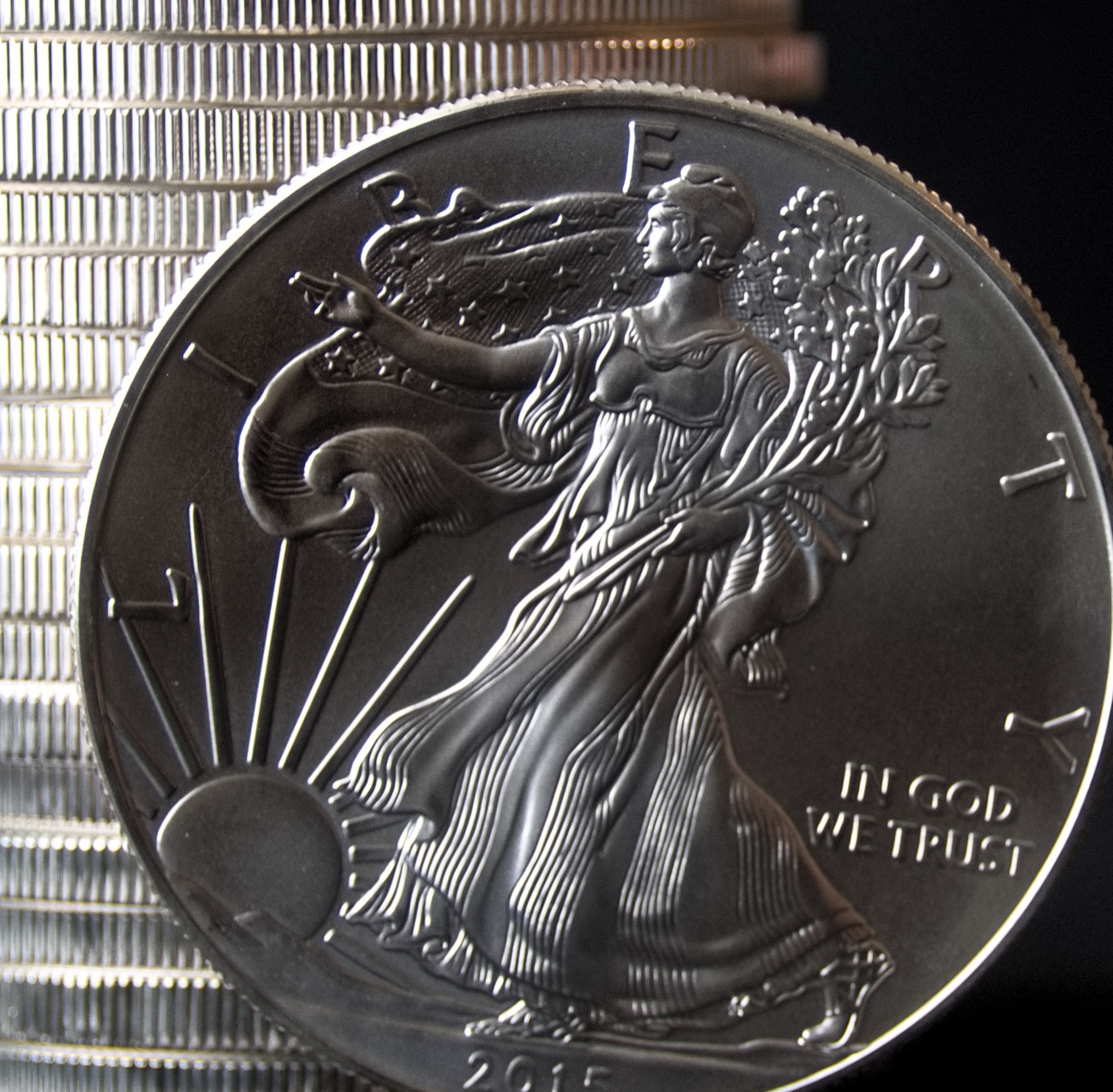
The US Mint is one of the most significant coin producers and one of the world’s oldest continually operating minting operations. In recent years, a variety of production problems related to the production of bullion coins have struck the Mint, leading to tremendous volatility with Silver Eagle premiums.
Some investors continue buying Silver Eagles despite the higher premiums, hoping that their dollar-cost average and rising commodity prices will offset the cost increases. Other investors are buying alternative bullion coins from other government mints.
Silver Eagle Premiums and Production Costs
The US Mint purchases raw materials for coins either in large rolls of metal strips or as ready-to-strike planchets from a select few approved suppliers, such as Sunshine Minting, Coins’N’Things, and other precious metals producers.
Before minting, the blanks are sent through a furnace to soften the material, referred to as annealing. The blanks are then rinsed and cleaned before the upsetting step raises the edges or rim of the blank to turn it into a planchet, which is then ready to be struck into a coin.
Each step in the production process costs the Mint resources, such as wages, electricity, water, tools, dies, and other materials. The law requires the Mint to charge Silver Eagle premiums which covers the cost of each coin’s production to prevent the program from operating at a loss.
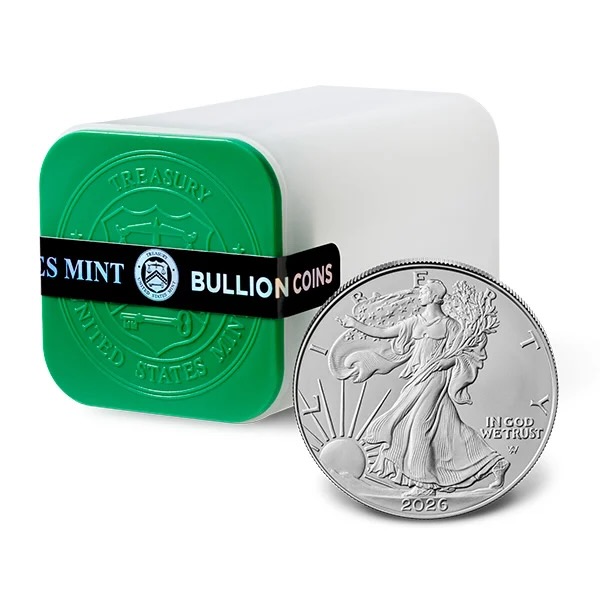
The premium that the Mint charges at a wholesale level to the Authorized Purchasers includes the production costs, which also reflects the packaging, and distribution of each coin.
The West Point Mint is the only facility that produces Silver Eagle coins, which now feature the W mint mark.
Results from a recent third-party audit have shown that the Mint’s production techniques remain some of the most efficient because of regular and ongoing continuous improvements for the last 75 years.
Although newer processes exist for manufacturing large volumes of small parts (such as injection molding), the Mint’s ability to produce the quantity and quality of metal stampings is far more economically cost-effective.
Authorized Purchasers
Just ten companies in the US that meet the very stringent criteria can buy wholesale Silver Eagle coins directly from the Mint. The criteria and process of becoming a U.S. Mint Authorized Purchaser are arduous and require significant financial capital.
Some of the Authorized Purchasers are companies familiar to precious metals investors, including wholesalers and one primary online bullion dealer. Others include financial and banking institutions that provide an array of investment solutions.
| Company | Headquarters | Authorized Metals |
|---|---|---|
| A-Mark Precious Metals Inc (AMRK) | El Segundo, CA | Silver, Gold, Platinum & Palladium |
| American Precious Metals Exchange (APMEX) | Oklahoma City, Oklahoma | Silver, Gold Platinum & Palladium |
| Coins & Things, Inc. (CNT) | Bridgewater, Mass. | Silver, Gold Platinum & Palladium |
| Dillon Gage Inc. of Dallas | Addison, Texas | Silver, Gold Platinum & Palladium |
| Fidelitrade, Inc. | Wilmington, Delaware | Silver, Gold Platinum & Palladium |
| Jack Hunt Coin Broker, Inc. | Kenmore, New York | Silver, Gold Platinum & Palladium |
| Manfra, Tordella, & Brookes, Inc. (MTB) | New York, New York | Silver, Gold Platinum & Palladium |
| ScotiaMocatta (Scotia Bank) | New York, New York | Silver, Gold Platinum & Palladium |
| StoneX Bullion | Santa Monica, California | Silver, Gold Platinum & Palladium |
| The Gold Center | Springfield, Illinois | Silver only |
Monthly Silver Eagle Sales Volume
The Mint’s monthly sales reports track how many bullion Silver Eagles the Authorized Purchasers have ordered. Because the Mint only strikes coins against confirmed orders, these sales figures are effectively mintage reports.
| Year | 1 oz ASE Coins Sold |
|---|---|
| 2016 | 37,701,500 |
| 2017 | 18,065,500 |
| 2018 | 15,700,000 |
| 2019 | 14,863,500 |
| 2020 | 30,089,500 |
| 2021 | 28,275,000 |
| 2022 | 15,140,000 |
| 2023 | ~25,000,000 |
| 2024 | ~14,000,000 |
| 2025 | ~11,568,000 |
| Apr 2026 | 380,500 |
| May 2026 | 0 |
The 2026 figures tell a dramatic story. The U.S. Mint sold just 380,500 Silver Eagles in April 2026 — a fraction of what earlier years produced in a single month. In May 2026, that number dropped to zero. No one-ounce Silver Eagles were sold at all. Whether this signals a production shift, a supply constraint at the blank level, or a deliberate Mint decision, the effect on premiums is direct: fewer coins entering the market puts upward pressure on dealer pricing for existing inventory.
The most significant mintage year for 1 oz Silver Eagle coins was 2015. In that year, the Mint produced more than 47 million coins at the West Point Mint, indicating a production capacity of nearly 4 million coins monthly.
Mintage reports from the first few months of 2023 indicate that the Mint was producing only 900,000 coins per month, the equivalent to just 1,800 monster boxes. This is drastically lower than regular demand and limits the supply of coins and drives up premiums.
During the 2020 mintage year, the West Point Mint shut down operations due to pandemic lockdowns. During this time production was temporarily moved to the Philadelphia Mint. Following the reopening of the West Point Mint, the mint released reports indicating difficulty sourcing suitable blank planchets from suppliers leading to the cancellation of the 2022 Morgan Silver Dollar and Peace Silver Dollar commemorative issues.
Some of the planchets suppliers are owned by Authorized Purchasers, creating a closed-looped for the production and distribution of silver bullion coins, with the US Mint providing manufacturing services at a fixed cost.
Less than a dozen companies control the wholesale market; several are also primary raw materials and blank planchets suppliers.
Across the market, it is apparent that premiums on 1 oz silver coins from other sovereign mints have remained lower than Eagles.
Silver Eagle Premium Trends
As of July 2026, Silver Eagle premiums sit at 15.63% over spot — about $9.69 per coin above the raw silver price. FindBullionPrices tracks this daily on the Silver Eagle premium history chart, which shows how that number has moved over time.
For context, premiums on Silver Eagles topped 50% during the COVID-era supply crunch in 2020-2021. They have since pulled back but remain higher than premiums on other sovereign silver coins. Canadian Silver Maple Leafs currently carry a 12.13% premium, and generic silver rounds sit at just 7.78%. That gap exists because Silver Eagles have both the highest brand recognition among U.S. buyers and the most constrained supply chain — every coin must pass through the Mint’s authorized purchaser network before reaching a dealer.
The premium you pay on a Silver Eagle is not just a dealer markup. It reflects the entire cost structure from blank production through AP distribution, plus market demand at the retail level. When Mint output drops — as it did in early 2026 — premiums tend to widen because dealer inventory gets tighter while buyer demand stays steady or increases.
Buyers looking to lower their per-ounce cost can check our breakdown of low-premium alternatives to Silver Eagles, which covers rounds, bars, and other sovereign coins that consistently trade closer to spot.
The Year-End Premium Cycle
Silver Eagle premiums follow a seasonal pattern that repeats every fall and winter. Understanding the cycle helps buyers time purchases and avoid paying peak premiums during the most expensive stretch of the year.
The November Production Pause
Each November, the West Point Mint pauses production of the current year’s bullion Silver Eagles to retool dies and prepare for the next year’s date. No bullion Silver Eagles ship to Authorized Purchasers during this transition. The pause typically lasts four to six weeks, with the first 2027-dated coins reaching APs sometime in January.
For dealers, the pause means no new inventory at wholesale. Whatever 2026-dated Silver Eagles remain in stock are what they have to sell through the end of the year. That finite supply, combined with holiday gift demand, pushes premiums higher in late November and December compared to other months.
The 2026 pause carries extra weight. Bullion Silver Eagle sales were already thin through the spring and summer — just 380,500 coins in April and zero in May. Authorized Purchasers entered the fall with less inventory than usual, which means the November cutoff hits a market that was already supply-constrained.
2026 vs. 2027 Date Premiums
When the calendar turns and 2027-dated Silver Eagles start shipping, the premium picture splits in two.
2026-dated coins become a closed set. No more will be struck. Dealers holding remaining 2026 inventory may price them slightly above 2027 coins, particularly if the 2026 mintage total comes in low relative to recent years. That dynamic has played out before — 2022 Silver Eagles, which had a comparatively small mintage of 15.1 million coins, still carry a modest date premium over their 2023 and 2024 counterparts.
The 2026 date also has a structural distinction. This is the final year of the Semiquincentennial dual-date coins, and 2026 Silver Eagles carry the 1776-2026 privy mark. That mark will not appear on 2027 or future Silver Eagles. The privy mark alone does not dramatically change the bullion premium on circulated or BU coins, but it gives the 2026 date a collectible angle that purely bullion-focused dates lack. It is reasonable to expect 2026-dated Silver Eagles to hold a small but persistent premium over 2027 coins once the transition is complete.
The First-Year Bump
New-date Silver Eagles reliably carry a slight premium over previous-year coins during their first weeks of availability. Dealers price the newest date higher because collectors want the current year, and because initial shipments from the Mint take time to fill the wholesale pipeline.
This first-year bump is usually modest — a dollar or two per coin above the prior year — and it fades within a few months as supply catches up. But for buyers placing large orders (tubes of 20 or monster boxes of 500), even a small per-coin premium adds up. Buyers who are indifferent to the date can save money by purchasing remaining 2026-dated coins before the 2027s arrive, or by waiting until March or April when the new-date premium has settled.
December Gift Demand
Silver Eagles are among the most popular precious metals gifts during the holiday season. Individual coins in presentation cases, proof editions, and even rolls or tubes make common gifts for collectors and first-time bullion buyers alike.
That seasonal demand spike coincides with the production pause, creating a supply-demand mismatch that reliably lifts premiums in December. Dealers know this and begin adjusting prices upward in late November. Buyers planning holiday purchases can save by ordering in early to mid-November, before the pause takes full effect and gift-season pricing kicks in.
The pattern reverses in January and February. Once the holidays pass and 2027-dated coins begin flowing, premiums typically pull back from their December highs. That post-holiday dip is often the best buying window of the year for Silver Eagles on a premium-per-ounce basis.
What This Means for Q4 2026
The combination of low 2026 mintage, the November production pause, Semiquincentennial privy mark collectibility, and holiday demand creates a premium environment that favors sellers over buyers through year-end. Buyers who want 2026-dated Silver Eagles at the lowest available premium should act before mid-November. Those who are date-indifferent and patient will likely find better pricing in late January or February 2027, once the new-date coins have filled the pipeline.
The Mint’s current wholesale premium to Authorized Purchasers remains at $3.05 per coin above the silver spot price. That wholesale figure has held steady since the Mint’s January 2026 repricing, which adjusted several silver product prices upward. The retail premium that buyers actually pay reflects the AP margin, dealer margin, and market conditions on top of that $3.05 base.
2026 Silver Eagle Collector Editions
The Semiquincentennial year has produced an unusually deep lineup of collector-grade Silver Eagles alongside the standard bullion coins. These editions carry higher premiums than BU bullion Eagles, but they also carry mintage caps that give them a different value trajectory over time.
The 2026 Enhanced Uncirculated Silver Eagle opened with 117,233 coins sold on its first day in July. The 2026 Proof Silver Eagle has topped 451,000 units sold through late October. Both editions feature the Semiquincentennial dual date and are West Point issues with the W mint mark.
These collector editions do not directly affect bullion premiums, but they do absorb some of the collector demand that might otherwise flow into BU bullion coins. When the Mint offers multiple Silver Eagle variants in the same year, some portion of the market buys the special edition instead of (or in addition to) the standard bullion coin.
More on Silver Eagle and Bullion Premiums
If you want to dig deeper into how premiums work and what they mean for buyers, start with What Is Premium Over Spot? A Plain-English Guide for Bullion Buyers. For the full data story on Silver Eagles specifically, see Silver Eagle Premiums: What the Data Shows from COVID to Today. You can also browse live premium data for every major product on the Premium History dashboard.
Disclaimer: This article is for informational purposes only and does not constitute financial or investment advice. Precious metals investments carry risk, and past performance does not guarantee future results. Always conduct your own research before making purchasing decisions. Prices and availability are subject to change.