Pick up a U.S. dime, quarter, or half dollar minted before 1965 and you are holding something fundamentally different from the coins in your pocket today. These older coins are made from 90% silver. Commonly referred to today as junk silver, this composition was standard in American coinage for more than a century, until rising prices and surging industrial demand forced Congress to change how U.S. money was made.
Understanding why silver left American coinage helps explain why these coins remain an important part of the precious metals market and why investors continue to buy them as one of the most practical ways to hold physical silver.
American Coinage Before 1965
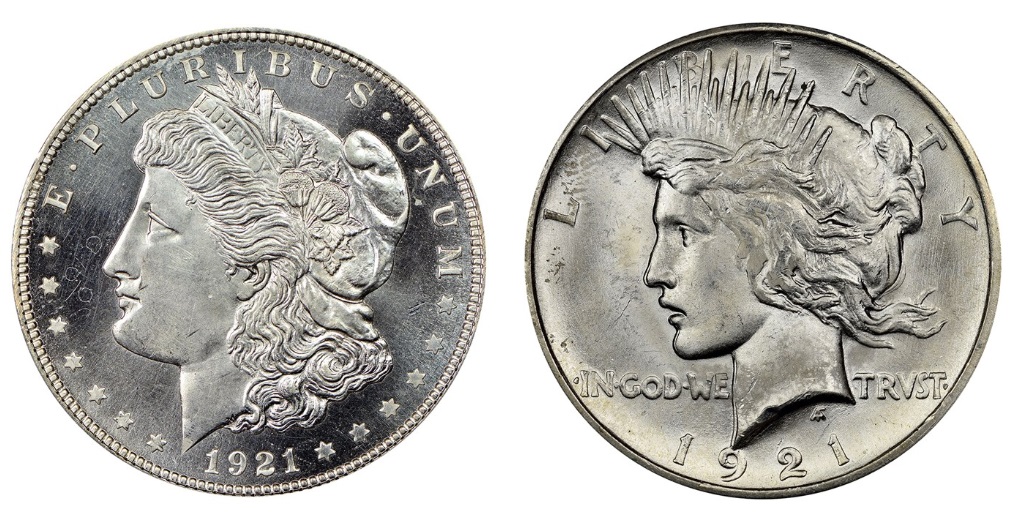
For more than 125 years, the dimes, quarters, and half dollars circulating in everyday American commerce were minted from a 90% silver, 10% copper alloy known historically as coin silver. This standard was formalized in the Coinage Act of 1837 and held without interruption for the next century and a quarter.
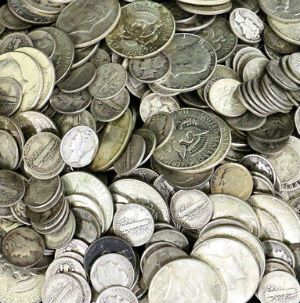
The coins produced under this standard included:
- Mercury Dimes (1916–1945)
- Roosevelt Dimes (1946–1964)
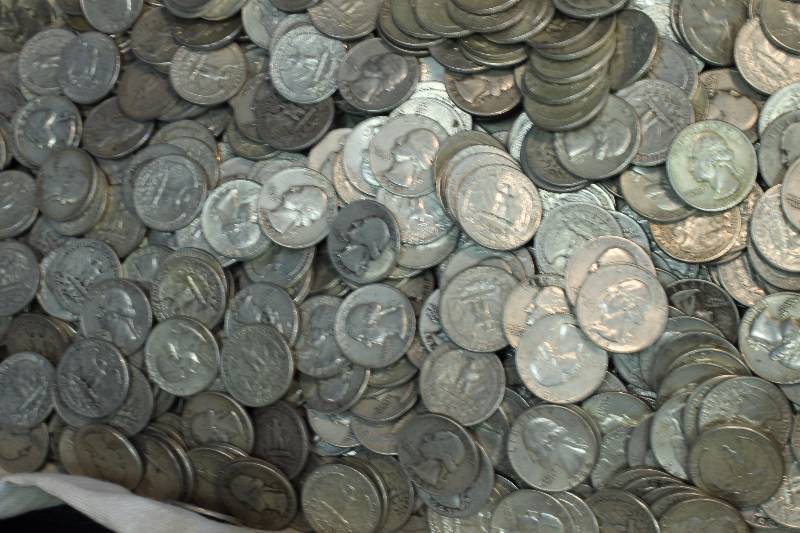
- Washington Quarters (1932–1964)
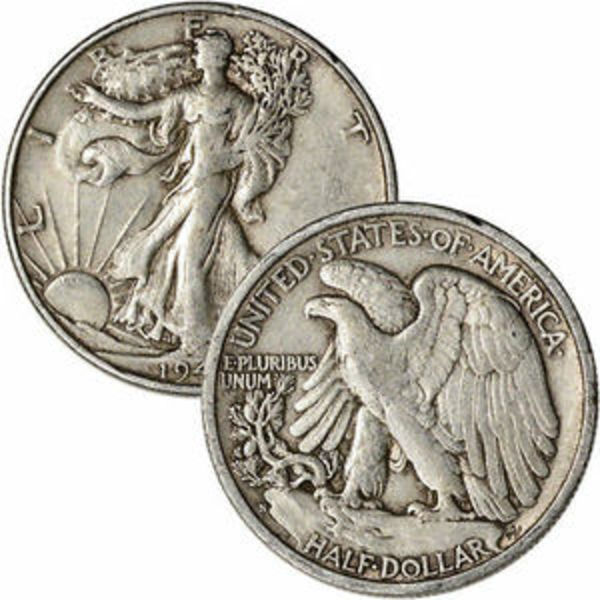
- Walking Liberty Half Dollars (1916–1947)
- Franklin Half Dollars (1948–1963)
- Kennedy Half Dollars (1964, first year only at 90%)
Because these coins were produced in the hundreds of millions and circulated widely through everyday commerce, they remain relatively easy to find today. Their most recognizable feature is the solid silver color visible on the coin’s edge — unlike modern clad coins, which show a distinct copper stripe when viewed from the side.
The Forces That Ended Silver Coinage
By the early 1960s, two converging pressures made it increasingly difficult for the U.S. government to continue producing silver coins.
Rising Silver Prices
As the market value of silver climbed throughout the postwar decades, the metal contained in a dime, quarter, or half dollar began approaching — and in some cases exceeding — the coin’s face value. When the intrinsic value of a coin exceeds its denomination, people stop spending it and start saving or hoarding it. This phenomenon, sometimes described through Gresham’s Law, caused silver coins to disappear from circulation faster than the Mint could replace them, producing a nationwide coin shortage by the early 1960s.
Industrial Demand for Silver
At the same time, silver had become a critical material in several fast-growing industries that were consuming it in quantities that hadn’t existed a generation earlier.
Photography and film were the largest consumers. Silver halide crystals were the fundamental ingredient in photographic emulsions — both for consumer cameras and for the high-resolution reconnaissance films developed for military and intelligence use.

Under the leadership of William Vaughn, Kodak developed grain-dense, high-resolution emulsions for the CIA and U.S. Air Force. These films were used in imaging systems aboard aircraft including the SR-71 Blackbird and the U-2 spy plane, providing the aerial intelligence capabilities that defined Cold War reconnaissance until digital satellite imaging matured decades later. The silver requirements for these programs were substantial and continuous.
Medical imaging followed the same chemistry. As hospitals expanded and diagnostic X-rays became routine through the 1950s and 1960s, medical demand for silver grew in parallel. Consumer and industrial electronics added further pressure: silver’s conductivity and chemical stability made it essential in emerging technologies, and the development of miniaturized silver oxide batteries — first used in hearing aids and small medical devices — opened consumption categories that hadn’t existed before.
Together, these industrial uses absorbed a growing share of global silver supply. As prices rose and hoarding accelerated, the government was effectively competing with industry for the same metal it was trying to put into circulation.
The Coinage Act of 1965
In June 1965, President Lyndon Johnson sent a special message to Congress requesting immediate legislation to address the coin shortage. The resulting Coinage Act of 1965, sponsored in the Senate by Absalom Robertson of Virginia, fundamentally changed the composition of U.S. circulating coinage in three ways.
Dimes and Quarters: Silver Removed Entirely
Beginning with the 1965 production year, quarters and dimes and were manufactured using copper-nickel clad metal — a copper core bonded between outer layers of a nickel alloy. The silver content dropped from 90% to zero. The clad construction was specifically designed to match the electrical resistance characteristics of the old silver coins, ensuring that the new coins would work in the vending machines and coin-operated equipment that had been calibrated for silver.
Half Dollars: Reduced to 40% Silver
The Kennedy Half Dollar, which had been issued in 90% silver for its debut year in 1964, was redesigned as a layered coin for 1965 through 1970. The core was an alloy of approximately 21% silver mixed with base metals; the outer cladding on each face was 80% silver. Averaged across the full composition, this produced a coin that was approximately 40% silver overall — a transitional standard that lasted until 1971, when silver was removed from half dollars entirely.
The Market Impact
Following the legislation, the Mint and Treasury released stockpiled silver onto the market to help meet industrial demand and moderate prices. Silver, which had been rising through the early 1960s, reached a low of approximately $1.29 per troy ounce in 1967 — before resuming its upward trajectory as industrial consumption continued to outpace supply. Within two years, the price had recovered to over $2.00 per ounce, and the long-term trend toward significantly higher silver prices was underway.
Historical silver price data sourced from publicly available commodity records. For current silver prices and historical charts, see FindBullionPrices.com.
What Happened to the Silver Coins
The pre-1965 silver coins already in circulation did not vanish immediately, but they did disappear quickly from everyday use. Within a few years of the Coinage Act, dimes and quarters with silver content had largely been pulled from active commerce — saved by individuals who recognized their metal value, acquired by dealers and refiners, or simply set aside in drawers and coin jars across the country.
Today, these silver coins are commonly traded in the precious metals market under the informal name junk silver. The term refers to common-date circulated coins that carry no significant numismatic premium — coins valued based on their silver content rather than their rarity or condition. Despite the name, there is nothing inferior about them. They are a standardized, widely recognized form of physical silver that has been in continuous use in the precious metals market for more than half a century.
Why Investors Buy Junk Silver Today
Pre-1965 silver coins remain one of the most practical formats for holding physical silver, for several reasons that have held consistent across decades of precious metals investing.
Fractional Denomination and Divisibility
Dimes, quarters, and half dollars represent small, granular units of silver. This divisibility is practically useful: it is easier to sell $5 face value of dimes than to liquidate a fraction of a one-ounce bar, and it provides flexibility in both buying and selling that larger-format bullion does not.
Standardized and Easy to Verify
The 90% silver composition is well established and universally recognized in the precious metals trade. Authentication is straightforward, and the silver content is calculable directly from face value — use our Silver Coin Value Calculator to check today’s prices: $1.00 face value of 90% silver coins contains approximately 0.715 troy ounces of silver (currently worth approximately 45.27 at today’s spot price). This predictability makes pricing and valuation simple.
Lower Premiums Over Spot
Because junk silver coins were produced in the hundreds of millions and have no collectible scarcity, they frequently trade at lower premiums over the spot price of silver than newly minted bullion coins. For investors accumulating physical silver in volume, $1,000 face-value bags — containing approximately 715 troy ounces of silver — are often among the most cost-efficient formats available. Premiums vary significantly between dealers, so comparing prices before purchasing is worthwhile.
A Tangible Piece of Monetary History
These coins circulated as everyday money through some of the most consequential decades in American economic history. For many investors, that historical dimension adds meaning to the holding — a tangible artifact of a monetary system in which currency contained intrinsic value.
Where to Buy 90% Silver Coins
Circulated silver coins are available from local coin shops, pawn brokers, precious metals dealers, and online bullion marketplaces. The most common purchase increments are:
- $1 face value — a practical entry point for new buyers
- $10 face value – typically standard bankrolls of quarters, halves, and dimes
- $100 face value — approximately 71.5 troy ounces of silver
- $1,000 face value bags — approximately 715 troy ounces; the standard large-quantity unit
Because premiums can vary meaningfully between dealers — sometimes by several percentage points over spot — using a price comparison tool before purchasing is recommended, particularly at larger quantities where small per-ounce differences compound into material cost differences.
The Legacy of Silver in American Coinage
The Coinage Act of 1965 marked the end of more than a 150 years in which precious metal circulated as everyday money in the United States. The combination of rising silver prices and accelerating industrial demand made that system economically unsustainable, and the shift to clad coinage was a practical response to those pressures.
The coins that predated that change are still with us. They trade not as curiosities but as functional units of physical silver — recognized, divisible, and relatively affordable. For investors who want exposure to silver in a form that requires no assay, no vault storage, and no unfamiliar counterparty, pre-1965 coins remain one of the clearest choices the market offers.
Related Guides
- Silver Coin Melt Value Calculator — check live melt values for every pre-1965 denomination
- Junk Silver Prices
- Junk Silver: What You Need to Know About 90% Silver Coins
- Junk Silver: A Smart and Affordable Way to Invest
- Reasons to Buy Junk Silver
- Junk Silver Below-Melt Deals
- Collecting and Investing in 90% Silver Half Dollar Coins
This article is for informational and educational purposes only and does not constitute financial or investment advice. Silver prices fluctuate and past market behavior is not indicative of future results. Consult a qualified financial advisor before making investment decisions.