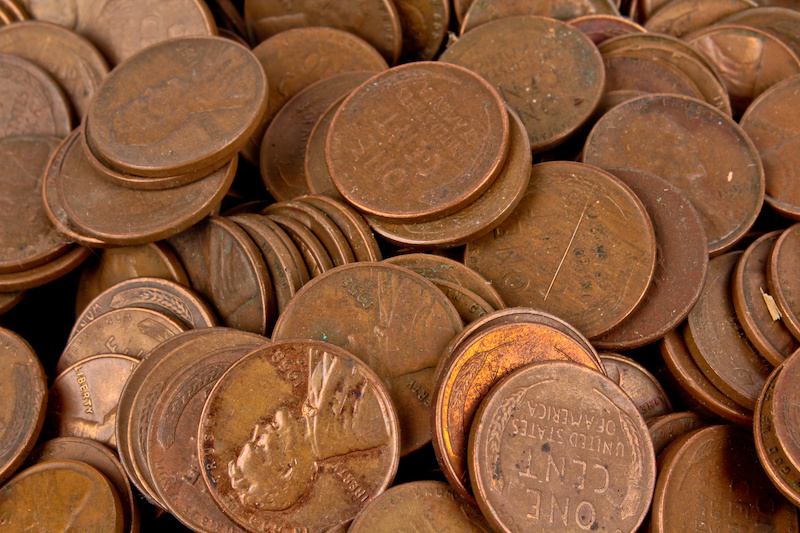
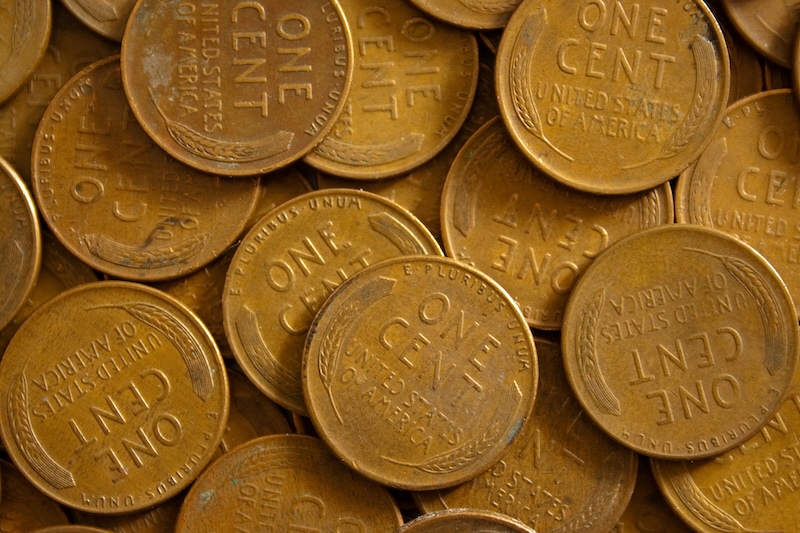
Lincoln cents minted before 1982 are 95% copper and 5% zinc, weighing 3.11 grams each. At today’s copper prices, each coin contains roughly 4.2 cents’ worth of metal, over four times its face value. Post-1982 pennies are 97.5% zinc with a thin copper plating and contain almost no commodity value.
You cannot legally melt U.S. pennies, but you can collect, sort, hold, and sell them as-is. The copper content is real. Whether it ever becomes extractable depends on future legislation, but in the meantime, pre-1982 pennies are one of the cheapest ways to accumulate a position in copper using recognizable government-issued coinage.
Why Pre-1982 Pennies Are Different
For most of the Lincoln cent’s history, the penny was a real copper coin. From 1909 through mid-1982, pennies were struck from an alloy of 95% copper and 5% zinc (earlier issues used tin in the mix as well). That composition gave each coin genuine commodity value beyond its one-cent face.
In 1982, the Mint switched to a zinc core with copper plating (97.5% zinc, 2.5% copper) because the metal content was approaching the coin’s face value. Two visually identical Lincoln cents can now have completely different compositions depending solely on when they were made.
The 1982 Transition Year
1982 is the tricky year. The Mint produced both the old copper composition and the new zinc composition during that year, and the coins look the same. Both were struck at Philadelphia and Denver in large-date and small-date varieties, creating eight distinct 1982 cent varieties.
The only reliable way to tell them apart is weight. Copper 1982 pennies weigh 3.11 grams. Zinc 1982 pennies weigh 2.50 grams. A digital scale accurate to 0.01 grams is all you need. Anything at 3.1g or above is copper. Anything at 2.5g is zinc.
Composition by Year
1909 through 1942: 95% copper, 5% tin and zinc, 3.11g, containing 2.95g of copper per coin. 1943: zinc-coated steel with zero copper (wartime substitution). 1944 through 1946: 95% copper, 5% zinc, struck from recycled shell casings. 1947 through mid-1982: 95% copper, 5% zinc, 3.11g. 1982 (some): copper at 3.11g, confirm by weight. 1982 (some) through present: 97.5% zinc, 2.5% copper plating, 2.50g.
The 1943 exception catches new sorters off guard. Those pennies are steel, not copper, and will stick to a magnet. If you find a 1943 penny that does not stick to a magnet, stop sorting immediately. A genuine 1943 copper cent is one of the most valuable U.S. coin errors and can be worth tens of thousands of dollars. For more on that, see our 1943 penny value guide.
What Are Copper Pennies Worth? The Math
The copper value of a pre-1982 penny is straightforward to calculate. Each coin weighs 3.11 grams with 95% copper content, giving you 2.9545 grams of pure copper per penny. There are 453.592 grams in a pound, so one pound of copper pennies contains about 146 coins and roughly 0.95 pounds of actual copper.
Pre-1982 Copper Pennies
At copper’s recent price near $6.49 per pound (check the live copper price for today’s rate), the math works out to about $6.16 in copper value per pound of pennies. The face value of those same 146 coins is $1.46. That puts the copper-to-face ratio at roughly 4.2x.
Scaled up, a standard 5-gallon bucket holds around 200 pounds of pre-1982 pennies: approximately 29,200 coins with a face value of $292. At $6.49/lb copper, the metal content of a full bucket runs about $1,232. That spread between face value and commodity value is what drives the stacking community.
Copper prices fluctuate with global industrial demand. The ratio compresses when copper falls and widens when it rises, but the face value floor of $0.01 per coin never changes, which means the downside risk on a copper penny is capped at face value. You can always spend them or return them to the bank.
Is It Legal to Melt Copper Pennies?
No. In December 2006, the U.S. Mint enacted regulations under 31 CFR Part 82 that prohibit melting one-cent and five-cent coins, as well as exporting them in quantities greater than $5 face value. Violations carry fines up to $10,000 and up to five years in prison.
This is different from pre-1965 silver coins, which can be legally melted. Silver coins were effectively demonetized from a commodity standpoint through separate legislation. Pennies remain legal tender under the full prohibition. If you’re interested in the silver side of commodity coinage, see our junk silver collection and silver coin melt value calculator.
That said, buying, selling, holding, and trading sorted copper pennies is entirely legal. The market for them exists because the commodity value is real even if you can’t personally extract it. If the melt prohibition were ever lifted, as eventually happened with silver coins, pre-1982 pennies would be immediately liquid at metal value.
Why Copper Prices Matter
Copper is the most economically significant industrial metal in the world. It is the primary conductor in electrical wiring, motors, transformers, and plumbing. Electric vehicles use three to four times more copper than conventional cars. Wind turbines, solar infrastructure, and data center construction are all copper-intensive. This demand profile ties copper prices closely to global manufacturing activity and the energy transition.
Supply constraints add upward pressure. New copper mines take 10 to 15 years from discovery to first production, and major closures like the Cobre Panama mine in late 2023 (which removed roughly 1.5% of global supply) can move prices meaningfully. For copper penny stackers, rising copper prices widen the gap between face value and metal value. Falling prices narrow it, but the floor never drops below one cent per coin.
Coin Roll Hunting for Copper Pennies
Pre-1982 pennies are still in circulation, though they get harder to find as collectors pull them out. The basic process: request penny rolls from your bank (a standard bank box is $25 face value, or 2,500 coins in 50 rolls), sort by date, and return the zinc to the bank at face value. Anything dated 1981 or earlier goes in the copper pile. Anything 1983 or later goes back. Only 1982 coins need to be weighed.
Hit rates vary by area. In well-searched markets, copper finds run 2 to 5% of a given box. In less-picked areas, some hunters find 10 to 15%. Either way, the cost of searching is zero since you return unsorted zinc at face value.
Copper Penny Sorting Machine
For volume sorting, automatic penny sorters detect the weight difference between the 3.11g copper coin and the 2.50g zinc coin. Mechanical sorters capable of processing several hundred coins per minute are available through eBay and Amazon, typically in the $50 to $300 range. If you’re processing a bank box per week, a sorter pays for itself quickly. For occasional roll hunting, hand-sorting the 1982 coins is manageable.
Storage and Practicality
Copper pennies are heavy relative to their metal value. A 5-gallon bucket at 200 pounds is difficult to move and takes up real space. Many stackers use smaller containers: 1-gallon buckets, coin tubes (50 pennies per tube), or bank bags for easier handling. Standard 1-cent coin tubes fit neatly in a box of 50, holding one full bank box worth of sorted pennies.
The weight-to-value ratio is the biggest practical drawback of copper penny stacking compared to copper bullion rounds and bars, which offer more concentrated copper exposure per unit of storage space. Pennies have the advantage of carrying a government-guaranteed face value floor and being instantly recognizable, but they take up a lot of room.
1909 through 1982. However, 1943 pennies are steel (wartime exception), and 1982 was a transition year where both copper and zinc versions were produced. Weigh 1982 pennies to confirm: 3.11g is copper, 2.50g is zinc.
How much is a copper penny worth in melt value?
At copper’s recent price near $6.49/lb, each pre-1982 penny contains about $0.042 in copper, roughly 4.2x its face value. Check the live copper price for current math.
Can you melt copper pennies?
No. Federal law (31 CFR Part 82) prohibits melting U.S. one-cent and five-cent coins. Collecting, holding, buying, and selling them as-is is legal.
How many copper pennies fit in a 5-gallon bucket?
About 29,200 coins weighing roughly 200 pounds, with a face value of $292. At current copper prices, the metal content is worth approximately $1,232.