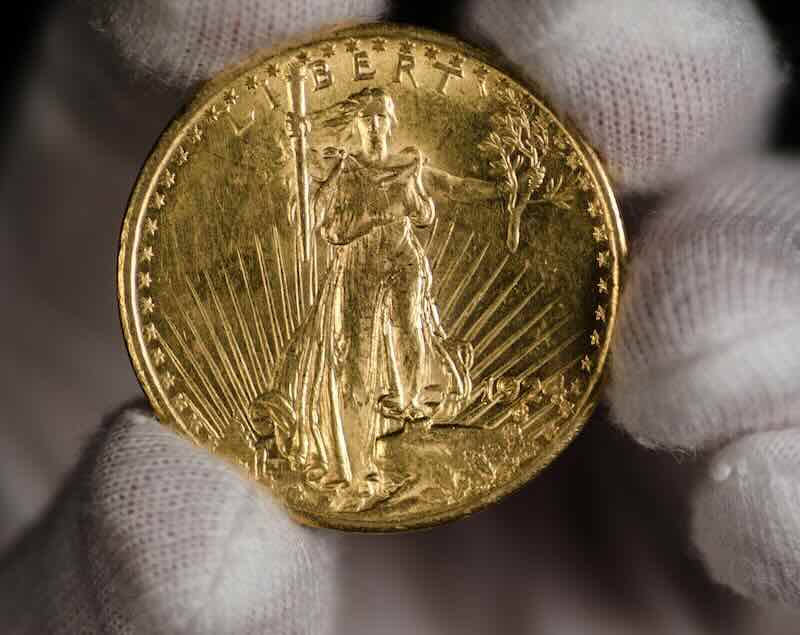
The Saint-Gaudens Double Eagle is widely considered the most beautiful coin the United States Mint has ever produced. That is not collector nostalgia — it is a judgment shared by numismatists, art historians, and the casual observers who see one for the first time and cannot look away. Struck from 1907 to 1933, this 20 dollar gold coin carries 0.9675 troy ounces of pure gold, giving it a current melt value of $4,197.65. The coin that launched the American “Renaissance of Coinage” remains one of the most liquid, recognizable, and rewarding gold assets on the market today.
For bullion investors, common-date Saints trade close to melt with tight dealer spreads. For collectors, the series spans legendary rarities — the 1907 High Relief, the 1927-D, and the infamous 1933 — that have fetched millions at auction. This guide covers the full picture: design history, specifications, mintage data, key dates and values, grading, and practical buying advice for anyone considering a Saint-Gaudens double eagle coin for their portfolio or collection.
The Story Behind the Design: Roosevelt, Saint-Gaudens, and the Push for Beautiful Coinage
By the early 1900s, President Theodore Roosevelt was openly frustrated with the state of American coinage. He considered the existing designs bland and utilitarian — unworthy of a rising world power. In 1905, Roosevelt recruited Augustus Saint-Gaudens, already the most celebrated sculptor in America, to redesign the nation’s gold coins. It was an unusual move. The Mint had relied on its own engravers for decades, and bringing in an outside artist signaled that Roosevelt wanted something fundamentally different.
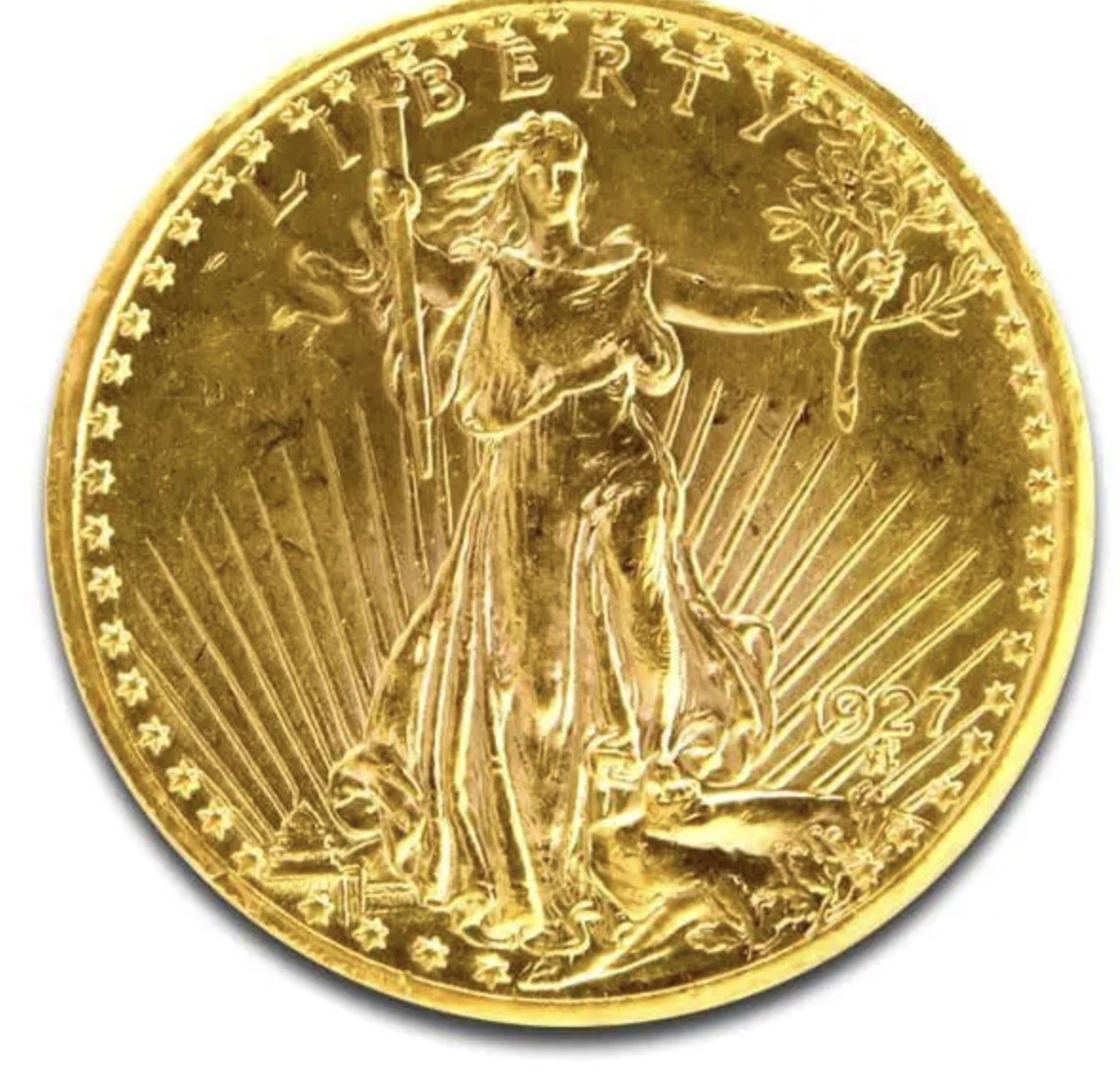
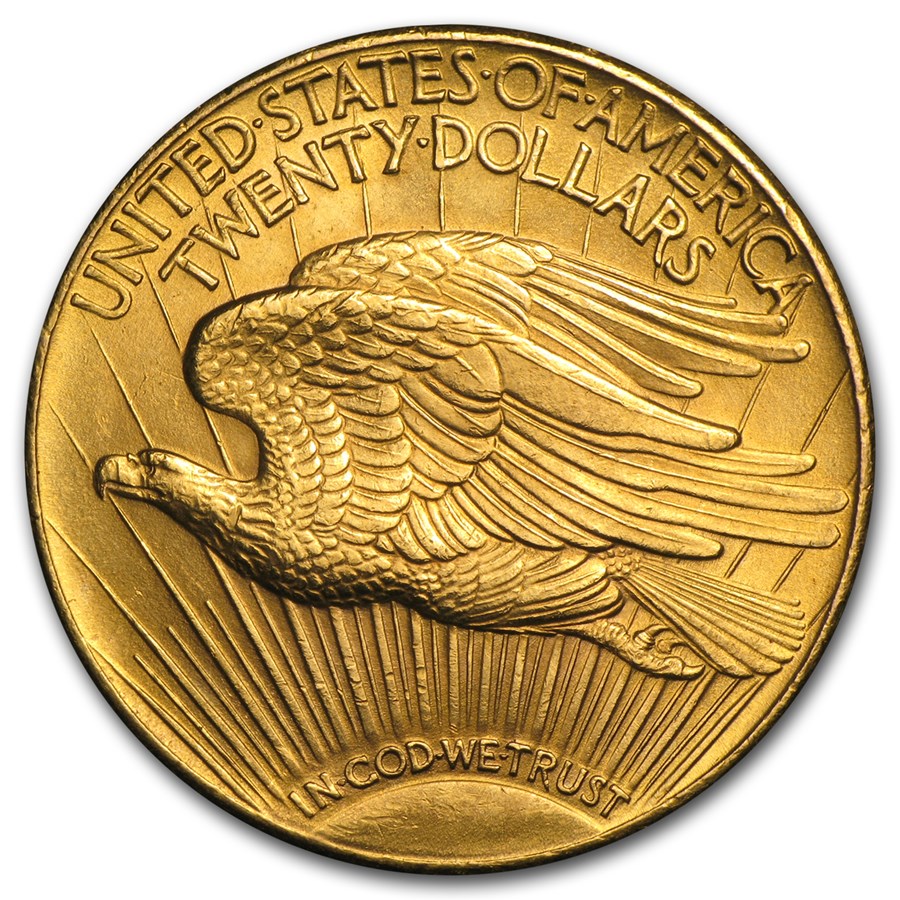
Saint-Gaudens delivered. His vision for the 20 dollar gold coin drew on classical antiquity — specifically the high-relief coins of ancient Greece that both he and Roosevelt admired. The obverse depicts Liberty striding forward, torch raised in her right hand, olive branch in her left, with the Capitol building visible behind her and rays of sunlight radiating outward. The reverse shows a soaring eagle in flight above a rising sun, a composition that captures motion and grandeur in a way no prior American coin had attempted.
Saint-Gaudens originally envisioned the coin in ultra-high relief, closer to a medal than a circulating coin. He wanted depth, shadow, and sculptural detail that would make each piece feel like it belonged in a gallery. The problem was practical: the U.S. Mint’s presses could not efficiently strike coins at that relief. Early test pieces required multiple strikes per coin — some needed as many as nine passes through the press — making mass production impossible.
Saint-Gaudens died in August 1907, just months before his coin entered production. He never saw the finished product reach circulation. The Mint produced a small run of High Relief coins in 1907 (roughly 12,367 pieces across wire rim and flat rim variants), then lowered the relief to allow single-strike production. The regular-issue double eagle coin that emerged was still strikingly beautiful, though it sacrificed some of the sculptural depth Saint-Gaudens had originally intended.
The Motto Controversy
Roosevelt had deliberately omitted the motto “IN GOD WE TRUST” from Saint-Gaudens’ design, arguing it was irreverent to stamp the name of God on something people used to buy everyday goods. Congress disagreed. In 1908, legislation mandated the motto’s return, and it was added to the reverse side below the sun. This created two distinct subtypes: the 1907-1908 “No Motto” variety and the 1908-1933 “With Motto” variety. Both are collectible, though the No Motto coins carry a modest premium due to their shorter production window and the historical controversy surrounding them.
Saint-Gaudens Double Eagle Specifications and Gold Content
Every Saint-Gaudens double eagle coin shares the same core specifications, whether it was struck in 1907 or 1932. Here is what you are buying when you purchase one:
| Specification | Detail |
|---|---|
| Face Value | $20 (Double Eagle) |
| Designer | Augustus Saint-Gaudens |
| Years Minted | 1907–1933 |
| Composition | 90% gold, 10% copper |
| Pure Gold Content | 0.9675 troy ounces |
| Total Weight | 33.436 grams (1.0750 troy oz) |
| Diameter | 34 mm |
| Minting Facilities | Philadelphia (no mintmark), Denver (D), San Francisco (S) |
| Obverse | Liberty striding with torch and olive branch |
| Reverse | Eagle in flight above a rising sun |
| Subtypes | 1907 High Relief; 1907–08 No Motto; 1908–33 With Motto |
The 10% copper alloy gives the coin its durability and the warm, slightly reddish gold tone that collectors prize on well-preserved examples. At $4,197.65 in melt value, the gold content alone makes this one of the more substantial gold coins available on the secondary market. To put that in context, a modern American Gold Eagle contains exactly 1.0 troy ounce of gold, so a Saint-Gaudens carries about 96.75% as much gold content — a negligible difference that disappears once you factor in the sometimes-lower premiums on common-date Saints versus modern bullion coins.
Key Dates and Varieties: Where the Real Value Lives
Most Saint-Gaudens Double Eagles are common-date coins valued primarily for their gold content. But specific dates and varieties command enormous premiums, driven by low mintages, low survival rates, or both. If you are collecting the series or evaluating a potential purchase, these are the dates that matter most.

1907 High Relief (Wire Rim and Flat Rim)
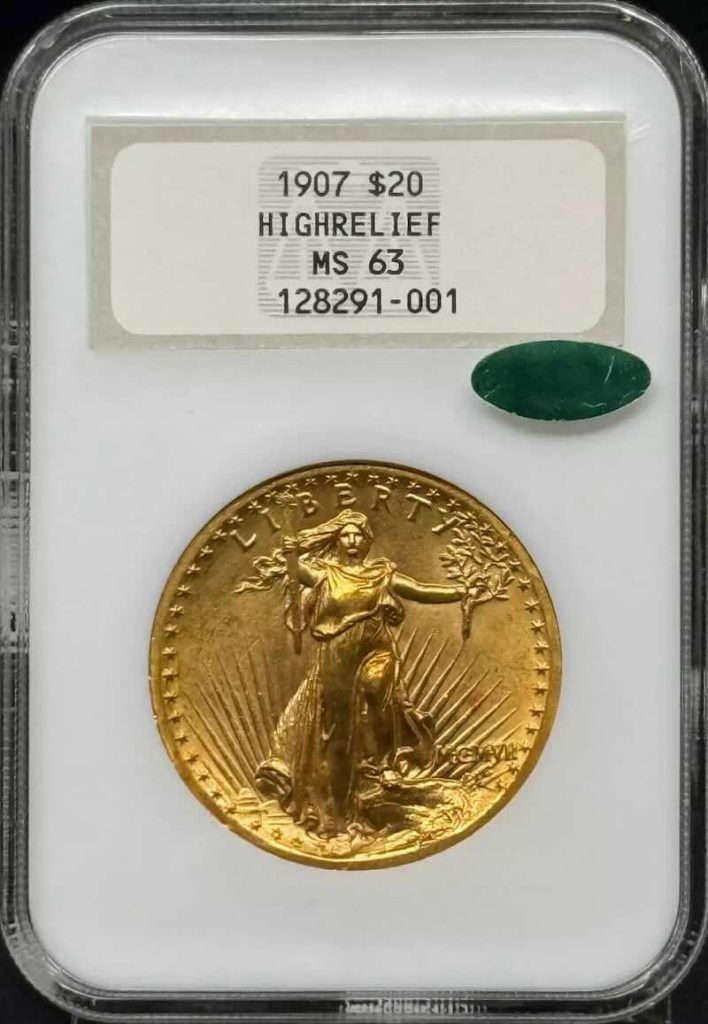
The crown jewel of the series. These coins preserve Saint-Gaudens’ original sculptural vision before the Mint lowered the relief for mass production. Wire rim examples have a thin raised edge from the striking process; flat rim pieces had the edge filed down at the Mint. Total production was approximately 12,367 coins. In circulated grades, expect to pay $10,000 and up. Uncirculated examples in MS-63 to MS-65 regularly bring $25,000 to $60,000 or more, depending on eye appeal and holder. These are the coins that remind you this series began as a work of art, not just a medium of exchange.
1907 Arabic Numerals
After the High Relief experiment, the Mint switched to a lower-relief design with the date rendered in Arabic numerals rather than Roman numerals. This became the template for all subsequent Saint-Gaudens production. The 1907 Arabic Numeral coins are not rare, but they hold a special place as the first regular-production 20 dollar gold coin in the series. Premiums are modest — a few percentage points above common-date pricing in most grades.
1908 No Motto and With Motto
The 1908 production year straddles the motto transition, making it the only year where both No Motto and With Motto varieties exist in significant quantities. The No Motto coins (both Philadelphia and Denver) are popular type coins. The 1908-S No Motto, with just 22 pieces believed to survive, is a major rarity — but the standard Philadelphia and Denver issues are accessible and make excellent entry points for type collectors.
1920-S and 1921
Both dates had reasonable mintages but abysmal survival rates. Most were melted in the Treasury’s gold recall of the 1930s. A 1920-S in AU condition can bring $10,000 to $15,000, and the 1921 is even scarcer, with MS examples selling for $50,000 and above. These are the sleepers of the series — coins that look ordinary on a mintage chart but become extraordinary once you account for how few escaped the melting pot.
1927-D
One of the rarest regular-issue U.S. gold coins. The Denver Mint struck 180,000 pieces in 1927, but nearly all were melted. Fewer than 20 are believed to survive today. In 2021, a PCGS MS-65 example sold for over $2 million at auction. The 1927-D is not a coin most collectors will ever own, but it defines the upper boundary of what the Saint-Gaudens series can command at the top of the market.
1933 Double Eagle
The most famous — and most controversial — American coin. The Philadelphia Mint struck 445,500 double eagles dated 1933, but none were officially released for circulation. President Roosevelt’s Executive Order 6102, issued in April 1933, prohibited private gold ownership, and the entire mintage was ordered melted. A handful of coins escaped the Mint through irregular channels, leading to decades of legal battles between private holders and the U.S. government.
Today, only one 1933 Double Eagle is legally available for private ownership — the so-called Farouk-Weitzman specimen, which was sold at Sotheby’s in June 2021 for $18.9 million, making it one of the most expensive coins ever auctioned. Two additional specimens are held by the Smithsonian Institution’s National Museum of American History. Every other surviving example remains the legal property of the United States government. This is not a coin you can buy; it is a piece of legal and monetary history that underscores the dramatic end of the gold standard era.
Mintage Overview by Era
The Saint-Gaudens double eagle coin was produced in substantial quantities across its 27-year run. Understanding mintage patterns helps clarify which dates are common, which are scarce, and which represent the rarest opportunities in U.S. numismatics.
1907–1911 (Early Production): These years include the High Relief issue and the transition to the With Motto design. Philadelphia dominated production, with Denver and San Francisco contributing smaller quantities. Total annual mintages ranged from roughly 300,000 to over 2 million across all facilities. Most early dates are available in circulated grades at reasonable premiums, with the 1907 High Relief and 1908-S No Motto standing as the notable exceptions.
1911–1916 (Peak Production): This was the high-water mark for Saint-Gaudens production. Philadelphia, Denver, and San Francisco all operated at high capacity, with individual mint outputs sometimes exceeding 1 million coins in a single year. Common dates from this era — 1911-D, 1913, 1914-S, 1915-S — form the backbone of the “bullion-grade” Saints market. They are plentiful, liquid, and priced close to melt.
1920–1928 (Post-War Scarcity): Mintages varied widely during this period. Some years (1924, 1925, 1926, 1928) saw large Philadelphia runs, producing millions of coins that remain common today. But branch-mint issues from these years — 1920-S, 1921, 1924-D, 1925-D, 1925-S, 1926-D, 1926-S, 1927-D, 1927-S — are a different story. Many had modest mintages and were almost entirely melted during the gold recall. These branch-mint coins from the 1920s represent some of the most significant rarities in the series.
1929–1933 (Final Years): Production declined sharply as the Great Depression took hold and the United States moved toward abandoning the gold standard. The 1929, 1930-S, 1931, 1931-D, and 1932 all had limited mintages, and most were melted before they could reach the public. The 1933, with its 445,500 mintage and near-total melt rate, is the ultimate expression of this era’s scarcity. Collectors pursuing late-date Saints should expect steep premiums and limited availability, particularly for branch-mint issues.
Grading the Saint-Gaudens Double Eagle: Bullion-Grade vs. Numismatic-Grade
The Saint-Gaudens market splits cleanly into two segments, and knowing which side of the line your coin falls on is essential for understanding its value.
Bullion-Grade Saints
A “bullion-grade” Saint-Gaudens is a common-date coin valued primarily for its 0.9675 ounces of gold content rather than its rarity or condition. These typically fall in the XF (Extremely Fine) through AU (About Uncirculated) range, or in lower Mint State grades like MS-60 to MS-62. They show honest wear or bag marks, and they trade at modest premiums over melt — often 3% to 10% depending on grade, holder, and market conditions.
Bullion-grade Saints are popular with investors for good reason. They offer nearly an ounce of gold per coin, they are recognized worldwide, and their dealer buy/sell spreads are tight compared to many modern bullion products. In periods when premiums on American Gold Eagles or Canadian Maple Leafs expand, savvy buyers sometimes rotate into pre-1933 gold because the premium math works out favorably. You can compare bullion dealer pricing to identify the best available spreads on common-date Saints at any given time.
Numismatic-Grade Saints
Once you move above MS-63 on common dates — or into any grade on key dates — the pricing model changes entirely. These coins are valued on rarity, eye appeal, strike quality, luster, and surface preservation, not gold content. The premiums can be dramatic. A common-date Saint in MS-65 might trade at 25% to 40% over melt, while the same date in MS-67 could command a multiple of melt. Key dates like the 1907 High Relief, 1920-S, or 1927-D operate in a separate market altogether, where condition rarity and auction history drive pricing far more than the daily gold spot quote.
For numismatic-grade coins, third-party certification from PCGS or NGC is essential. The grade assigned to a Saint-Gaudens in a slab is effectively its market price tier, and the difference between an MS-64 and an MS-65 can represent thousands of dollars on a common date — or tens of thousands on a key date. Population reports (how many coins exist at each grade level) are critical research tools for anyone buying at the upper end of the market.
Buying Guide: What to Look For and How to Buy Smart
Buying a Saint-Gaudens double eagle coin is not complicated, but the market rewards informed buyers. Here is what matters most, whether you are purchasing your first common-date bullion piece or targeting a five-figure key date.
Start With Your Goal
Are you buying gold exposure with a historical premium, or are you collecting the series? The answer determines everything else: what grades to target, whether to buy raw or certified, and how much premium over melt you should be willing to pay. Bullion-oriented buyers should focus on common dates in XF through MS-62 and shop aggressively on premium. Collectors should define their target dates and grades first, then wait patiently for properly priced examples.
Know the Melt Value
Every purchase should start with a melt calculation. The Saint-Gaudens contains 0.9675 troy ounces of gold, so melt value equals the current gold spot price multiplied by 0.9675. Right now, that puts melt at $4,197.65. Every dollar you pay above that figure is premium — some of which you may recover on resale, and some of which you may not. Bullion-grade Saints typically carry premiums in the 3% to 10% range. Anything significantly above that range on a common date deserves scrutiny. If you are new to gold and want to understand how gold bars and coins compare on premium, that context helps frame the discussion.
Premium Ranges by Grade (Common Dates)
| Condition | Grade Range | Typical Premium Over Melt |
|---|---|---|
| Cleaned/Jewelry Grade | “Details” grade | 0–3% |
| Circulated | XF-40 to AU-58 | 3–8% |
| Raw Brilliant Uncirculated | MS-60 to MS-61 | 5–10% |
| Certified Generic | MS-62 (PCGS/NGC) | 8–15% |
| Choice Uncirculated | MS-63 (PCGS/NGC) | 12–25% |
| Gem Uncirculated | MS-65+ (PCGS/NGC) | 25–50%+ |
Premiums fluctuate with market conditions and dealer competition. Always check live bullion pricing before making a decision.
Raw vs. Certified
For bullion-grade purchases in the XF to MS-62 range, raw (unslabbed) coins are common and acceptable — provided you buy from a reputable dealer. But for anything above MS-62, or for any key date regardless of grade, third-party certification from PCGS or NGC is worth the cost. A slab provides authentication, a standardized grade, and dramatically easier resale. The counterfeit market for Saint-Gaudens Double Eagles is active, and fake coins range from crude cast copies to sophisticated struck forgeries that can fool an untrained eye. Certification eliminates that risk.
Compare Dealer Pricing
The premium you pay on a bullion-grade 20 dollar gold coin varies meaningfully from dealer to dealer. A two-percentage-point difference in premium on a coin worth over two thousand dollars in gold content is real money, and those savings compound if you are building a position over time. Use price comparison tools to see current bullion dealer pricing across multiple vendors before committing to a purchase. International buyers may also find value in exploring how historical gold coins from other nations compare in terms of premium and liquidity.
Counterfeit Awareness
The Saint-Gaudens Double Eagle is one of the most counterfeited coins in the world, particularly common dates in AU to low MS grades. Warning signs include incorrect weight (should be exactly 33.436 grams), wrong diameter (should be 34 mm), mushy or soft details on Liberty’s face or the eagle’s feathers, and a dull or flat ring when tapped. Cast copies are the most common fakes and are relatively easy to detect; die-struck forgeries are harder. For any significant purchase, buy certified (PCGS or NGC) from an established dealer. For raw coins, sigma testing or XRF analysis provides additional assurance.
Frequently Asked Questions
How much is a Saint-Gaudens Double Eagle worth?
Common-date Saint-Gaudens Double Eagles are worth their gold melt value plus a market premium. With 0.9675 troy ounces of gold, the current melt value is approximately $4,197.65. Most circulated common dates trade at 3% to 10% above melt. Key dates and high-grade examples can be worth many times melt, from $10,000 for a 1907 High Relief in circulated condition to $18.9 million for the unique 1933 specimen.
How much gold is in a Double Eagle?
Each Saint-Gaudens Double Eagle contains exactly 0.9675 troy ounces of pure gold. The coin’s total weight is 33.436 grams (1.0750 troy ounces), with the remaining weight consisting of copper alloy added for durability. The gold content is identical across all dates and mint marks in the series.
Are all Saint-Gaudens Double Eagles legal to own?
All dates except 1933 are legal for private ownership in the United States. The 1933 Double Eagle has a unique legal status: only one specimen (the Farouk-Weitzman coin) is legally available for private ownership, having been monetized by the U.S. Treasury as part of a legal settlement. Two additional specimens are held by the Smithsonian Institution. Any other 1933 Double Eagle is considered government property.
What is the difference between a Double Eagle and other gold coins?
“Double Eagle” is the denomination name for any U.S. $20 gold coin. The Saint-Gaudens type (1907–1933) replaced the earlier Liberty Head Double Eagle (1849–1907). Both contain the same amount of gold — 0.9675 troy ounces — but the Saint-Gaudens is more widely collected and typically commands slightly higher premiums due to its superior design and stronger collector demand. The term has nothing to do with an eagle depicted on the coin; it refers to the coin being worth twice the value of a $10 Eagle.
Should I buy raw or PCGS/NGC certified Saints?
For bullion-grade common dates (XF to MS-62), raw coins are perfectly acceptable if purchased from a reputable source. The premium savings over slabbed coins can be meaningful. For coins above MS-63, key dates, or any purchase exceeding several thousand dollars in numismatic premium, PCGS or NGC certification is strongly recommended. The slab authenticates the coin, locks in a grade, and makes future resale significantly easier.
What is the best date to buy for bullion value?
The “best” date for bullion-oriented buyers is whichever common date carries the lowest premium at the time of purchase. Popular choices include 1924, 1925, 1926, 1927, and 1928 Philadelphia issues, all of which had large mintages and remain abundant in circulated and low Mint State grades. Do not overpay for a specific date if your primary goal is gold exposure — shop on premium, not on date.
Why the Saint-Gaudens Double Eagle Endures
Few coins occupy the space the Saint-Gaudens does. It is both a bullion vehicle and a work of art, a product of presidential ambition and a sculptor’s dying masterpiece. It bridges the era of circulating gold and the modern precious metals market. Common dates give investors access to nearly an ounce of gold at competitive premiums, while the key dates and High Relief issues reward collectors with some of the most beautiful and historically significant coins in American numismatics.
The series also benefits from deep market liquidity. Gold coins with this level of recognition — graded, authenticated, and widely traded — create tight bid/ask spreads and reliable resale channels. Whether you are building a bullion position, assembling a type set, or chasing a specific date in a specific grade, the Saint-Gaudens double eagle coin remains one of the most compelling options in the U.S. gold market.
This article is for informational purposes only and does not constitute investment advice. Gold coin values fluctuate with precious metals markets and collector demand. Always verify current prices before making purchase decisions.