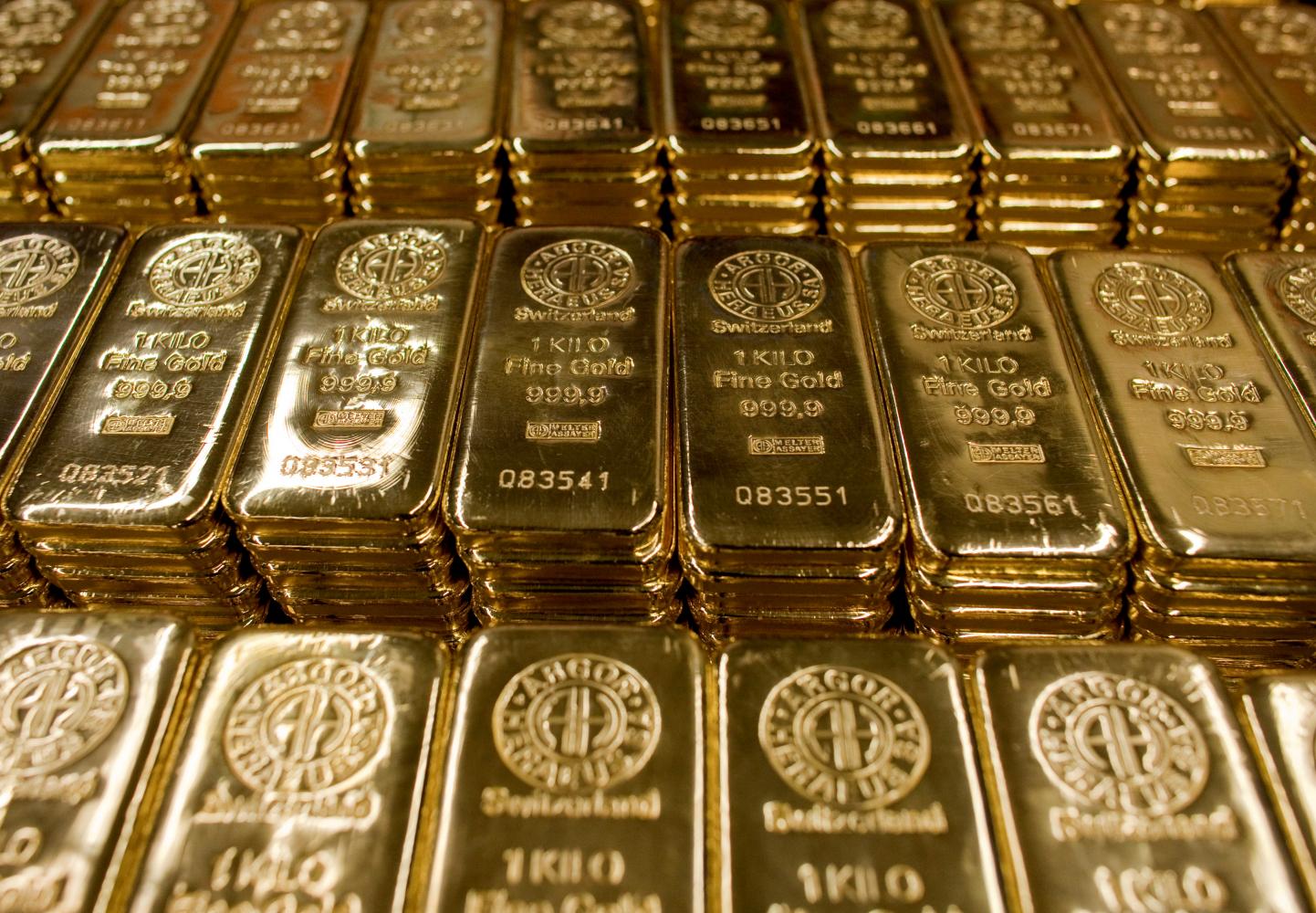
Gold set an all-time nominal high of $5,595 per ounce on January 29, 2026. An ounce of gold purchased in 2000 at $280 is now worth more than twenty times that amount. Meanwhile, a $100 bill from 2000 buys roughly 30 cents on the dollar compared to what it purchased then. This divergence — gold appreciating while paper currency loses purchasing power — is the central argument for why retirement investors consider allocating a portion of their long-term savings to physical precious metals.
This guide explains how a self-directed Precious Metals IRA works, what the IRS requires, how to evaluate custodians, how to compare costs, and how to avoid the common — and often expensive — mistakes that affect investors new to this asset class.

Gold as a Long-Term Store of Value: The Numbers
The purchasing power comparison between gold and fiat currency is most effectively illustrated with a concrete price history. The table below reflects approximate spot prices at five-year intervals.
| Year | Gold Price (approx.) | $100 in Gold Terms | Purchasing Power of $100 (CPI-adjusted) |
|---|---|---|---|
| 2000 | $280 / oz | 0.357 oz | $100 (baseline) |
| 2005 | $513 / oz | 0.195 oz | ~$81 |
| 2010 | $1,405 / oz | 0.071 oz | ~$71 |
| 2015 | $1,060 / oz | 0.094 oz | ~$64 |
| 2020 | $1,900 / oz | 0.053 oz | ~$58 |
| 2025 | ~$3,500–4,500 / oz (avg.) | ~0.025 oz | ~$42 |
| 2026 (Jan. ATH) | $5,595 / oz (Jan. 29, 2026) | 0.0179 oz | ~$37 (est.) |
Gold prices are approximate spot prices for reference. CPI-adjusted purchasing power figures are estimates based on Bureau of Labor Statistics CPI data. Past performance does not indicate future results.
The data in the table above illustrates the central argument for gold as a retirement allocation: an investor who held gold in 2000 has watched its nominal dollar value increase approximately twentyfold, while a dollar-denominated savings account has seen its purchasing power roughly halved over the same period due to cumulative inflation.
It is important to note that gold is not a consistent annual compounder — the 2015 price ($1,060) was lower than 2010 ($1,405), and gold can underperform conventional assets during periods of low inflation and strong equity markets. The case for gold in a retirement portfolio is not about maximizing returns but about preserving purchasing power over very long time horizons and providing non-correlated exposure during periods of financial stress.
What Is a Precious Metals IRA?
A Precious Metals IRA — sometimes called a Gold IRA or Self-Directed IRA (SDIRA) — is a type of Individual Retirement Account that holds physical gold, silver, platinum, or palladium instead of (or in addition to) stocks, bonds, and mutual funds. It operates under the same IRS rules as a conventional IRA: contributions may be tax-deductible (Traditional IRA) or made post-tax for tax-free withdrawals (Roth IRA), and assets grow tax-deferred until distribution.
The defining feature is that a Precious Metals IRA requires an IRS-approved third-party custodian to hold the assets. Unlike home storage of physical bullion — which is permitted for personal holdings — IRA-held metals must be stored at an IRS-approved depository. This is a legal requirement with no exceptions.
IRS Requirements for Eligible Metals
Not all gold, silver, platinum, or palladium products qualify for IRA inclusion. The IRS specifies minimum purity standards under Internal Revenue Code Section 408(m):
- Gold: minimum .9950 fine (99.50% pure). Exception: American Gold Eagle coins are .9167 fine but are specifically approved by the IRS under separate legislation.
- Silver: minimum .9990 fine (99.90% pure)
- Platinum: minimum .9995 fine
- Palladium: minimum .9995 fine
Common IRS-eligible products include: American Gold Eagles, American Gold Buffalos, Canadian Gold Maple Leafs, Austrian Gold Philharmonics, South African Krugerrands (from certain years, pending custodian confirmation), American Silver Eagles, Canadian Silver Maple Leafs, and gold/silver/platinum/palladium bars from LBMA-accredited or NYMEX/COMEX-approved refiners meeting the relevant purity standards.
What Is Not Eligible
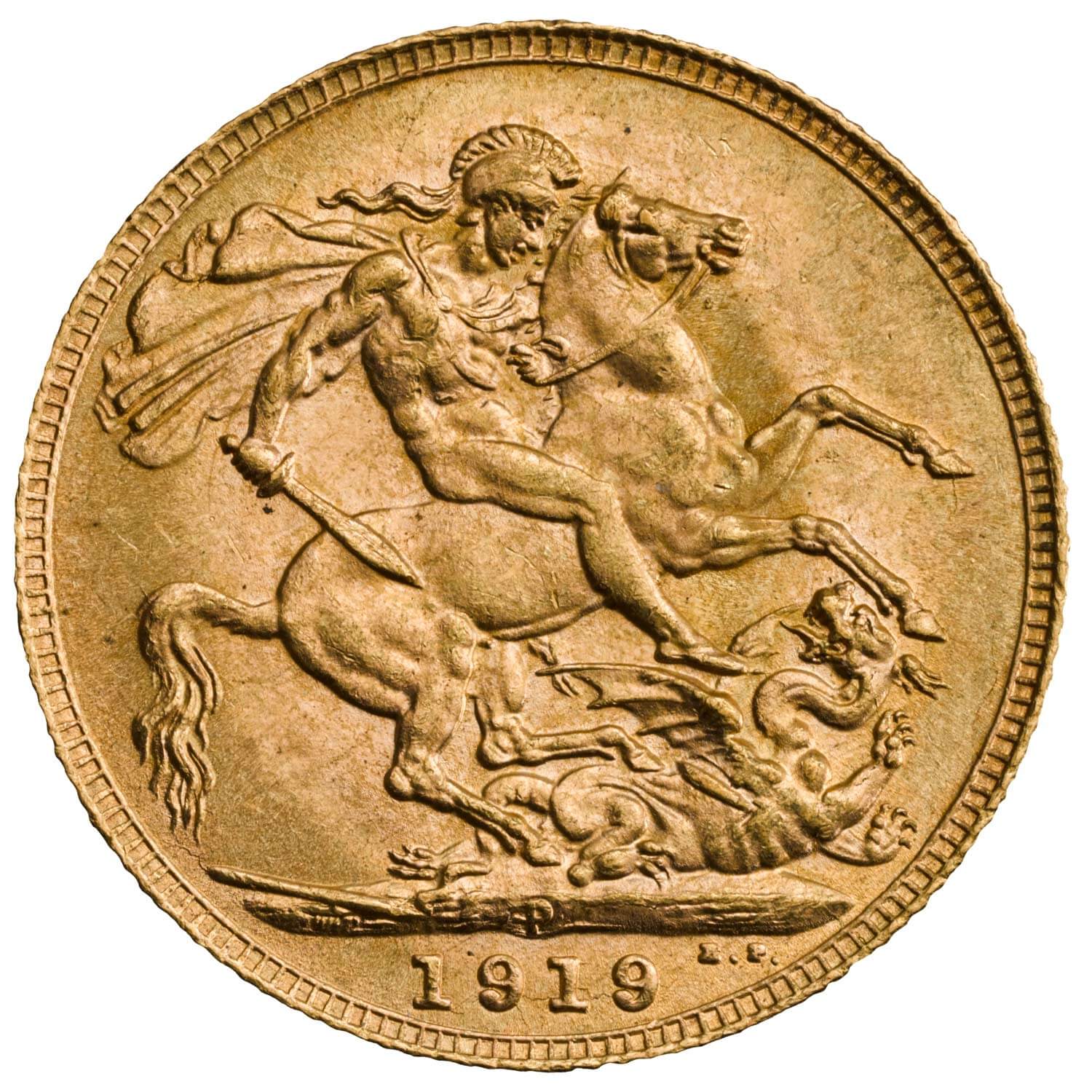
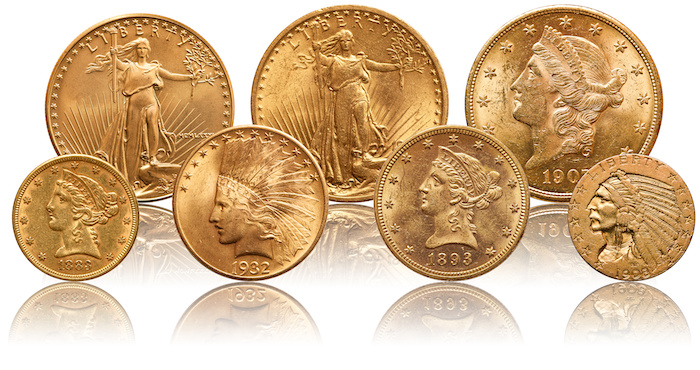
Collectible coins, rare coins, numismatic coins, and most proof coins are not eligible for IRA inclusion under IRC 408(m), which prohibits holding “collectibles” in an IRA. There is an exception for American Eagle proof coins (gold, silver, and platinum), but most foreign proof coins and special-edition collector pieces do not qualify. This is a common source of confusion and a significant pitfall with some traditional Gold IRA providers, discussed in detail below.
Self-Directed vs. Traditional Precious Metals IRA: Cost and Control
There are two primary ways to establish a Precious Metals IRA. The first is through a traditional precious metals IRA company — a vertically integrated provider that handles everything from account setup to metal selection to storage. The second is through a self-directed IRA (SDIRA) custodian, where the investor makes their own purchasing decisions.
The cost difference between these approaches is substantial:
| Fees and Costs | Traditional IRA Companies | Self-Directed IRA |
| Setup / Establishment Fee | $100 – $300 | $50 – $100 |
| Annual Custodial / Administration Fee | $150 – $300 | $75 – $150 |
| Annual Storage Fee | $150 – $250 | $100 – $175 |
| Premiums on Metal Purchases | Often 20 – 50% over spot | Typically 3 – 10% over spot |
| Investor Control Over Product Selection | Limited — provider selects products | Full — investor selects dealer and product |
| Pricing Transparency | Moderate to Low | High |
The premium column deserves particular attention. At an account value of $50,000 in gold, the difference between a 30% premium (common with traditional providers) and a 5% premium (achievable with a self-directed approach) represents $12,500 in additional cost paid at acquisition — metal that must appreciate simply to break even. At current gold prices, this premium differential has an even larger nominal impact than in prior years.
Avoiding Common and Costly Mistakes
High-Premium and Ineligible Coins
The most common pitfall with traditional Gold IRA companies is the recommendation of high-premium coins — proof coins, “exclusive” limited editions, semi-numismatic coins — that are positioned as superior investments but which carry premiums of 30–100% or more over spot value. Many of these coins also do not qualify under IRS purity standards, which would make holding them in an IRA a prohibited transaction with significant tax consequences.
The appropriate products for an IRA are straightforward: standard-bullion coins and bars meeting IRS purity requirements, purchased at the lowest available premium over spot price. Any IRA provider that steers customers toward high-premium specialty products without clear disclosure of those premiums should be evaluated with caution.
Home Storage Gold IRAs
A marketing concept called the “home storage Gold IRA” has circulated in recent years, suggesting that investors can hold IRA metals at home rather than at an approved depository. This is not a legitimate IRS-approved arrangement. IRS rules require that precious metals held in an IRA be stored at an approved third-party depository. Attempting to hold IRA metals at home risks the account being treated as a distribution, triggering income tax plus a 10% early withdrawal penalty if the account holder is under 59½. Investors should be highly skeptical of any provider promoting this approach.
Rollovers vs. Transfers
There are two ways to fund a new Precious Metals IRA from an existing retirement account. A direct transfer moves funds directly between custodians with no tax consequence and no time limits. A rollover distributes funds to the account holder, who then has 60 days to deposit them into the new IRA. The 60-day window is strict — missing it typically results in the amount being treated as a taxable distribution. Direct transfers are generally the simpler and lower-risk approach.
How a Self-Directed Precious Metals IRA Works: Step by Step
- Open an SDIRA account with an approved custodian.
Select a custodian from the list of IRS-approved SDIRA custodians. Complete the account application and choose your IRA type (Traditional or Roth).
- Fund the account.
Transfer or roll over funds from an existing IRA or 401(k), or make a new contribution (subject to annual IRS contribution limits: $7,000 in 2025, or $8,000 if age 50 or older).
- Research and select metals.
Use a price comparison resource to identify IRS-eligible products — gold coins or bars, silver coins or bars, platinum or palladium — at the lowest available premium over spot price across multiple authorized dealers. Confirm that each product meets IRS purity and eligibility requirements.
- Instruct your custodian to purchase.
Submit a purchase direction letter to your custodian specifying the product, quantity, and authorized dealer. The custodian executes the transaction using the IRA funds.
- Metals are shipped to the approved depository.
The dealer ships the metals directly to the IRS-approved depository linked to your IRA account — never to you personally. The depository confirms receipt and updates your account records.
- Monitor and manage.
Your custodian provides account statements reflecting holdings and current value. You can add to the account through additional purchases or contributions, or eventually take distributions (in-kind or as cash from a dealer sale) according to standard IRA distribution rules.
FindBullionPrices.com is a useful tool at the research and comparison stage. The site aggregates live pricing, premiums over spot, availability, and dealer information across multiple authorized online bullion dealers, allowing investors to identify the most competitively priced eligible products before submitting a purchase instruction to their custodian.
Choosing a Precious Metals IRA Custodian
The IRS requires that a Precious Metals IRA be administered by an approved third-party custodian. Custodians handle account opening, compliance reporting to the IRS, purchase execution, depository coordination, and required minimum distribution (RMD) administration. They do not provide investment advice.
Reputable approved custodians as of this writing include:
- New Direction Trust Company (NDTCO)
- Equity Trust Company
- GoldStar Trust Company
- STRATA Trust Company
- The Entrust Group
- Preferred Trust Company
- Millennium Trust Company
When comparing custodians, the most important factors to evaluate are fee structure (setup, annual administration, and storage fees), storage arrangements (segregated vs. commingled), the network of approved depositories available, the quality of the online account portal, and customer service responsiveness. Some custodians offer dedicated account representatives; others operate primarily through self-service portals.
Custodian status and fee structures change over time. Verify that any custodian you are considering is currently IRS-approved and request a full fee schedule in writing before opening an account. This list is provided for reference only and does not constitute an endorsement.
Storage Options: Segregated vs. Commingled
Segregated storage means your metals are held in a dedicated, individually identified space within the depository. The exact coins or bars you purchased are held in your name and returned to you if you take an in-kind distribution. Segregated storage typically costs more in annual fees but provides greater assurance of holding the specific products you acquired.
Commingled storage means your metals are pooled with other investors’ holdings of the same type and purity. You have a claim to an equivalent quantity and quality of metal rather than specific pieces. Commingled storage is generally less expensive and is the standard arrangement with many custodians. For investment-grade bullion held at an accredited depository, commingled storage is generally considered acceptable, though some investors prefer the additional certainty of segregated arrangements.
Typical annual storage fees range from flat rates of $100–$175 per year to percentage-based fees of 0.1–0.3% of account value. At higher account values, flat-fee storage is generally more cost-effective.
Approved Depositories
IRA precious metals must be stored at an IRS-approved depository. Major approved depositories in the United States include Delaware Depository (Wilmington, DE), Brink’s Global Services, CNT Depository, IDS of Delaware, and Texas Precious Metals Depository. Most custodians have established relationships with one or more of these facilities; confirm which depositories are available under your custodian’s arrangements before opening an account.
Tax Considerations
Traditional Precious Metals IRA
Contributions may be tax-deductible depending on income level and whether you or your spouse have access to a workplace retirement plan. Assets grow tax-deferred. Distributions in retirement are taxed as ordinary income. Required minimum distributions begin at age 73.
Roth Precious Metals IRA
Contributions are made with after-tax dollars and are not deductible. Assets grow tax-free. Qualified distributions in retirement are tax-free. No required minimum distributions during the account holder’s lifetime. Income limits apply for direct Roth IRA contributions; higher earners may use a “backdoor Roth” strategy (consult a tax advisor).
Early Withdrawal
Distributions taken before age 59½ are generally subject to a 10% early withdrawal penalty plus ordinary income tax (Traditional IRA) or tax and penalty on the earnings portion (Roth IRA). Certain exceptions apply, including first-time home purchase, qualified higher education expenses, and permanent disability.
Tax rules are subject to change. The information above reflects rules in effect as of early 2026. Consult a qualified tax advisor or CPA for guidance specific to your situation.
Beyond Gold: Silver, Platinum, and Palladium in an IRA
Silver
Silver is IRA-eligible at .9990 fine purity. The Silver Institute reported that silver industrial demand reached 680.5 million ounces in 2024 — a record for the fourth consecutive year — driven by solar manufacturing, EV production, and electronics. Silver entered 2026 having recorded five consecutive years of structural supply deficit and set its own all-time nominal high of $121.67 per ounce on January 29, 2026. Common IRA-eligible silver products include American Silver Eagles, Canadian Silver Maple Leafs, and .999+ fine silver bars from approved mints.
Platinum and Palladium
Both platinum and palladium are IRA-eligible at .9995 fine purity. These metals are smaller markets with more concentrated industrial demand profiles (palladium primarily in catalytic converters; platinum in industrial catalysis, jewelry, and increasingly in hydrogen fuel cells). They offer diversification within a precious metals allocation but are subject to different supply/demand dynamics than gold and silver.
Is a Precious Metals IRA Right for You?
A Precious Metals IRA is not a universal solution for retirement savings. It is most appropriate for investors who already have a diversified retirement portfolio (equities, bonds, cash equivalents) and want to add a non-correlated allocation with inflation-hedging characteristics. Most financial advisors who work with physical precious metals in retirement accounts suggest allocations in the range of 5–15% of total retirement assets, though appropriate allocation varies widely by individual circumstances.
The structural argument has rarely been clearer: central banks purchased over 1,000 tonnes of gold in each of the three years from 2022 through 2024. Gold set 53 all-time highs during 2025 alone. Silver is in its fifth consecutive year of supply deficit. U.S. federal debt stands at approximately $38 trillion with an annual interest burden exceeding $1.2 trillion. These are not short-term market conditions — they are multi-year structural developments with implications for long-term savers.
For investors considering adding physical metals to their retirement strategy, the self-directed approach offers the most cost-efficient path: choose your own products from the lowest-premium dealer available, instruct an approved custodian to execute the purchase, and hold the metals at an approved depository under your IRA’s ownership.
This article is for educational and informational purposes only. It does not constitute financial, investment, or tax advice. IRS rules governing self-directed IRAs and precious metals eligibility are complex and subject to change. Consult a qualified financial advisor, tax professional, or estate planning attorney before making decisions about your retirement accounts. FindBullionPrices.com is a price comparison tool and does not provide investment advisory services.