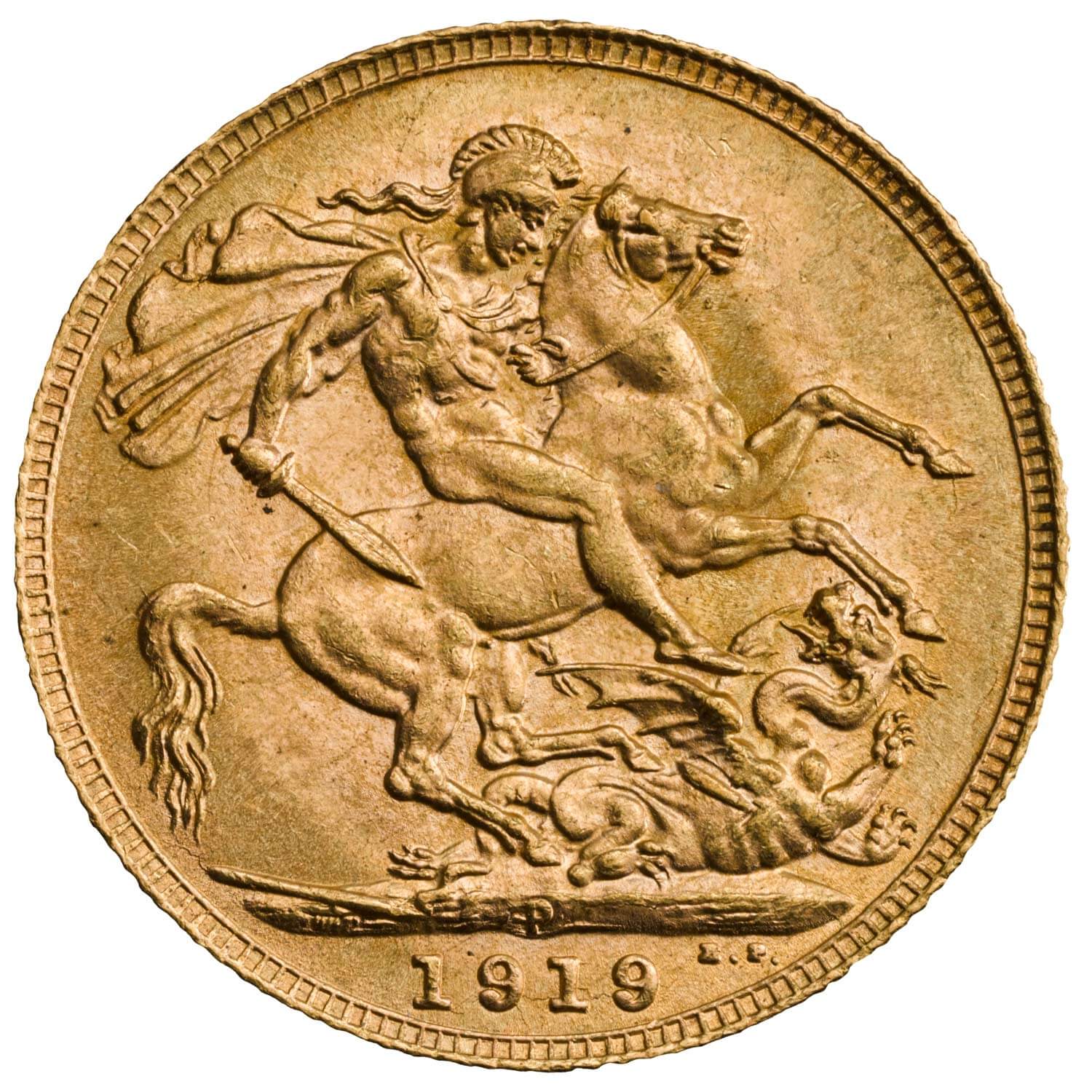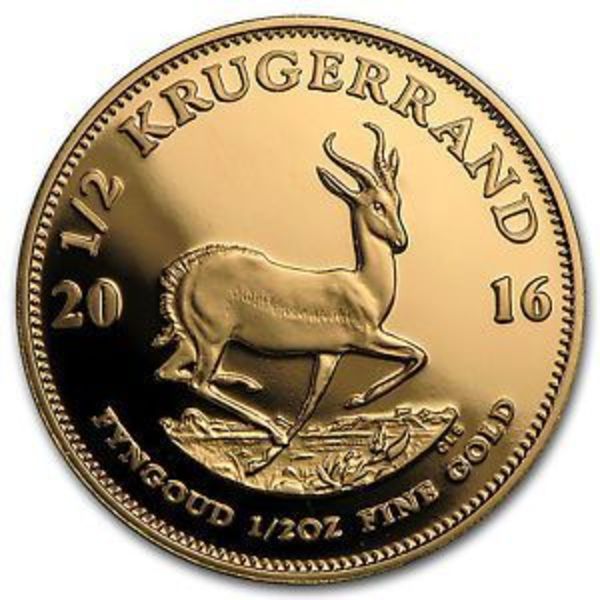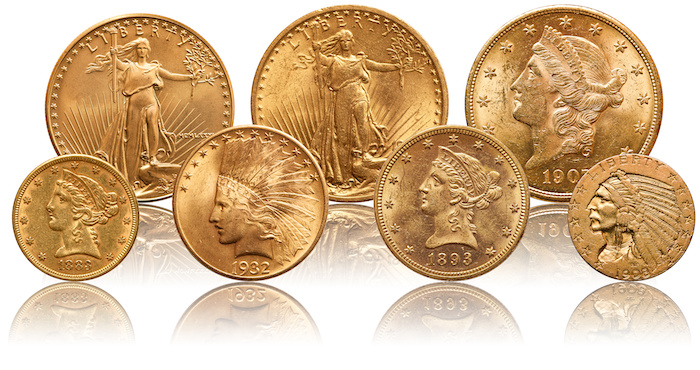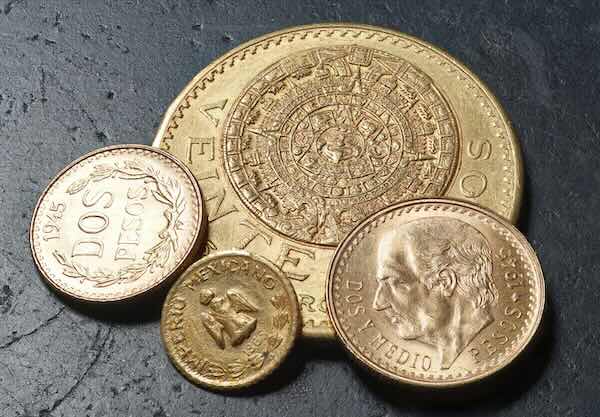
Most gold buyers start with modern bullion — American Gold Eagles, Canadian Maple Leafs, maybe a Krugerrand. The coins are familiar, the premiums are transparent, and the supply chain is straightforward. But at some point, usually after building a core position, many investors begin looking at the other side of the display case: the older coins, the foreign pieces, the restrikes that carry a date from a century ago but were struck last year. This is where the gold market gets more interesting — and where understanding what you’re actually buying starts to matter.
The distinction between a modern restrike and a vintage original is one of the most commonly misunderstood topics in bullion investing. Both contain the same gold. Both are legal tender (or were). But they serve different purposes, carry different premiums, and appeal to different buyers. If you’re building a position in world gold — particularly the Mexican Gold Pesos, European francs, or Austrian pieces that dominate this category — it’s worth understanding the difference before you buy.
Whether you choose a restrike or a modern sovereign coin, purity and premium are what matter. See the full lineup in comparing government-backed gold coins.
What Makes a Restrike a Restrike
A restrike is a coin produced by an official government mint using the original dies (or faithful reproductions of them) after the coin’s original production run ended. The Austrian Mint is the most prolific producer of restrikes in the world. Their 100 Corona carries a 1915 date — the last year of original production — but most examples in the market were struck decades later. The same is true of the Austrian 4 Ducat and the 1 Ducat, both bearing the 1915 date regardless of when they actually left the press.
Mexico’s approach is similar. The 50 Pesos Centenario was originally issued from 1921 to 1947, but the Mexican Mint restruck massive quantities between 1949 and 1972 — all bearing the 1947 date. These restrikes are indistinguishable from the final-year originals without expert analysis, and for bullion purposes, the distinction is irrelevant. The gold content is identical: 37.5 grams of .900 fine gold, or 1.2057 troy ounces per coin.
France took a similar path with the 20 Franc Rooster. Originally struck from 1899 to 1914, the Paris Mint restruck coins dated 1907–1914 in two waves — first in 1921, then again from 1951 to 1960. The restrikes entered circulation alongside originals and today trade interchangeably in the bullion market.
The key point: restrikes are not counterfeits. They are official government-produced coins, struck to the original specifications, by the same (or successor) mint. They carry the same legal status as the originals. What they lack is the scarcity — and the numismatic premium — of a coin that was actually produced in, say, 1908.
Collector’s Note: For a deeper look at how grading affects premiums on vintage world gold, see our guide to NGC and PCGS Grading for Pre-1933 Gold Coins. The grading principles apply equally to European vintage pieces.
The Coins: Specifications, History, and What They’re Worth in Gold
Mexico 50 Pesos Centenario
The Centenario is the largest standard-issue bullion gold coin still widely traded in the secondary market. Commissioned in 1921 to mark the centennial of Mexican independence, it features the Angel of Independence — the Winged Victory statue that stands on the Paseo de la Reforma in Mexico City — on the obverse, with the Mexican coat of arms on the reverse and the twin volcanoes Popocatépetl and Iztaccíhuatl in the background.
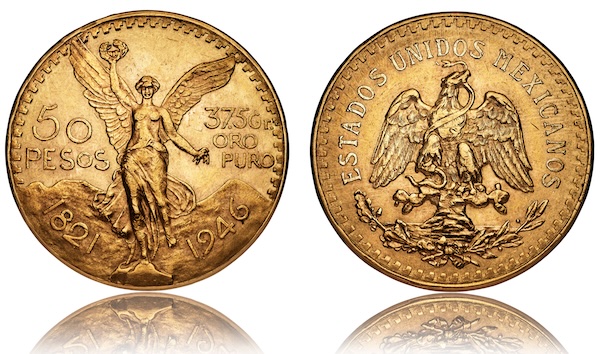
At 41.667 grams total weight and .900 fineness, each coin contains 1.2057 troy ounces of pure gold. That makes it one of the most gold-dense coins available at premiums that frequently undercut the American Gold Eagle on a per-ounce basis.
Melt value at today’s spot price: $5,231.12
The 1947 restrikes — which account for the vast majority of Centenarios in the market — trade at bullion premiums. Original-date coins from the 1920s and 1930s occasionally carry modest numismatic premiums, but the spread between a restrike and an original-date Centenario is far narrower than comparable US coins. For a stacker focused on gold content per dollar, the 50 Pesos Centenario remains one of the best values in world gold.
The Centenario is part of a broader Mexican Gold Peso series that spans six denominations — 2 Pesos, 2.5 Pesos, 5 Pesos, 10 Pesos, 20 Pesos, and 50 Pesos — all struck in .900 fine gold. The smaller denominations offer fractional gold alternatives at premiums that often beat comparable US fractional coins.
Austria 100 Corona
The 100 Corona is Austria’s flagship restrike and the second-largest gold coin commonly traded as bullion. First issued in 1908 to commemorate the 60th anniversary of Emperor Franz Joseph I’s reign, the coin features the emperor’s right-facing profile on the obverse and the imperial double-headed eagle on the reverse.
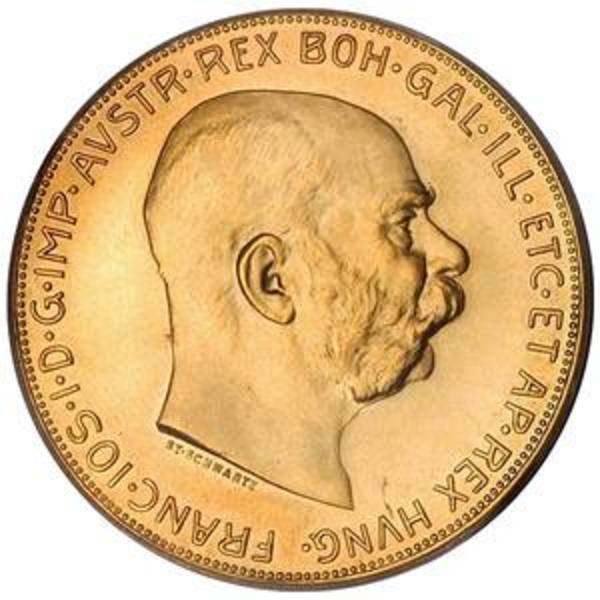
The specifications: 33.875 grams total weight, .900 fineness, containing 0.9803 troy ounces of pure gold. The coin measures 37mm in diameter — the same as the Centenario — giving it a substantial, satisfying heft.
Melt value at today’s spot price: $4,253.19
Every 100 Corona you encounter in the bullion market carries a 1915 date. The Austrian Mint began restriking these in 1915 itself and has continued intermittently ever since. Premiums over spot tend to run slightly lower than American Gold Eagles, making the 100 Corona a competitive option for investors looking to maximize gold content per dollar. The coin is exempt from VAT in the European Union, which makes it particularly popular among European buyers — but US-based stackers benefit from the same low premiums.
Austria 4 Ducat
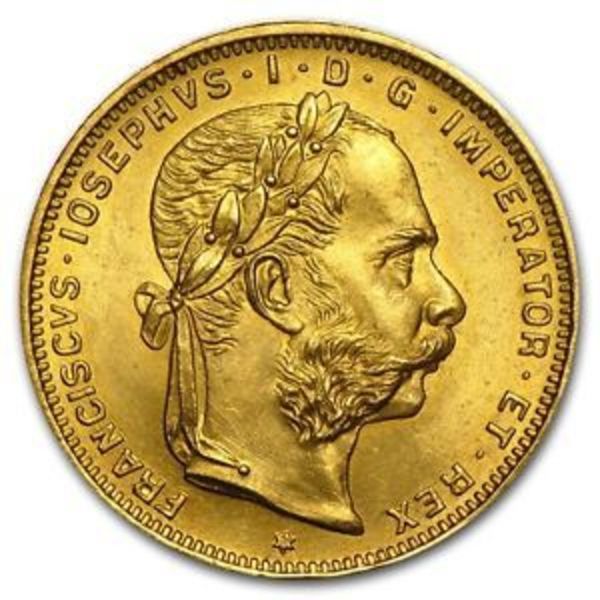
The 4 Ducat is one of the more unusual coins in the restrike market. At .986 fine — nearly pure gold — it is struck to a higher standard of purity than most bullion coins. The total weight is 13.964 grams, yielding an actual gold weight of 0.4427 troy ounces.
Melt value at today’s spot price: $1,920.72
The coin’s design dates to the Habsburg era, featuring Franz Joseph I on the obverse and the imperial arms on the reverse, and like the 100 Corona, all modern examples carry the 1915 date. What sets the 4 Ducat apart physically is its shape — thin and wide at 40mm, with a slight concavity that gives it an almost wafer-like feel. This is not a coin that stacks neatly in a tube. It is, however, a coin that catches the eye — and at roughly four-tenths of an ounce, it occupies a useful middle ground between fractional and full-ounce pieces.
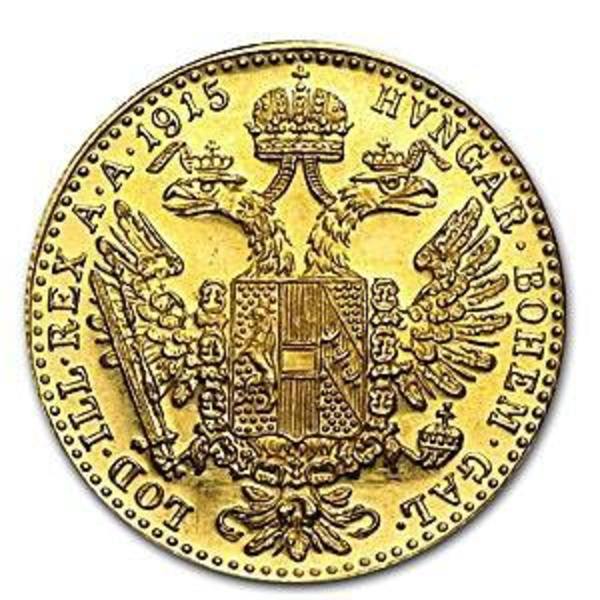
The Austrian Mint also produces a 1 Ducat restrike at the same .986 fineness, containing 0.1107 troy ounces of gold — a true fractional piece for collectors building out the full Austrian restrike set.
Switzerland 20 Franc Vreneli
The Vreneli, named for “Verena,” a common Swiss name used as a nickname for the allegorical figure on the obverse, Helvetia. This the Swiss entry in the Latin Monetary Union family of 20 franc gold coins. Struck at the Bern Mint from 1897 to 1949, it shows Helvetia in profile against an Alpine backdrop, with the Swiss cross and oak-leaf wreath on the reverse.
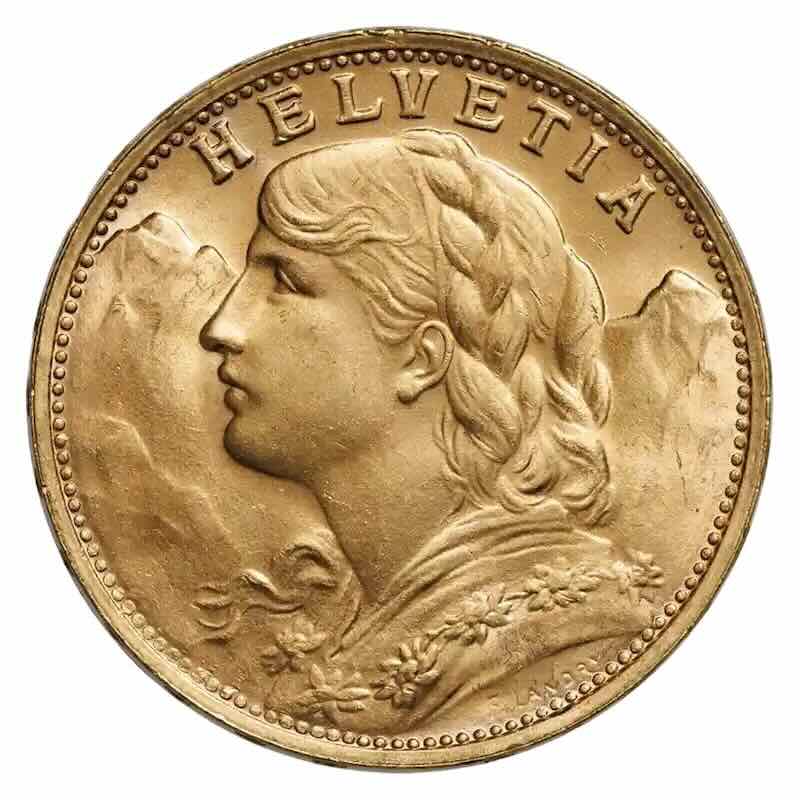
Specifications: 6.452 grams total weight, .900 fineness, 0.1867 troy ounces of pure gold. The coin is 21mm in diameter — small enough to sit on a fingertip.
Melt value at today’s gold spot price: $810.03
The Vreneli is not technically a restrike in the same sense as the Austrian pieces — the Swiss Mint did not continue production after the series ended. But because millions were struck over a 50-year production run, supply is abundant and premiums remain close to melt. Dates from the 1910s through the 1940s are common; earlier dates (1897–1905) command slight premiums for their relative scarcity.
For a deeper look at the full family of 20 franc coins, including the Belgian, Italian, and other Latin Monetary Union variants, see our guide to Collecting 20 Franc Gold Coins.
France 20 Franc Rooster
The Gallic Rooster — Le Coq Gaulois — is arguably the most recognizable design in the 20 franc family. Designed by Jules-Clément Chaplain and struck from 1899 to 1914, it pairs Marianne (the allegorical symbol of the French Republic) on the obverse with the rooster, France’s unofficial national emblem, on the reverse.
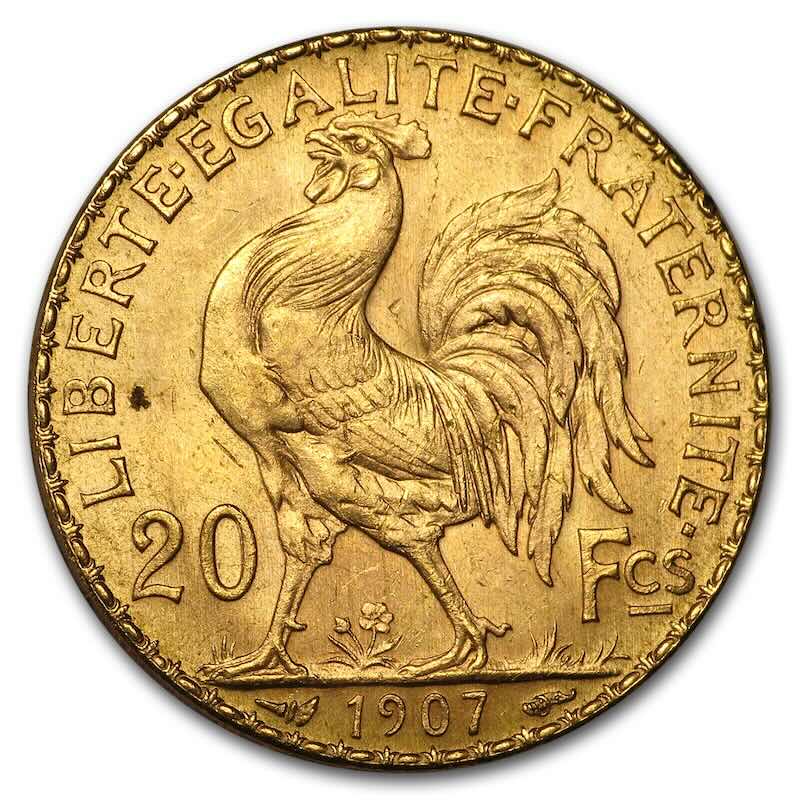
The specifications are identical to the Vreneli: 6.4516 grams total weight, .900 fine, 0.1867 troy ounces of gold. This is not a coincidence — the Latin Monetary Union standardized the weight and fineness of member nations’ coinage, making Swiss, French, Belgian, and Italian 20 franc gold pieces interchangeable by design.
Melt value at today’s spot price: $810.03
The Rooster’s restrike history adds a layer of complexity. Coins dated 1907–1914 were restruck by the Paris Mint in 1921 and again from 1951 to 1960. These restrikes are metallurgically identical to the originals and trade at the same premiums. For bullion buyers, the distinction is academic — you are buying the same coin, with the same gold content, at the same price. Collectors of original-date pieces may care, but the market does not differentiate for pricing purposes.
The French 20 Franc Rooster frequently offers among the lowest premiums in the fractional world gold market — often lower than 1/4 oz American Gold Eagles despite containing a similar amount of gold.
Maria Theresa Thaler
The Maria Theresa Thaler is the outlier on this list — it is silver, not gold, and it occupies a unique position in the history of world trade coinage. First struck in 1780, the year of Empress Maria Theresa’s death, it became the dominant trade coin across the Middle East, East Africa, and South Asia for over two centuries. Every example bears the 1780 date, regardless of when it was actually produced. The Austrian Mint still strikes them today.
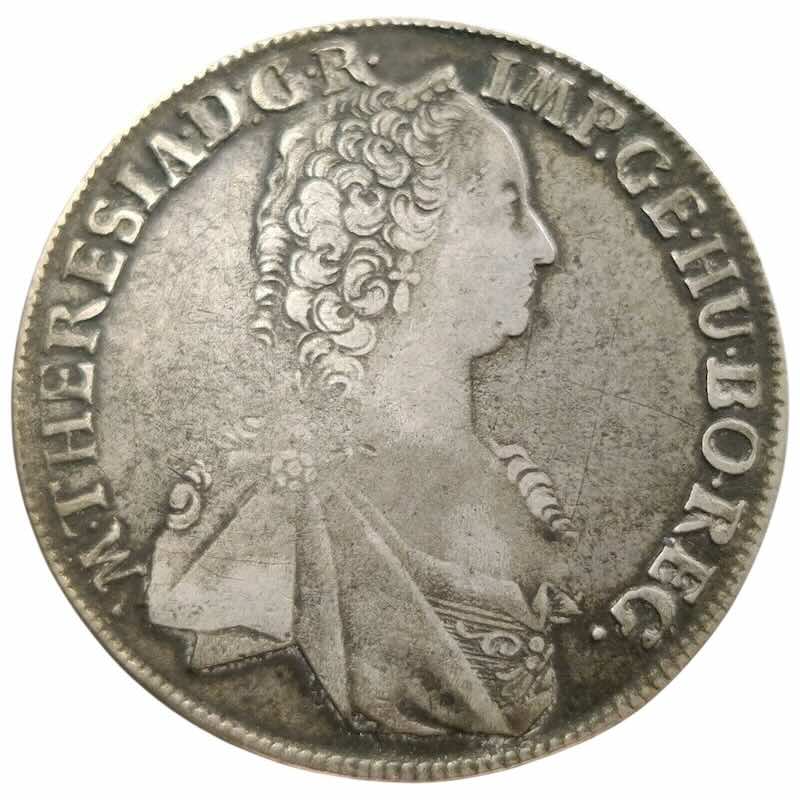
The specifications: 28.0668 grams total weight, .833 fineness, yielding an actual silver weight of 0.7517 troy ounces. The coin measures roughly 40mm in diameter — large, heavy, and distinctively detailed with the empress’s portrait on the obverse and the imperial double-headed eagle on the reverse.
Melt value at today’s spot price: $47.59
The Thaler is less a bullion investment and more a historical curiosity that happens to contain silver. Its premiums over melt are higher than typical silver bullion, reflecting its status as a collector piece and its ongoing role as a cultural artifact in the regions where it circulated for generations. For silver stackers who appreciate history, it is a fascinating addition to a collection — but it is not the most efficient way to accumulate silver by weight.
Collector’s Note: The Maria Theresa Thaler has been struck at mints in London, Paris, Rome, Bombay, Brussels, and Birmingham in addition to Vienna — making provenance research a hobby unto itself. Rome Mint examples are slightly different, struck to an .835 fineness standard rather than the Vienna standard of .833.
Restrike vs. Original: When Does It Matter?
For pure bullion investors — buyers focused on accumulating gold ounces at the lowest possible premium — the restrike question is largely irrelevant. A 1947-dated Centenario restrike contains the same 1.2057 ounces of gold as a 1921 original. The gold does not know what year the die struck it.
Where the distinction starts to matter is at the intersection of bullion and numismatics. Original-date coins in strong condition — an 1899 Rooster in AU58, a 1908 100 Corona in mint state — can carry premiums that significantly exceed their melt value. These premiums tend to be more stable than spot-driven bullion prices, because they are supported by collector demand that operates on different dynamics than the commodity market.
The practical question for most buyers is whether those numismatic premiums justify the additional cost. The answer depends on your goals. If you are building a position in gold as a store of value, restrikes and common-date pieces give you the most metal for your money. If you are also a collector — or if you value the idea of owning a coin that was actually circulating in Vienna in 1910 or Mexico City in 1925 — the premium for an original may be worth paying.
A reasonable middle path: build your core position with restrikes and common-date bullion, and selectively add original-date or high-grade pieces as your collection matures. This approach maximizes gold content in the early stages while leaving room for the numismatic dimension over time.
Further Reading: Our Pre-1933 Gold Coins guide covers the US side of this equation — where the restrike dynamic doesn’t exist, but the tension between bullion value and numismatic premium is just as real.
Buying Smart: Premiums, Timing, and What to Watch
Premiums on world gold coins fluctuate with supply and demand, and the restrike market tends to be more responsive to these cycles than modern bullion. A few patterns are worth noting.
European 20 franc coins — Roosters, Vrenelis, and their Latin Monetary Union siblings — often trade at the lowest per-ounce premiums in the gold market during periods of high supply. Dealers who acquire these coins in bulk from European sources can offer them at premiums that undercut even generic 1 oz gold bars. When supply tightens, premiums rise accordingly, but the 20 franc category has historically reverted to tight spreads.
The larger coins — Centenarios and 100 Coronas — compete directly with 1 oz modern bullion on a per-ounce basis. Their premiums are worth comparing against American Gold Eagles and Gold Buffalos at the time of purchase. In many market conditions, the world gold pieces win on price.
Authentication is straightforward for these coins. Their specifications are well-documented, counterfeits are relatively uncommon compared to rare US coins, and any reputable dealer will guarantee authenticity. If you are buying from an established bullion dealer, the risk of encountering a counterfeit is minimal. For secondary-market purchases — estate sales, coin shows, private transactions — a coin scale and calipers provide quick verification.
Related Guides
- Pre-1933 Gold Coins: The Complete Collector & Investor Guide
- Collecting 20 Franc Gold Coins — A Guide to Every Major Type
- World Gold Coins Buying Guide
- Top Vintage Gold Coins for Investors
- Understanding NGC and PCGS Grading for Pre-1933 Gold Coins
- Coin Grading: The Sheldon Scale & NGCX
- Mexico 5 Pesos: 3 Reasons to Buy
- Vintage Gold Coins