Whether you just received a bullion purchase in the mail or you are evaluating a coin at a local shop, knowing how to verify gold and silver is a basic skill for anyone buying precious metals. Most counterfeits can be detected with inexpensive tools and a few minutes of testing. Professional-grade equipment catches the rest.
Below: testing methods from simplest to most advanced, for both gold and silver, organized by what each test detects, what it misses, and which tests matter most for different products.
The Five-Minute Check: Tests Anyone Can Do
Visual Inspection
Start with your eyes. Compare the coin or bar to known reference images — not just any image from the internet, but official specifications from the issuing mint. Look for sharp, well-defined details in the design. Counterfeits often have soft or mushy lettering, uneven spacing, incorrect font weight, or details that look “off” compared to the genuine article. On coins, check the edge reeding (the ridges around the rim) — it should be uniform and evenly spaced.
Color is another visual cue, especially for silver. Genuine .999 fine silver has a bright, white luster. Counterfeits made from zinc, nickel, or lead alloys tend to look grayer or duller. Gold color is harder to judge because several base metal alloys can approximate 22K or 24K gold’s appearance, but side-by-side comparison with a known genuine coin often reveals subtle differences in tone.
For bars, check the stamped or engraved markings: refiner name, weight, purity, serial number, and assay marks. Compare these against the refiner’s published specifications. Counterfeit PAMP Suisse and Credit Suisse bars are common, and the fakes frequently have slightly wrong font sizes, misaligned text, or serial number formats that don’t match the refiner’s standard.
Magnet Test
Gold and silver are not ferromagnetic. A strong rare-earth magnet (neodymium) should produce no attraction when held near a genuine gold or silver coin or bar. If the piece snaps to the magnet or pulls noticeably toward it, it contains ferromagnetic metals and is not what it claims to be.
The magnet test has a second, more revealing use for silver. Tilt a silver bar or coin at about 45 degrees and slide a neodymium magnet down the surface. On genuine silver, the magnet will slide slowly — noticeably slower than gravity alone — because silver’s high electrical conductivity creates eddy currents that resist the magnet’s motion (the Lenz effect). On non-silver metals, the magnet slides freely or at normal speed.
The Lenz effect slide test also works on gold, though the braking effect is less dramatic than on silver because gold’s conductivity is lower. The test is quick, costs a few dollars for a neodymium magnet, and catches most ferromagnetic counterfeits. It does not detect non-magnetic fakes made from copper, lead, or tungsten.
Weight Check
Every major bullion product has a published weight accurate to fractions of a gram. A precision scale reading to 0.01 grams (available for $20-$50) is the best $30 you can spend on bullion verification. Weigh the piece and compare it to the official specification.
Key weights to know:
Product
Official Weight
Purity
1 oz American Silver Eagle
31.103 g
.999 fine silver
1 oz Canadian Silver Maple Leaf
31.103 g
.9999 fine silver
1 oz American Gold Eagle
33.931 g (total)
.9167 (1 ozt pure gold)
1 oz Canadian Gold Maple Leaf
31.103 g
.9999 fine gold
1 oz Gold Buffalo
31.103 g
.9999 fine gold
1 oz Krugerrand
33.931 g (total)
.9167 (1 ozt pure gold)
1 oz generic silver round/bar
31.103 g
.999 fine silver
Note that the American Gold Eagle and Krugerrand weigh more than 31.103 g total because they are 22-karat alloys — the extra weight is copper (and silver in the Eagle’s case). The pure gold content is still exactly 1 troy ounce. A fake that gets the total weight right but uses cheaper metals will have the wrong dimensions, because the counterfeiter cannot simultaneously match gold’s density, the correct weight, and the correct size. That leads to the next test.
Dimension Check (Calipers)
A digital caliper measuring diameter and thickness catches counterfeits that pass the weight test. The physics is simple: different metals have different densities, so a counterfeit that matches the weight of a genuine coin must be either thicker or wider (or both) to compensate for using a lighter metal. A fake Silver Eagle made from a zinc alloy, for instance, might hit 31.1 grams but will be measurably thicker than the genuine 2.98 mm specification.
A digital caliper accurate to 0.01 mm costs $15-$30. Measure the diameter and thickness and compare to the mint’s published specs. For American Silver Eagle specifications, those are 40.6 mm diameter and 2.98 mm thick. Any meaningful deviation is a problem.
Intermediate Tests
Ping Test (Sound)
Precious metals produce distinctive sounds when struck. Silver coins ring with a clear, high-pitched tone that sustains for several seconds. Gold coins produce a shorter, slightly lower ring. Base metals produce a flat thud or a short, dull tone that dies quickly.
The simplest approach: balance the coin on your fingertip and tap it with another coin. Listen to the ring. With practice, you can distinguish silver from non-silver by ear. Smartphone apps like “Bullion Test” and “CoinTrust” analyze the audio frequency of the ring and compare it to the known frequency profile of specific coins. The American Silver Eagle, for example, should ring at approximately 6,145 Hz. These apps turn the ping test from a subjective judgment call into a measured result.
The ping test is most useful for coins. Bars, especially those in sealed assay cards, are harder to test this way because the packaging dampens the sound. Poured bars also ring differently from minted bars even when genuine, because their internal grain structure varies.
Specific Gravity (Density) Test
The specific gravity test measures a piece’s density and compares it to the known density of the metal it claims to be. Gold has a density of 19.32 g/cm3. Silver is 10.49 g/cm3. These are distinctive values that most counterfeit materials cannot match.
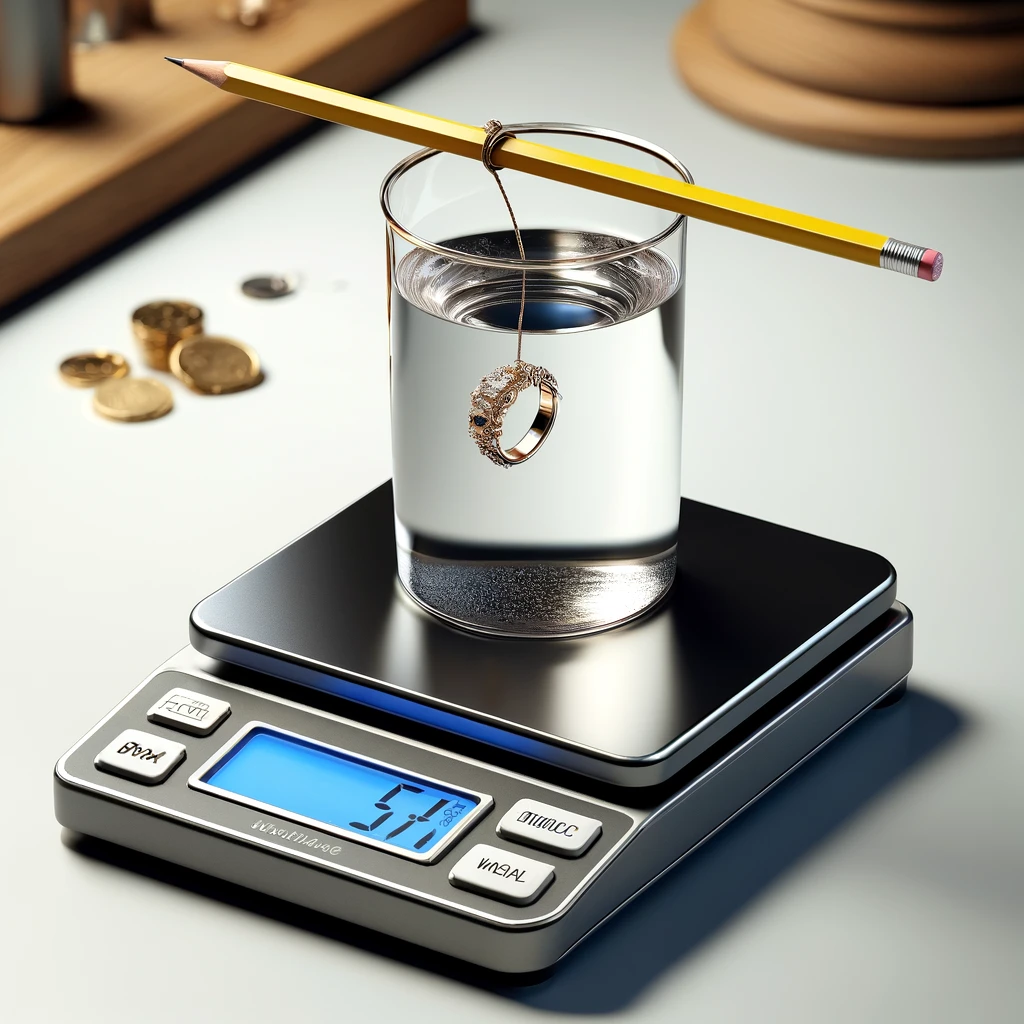
To run the test, you need a precision scale and a cup of water:
Weigh the piece in air and record the weight (dry weight).
Suspend the piece in water using a thin wire or thread attached to the scale, or place a cup of water on the scale, tare it, and lower the piece in on a wire. Record the weight while submerged (wet weight).
For a genuine 1 oz .999 silver coin, you should get a result near 10.49. For a .9999 gold coin, the result should be near 19.32. For 22K gold coins (Gold Eagles, Krugerrands), the result will be lower — around 17.7-17.8 — because of the copper and silver alloy.
The specific gravity test is highly effective for silver, because no common cheap metal matches silver’s density. It is slightly less definitive for gold, because tungsten (19.3 g/cm3) has a density almost identical to gold. A tungsten-core gold bar can pass the density test. For gold bars specifically, pair the density test with electronic verification. FBP’s density guide has the full reference values for common bullion alloys.
Ice Test (Silver Only)
Silver has the highest thermal conductivity of any metal. Place an ice cube on a silver bar or large silver coin and watch how fast it melts. On genuine silver, ice melts noticeably faster than it does on a countertop or on other metals. This is not a precise test — it is more of a quick “does this behave like silver?” check — but it is free, requires no tools, and can flag obvious fakes made from zinc, lead, or steel.
Professional-Grade Testing
Sigma Metalytics Precious Metals Verifier
The Sigma PMV is the electronic testing tool that most coin dealers, pawn shops, and serious collectors rely on. It measures the electrical resistivity of a coin or bar using electromagnetic induction — a non-destructive test that works through plastic capsules, mint packaging, and even sealed assay cards.
The device compares the reading against the known resistivity profile of the claimed metal. Genuine .999 silver, .9999 gold, 22K gold alloy, and platinum each have distinct electrical signatures. The Sigma can distinguish .999 silver from silver-plated copper, genuine gold from tungsten-cored fakes, and even detect coins that have been gold-plated over a base metal core — something the magnet test, weight check, and even specific gravity test can miss.
The Sigma PMV runs $700-$1,000+ depending on the model and wand configuration. That is a significant outlay, but for anyone buying bullion regularly on the secondary market — especially gold bars, which are the product most vulnerable to sophisticated tungsten-core counterfeits — it pays for itself by catching a single fake. The Sigma is the closest thing to a definitive desk-side authentication tool short of lab analysis.
XRF Analyzers
X-ray fluorescence (XRF) analyzers are the gold standard for non-destructive metal analysis. A handheld XRF gun fires X-rays at a piece and reads the fluorescent energy that bounces back, identifying the elemental composition in seconds. An XRF test will tell you the exact percentages of gold, silver, copper, zinc, and any other element present in the alloy.
XRF analyzers are used by refiners, assay offices, and high-end dealers. The limitation is cost: handheld units start around $20,000-$30,000 and go up from there. For individual buyers, XRF is typically accessed through a local coin shop or refiner that offers testing services, often for a small fee. Some shops test purchases for free as a customer service.
One important caveat: standard XRF reads only the surface layer of a piece (the top 10-50 microns depending on the metal and energy level). A thick gold plating over a tungsten core can fool a surface-only XRF reading. Higher-end units with deeper penetration settings mitigate this, but for gold bars above 1 oz, pairing XRF with the Sigma’s through-piece resistivity measurement provides the most complete picture.
Acid Testing
Acid testing uses chemical reactions to determine gold karat or verify silver content. A small scratch is made on an inconspicuous area of the piece (or on a touchstone rubbed against it), and acid solutions of known strength are applied. The acid’s reaction — whether it dissolves the metal, changes color, or has no effect — indicates the metal’s purity.
Acid test kits for gold typically include solutions for 10K, 14K, 18K, 22K, and 24K. Silver kits include a silver-specific acid. The test is reliable for identifying plated items (the acid quickly eats through thin plating to the base metal) but destructive — it leaves a mark. For bullion coins and bars, which derive value from their condition and completeness, acid testing is a last resort. It is more commonly used for jewelry, estate items, and scrap metal where cosmetic damage is acceptable.
Testing by Product Type
Bullion Coins (Gold Eagles, Silver Eagles, Maple Leafs)
Government-minted bullion coins have tight manufacturing tolerances and well-documented specifications, which makes them relatively easy to verify. The recommended testing sequence for coins: weigh it (catches most fakes), measure diameter and thickness with calipers (catches weight-accurate fakes that got the density wrong), and run a ping test for confirmation. For coins over $500, add a Sigma test if you have one.
Canadian Maple Leafs minted since 2013 include radial lines on the coin’s surface and a micro-engraved maple leaf privy mark that are difficult to replicate. The Royal Canadian Mint also uses Bullion DNA technology — a digitally recorded image of each coin’s surface pattern — though verifying this requires RCM’s proprietary reader. If a “Maple Leaf” lacks the radial line pattern, it is either a pre-2013 issue or a fake.
Gold Bars
Gold bars are the most vulnerable product category for sophisticated counterfeits, because a tungsten core with gold plating can match the weight and density of genuine gold. The Sigma Metalytics verifier is strongly recommended for any gold bar purchase from the secondary market. For new bars from major refiners (PAMP Suisse, Valcambi, Perth Mint, Royal Canadian Mint), buying in the original sealed assay card with matching serial number provides additional assurance — replicating the assay card and its security features adds another layer of difficulty for counterfeiters.
Compare gold bar prices across dealers to understand what a fair price looks like. A bar priced well below other dealers may be priced that way for a reason.
Silver Bars
Silver bars are less commonly counterfeited than gold bars because the profit margin for faking them is lower — the raw material cost of a convincing silver-colored base metal is not dramatically less than actual silver for smaller bars. That said, counterfeit 10 oz and 100 oz silver bars do exist, particularly branded replicas of popular products like Engelhard and Johnson Matthey vintage bars.
For silver bars, the specific gravity test is highly effective because no cheap metal closely matches silver’s density (10.49 g/cm3). Weight + dimensions + the Lenz effect magnet slide catches nearly everything. Compare silver bar prices for reference pricing.
Junk Silver (Pre-1965 U.S. Coins)
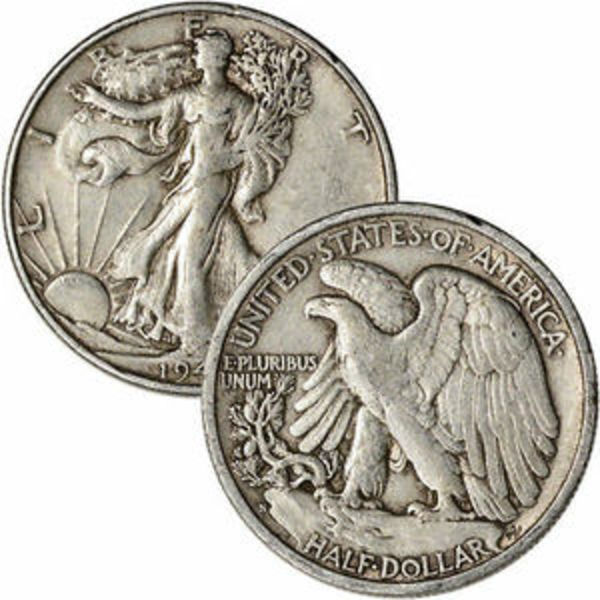
Pre-1965 90% silver dimes, quarters, and half dollars are rarely counterfeited because the individual coin values are too low for most counterfeiters to bother. The main risk is receiving clad (post-1965) coins mixed into lots. The edge check is the fastest way to sort: genuine 90% silver coins have a uniform silver edge, while clad coins show a visible copper stripe along the edge. Weight is the second check: a 1964 Washington quarter weighs 6.25 grams, while a clad quarter weighs 5.67 grams.
What to Do If You Suspect a Fake
If testing raises doubts about a piece you already purchased, document everything — photos, weight measurements, caliper readings, and any electronic test results. Contact the seller immediately. If you bought on eBay, file a claim through the Resolution Center within the 3-day return window for bullion. If you bought from an online bullion dealer, contact their customer service with your documentation — reputable dealers stand behind their products and will accept returns of counterfeit items.
For items purchased locally, a local coin shop with a Sigma or XRF can provide a third-party verification. If the piece is confirmed counterfeit, you may want to report it to local law enforcement or the U.S. Secret Service (which investigates counterfeiting of U.S. currency, including coins).
For most buyers, a magnet, a precision scale, and calipers ($40-$90 total) catch the vast majority of counterfeits. Adding the Sigma is the next step for anyone buying gold bars or high-value coins on the secondary market. XRF is a dealer-level tool that individual buyers access through their local coin shop.
This article is for informational purposes only and does not constitute financial or investment advice. Precious metals carry market risk, and past performance does not guarantee future results. Always conduct your own research and consult with a qualified financial advisor before making investment decisions.