Buyer’s Guide to Specifications, Refiners, Premiums, and Storage
One-kilogram gold bars are among the most premium-efficient forms of physical gold ownership available to private investors. Each bar contains exactly 32.1507 troy ounces of gold in a compact form — roughly the footprint of a passport — yet represents a significant concentration of stored value. For investors already familiar with gold coins or smaller bars who are now considering a larger position, understanding how kilo bars are produced, certified, and priced is essential before committing capital at this scale.
This guide covers specifications, the leading refiners, how to evaluate premiums, what to verify before purchasing, storage and insurance considerations, and the tax treatment that applies to gold bar ownership.
| Based on today’s gold price, 1 kilo of gold is worth: $139,487.92 Live Pricing Note: The value shown is calculated using live spot price data. FindBullionPrices.com displays the live kilo gold bar value alongside dealer prices to easily compare spreads and premiums in real time. A kilo bar’s total value depends entirely on today’s gold spot price multiplied by 32.1507. |
Before committing to a kilo bar, review our gold bar buyer’s guide to understand how premiums scale across every weight class.
What Is a 1 Kilo Gold Bar? Key Specifications
| Specification | Standard Value |
|---|---|
| Weight | 1,000 grams / 32.1507 troy ounces |
| Fineness | .9999 fine gold (most major refiners) |
| Min. LBMA Good Delivery fineness | .995 fine |
| Typical dimensions | approx. 116 × 51 × 9 mm (varies by refiner) |
| Serial number | Yes — stamped or laser-engraved |
| Assay certificate | Included with new bars from certified refiners |
Physical dimensions vary slightly between refiners. PAMP Suisse and Valcambi bars are typically produced in sealed assay cards; some brands produce poured bars with a more irregular profile. All major retail kilo bars from LBMA-certified refiners carry a unique serial number that matches the accompanying assay certificate.
Why Investors Choose 1 Kilo Gold Bars
Premium Efficiency
The primary financial argument for kilo bars over smaller denominations is premium compression. Dealers typically charge 1–2% over spot for new kilo bars from major refiners, compared to 3–6% or more for 1-ounce bars and 7–15% for gold coins. For investors accumulating gold primarily for its metal content, the larger format represents a meaningfully lower all-in cost per troy ounce.
Secondary market kilo bars — bars from previous owners, often without original packaging — typically carry premiums below 1% over spot, representing the lowest-premium entry point into physical gold by weight.
Storage Density
A single kilo bar holds more gold per cubic inch than almost any other retail gold product. For investors using third-party vault storage or bank safe deposit boxes where space is priced or limited, the kilo format stores significantly more value per unit of space compared to an equivalent position in coins or smaller bars.
Liquidity
Major-brand kilo bars from LBMA Good Delivery-listed refiners are recognized and tradable through bullion dealers worldwide. They can typically be sold with minimal identification requirements, provided the serial number and assay certificate are intact. Bars without documentation may require additional independent verification before a dealer will bid on them.
The LBMA Good Delivery Standard
The London Bullion Market Association (LBMA) maintains a list of approved gold refiners whose bars are accepted without re-assay in the London interbank market. Good Delivery standards require approved refiners to meet strict requirements on purity verification, chain-of-custody documentation, and responsible sourcing.
When a dealer or product listing describes a kilo bar as “LBMA-approved” or “LBMA Good Delivery certified,” this means it was produced by a refiner on the Good Delivery list. Buying from an LBMA-listed refiner is the most practical way to ensure a bar will be accepted by major dealers worldwide without assay disputes at the point of resale.
Sovereign Mints vs. Private Refiners
Both produce kilo gold bars at .9999 fineness with equivalent purity, but they differ in institutional backing, availability, and premium.
Sovereign government mints — including the Royal Canadian Mint and the Perth Mint of Australia — produce kilo bars under government authority. Their bars carry an implicit government purity guarantee, which many investors value as an additional trust layer. Premiums for sovereign mint kilo bars can run slightly higher than Swiss refinery equivalents.
Private LBMA-listed refiners — including PAMP Suisse, Valcambi, Metalor, and Argor-Heraeus — produce the majority of retail kilo gold bars globally. Top-tier Swiss refiners have established decades-long track records of purity consistency and international recognition. Their bars are accepted by dealers, banks, and institutions worldwide.
For most investors buying kilo bars at retail, the distinction between sovereign and private is primarily one of preference. Both offer .9999 fine gold, serialized documentation, and global liquidity.
Major Refiner Profiles
| Refiner | Origin | Fineness | LBMA Listed | Key Feature |
| PAMP Suisse | Switzerland | .9999 | Yes | Veriscan authentication, PROVENANCE™ |
| Valcambi Suisse | Switzerland | .9999 | Yes | Published due diligence reports |
| Metalor Technologies | Switzerland | .9999 | Yes | Central bank supplier, Mine-to-Market |
| Argor-Heraeus | Switzerland | .9999 | Yes | Heraeus-owned, ISO 9001/14001 |
| Royal Canadian Mint | Canada | .9999 | Yes | Government purity guarantee |
| Perth Mint | Australia | .9999 | Yes | Gov’t-backed; widely held in Asia-Pacific |
PAMP Suisse
Established in 1977 in Castel San Pietro, Switzerland, PAMP (Produits Artistiques Métaux Précieux) is among the most widely recognized names in retail gold bars globally. PAMP kilo bars are available in cast format and in a minted format sealed in a tamper-evident assay card. All PAMP bars include a Veriscan authentication feature — a microscopic surface scan encoded in a QR code that allows any buyer to verify the bar’s unique physical fingerprint against PAMP’s central database via smartphone.
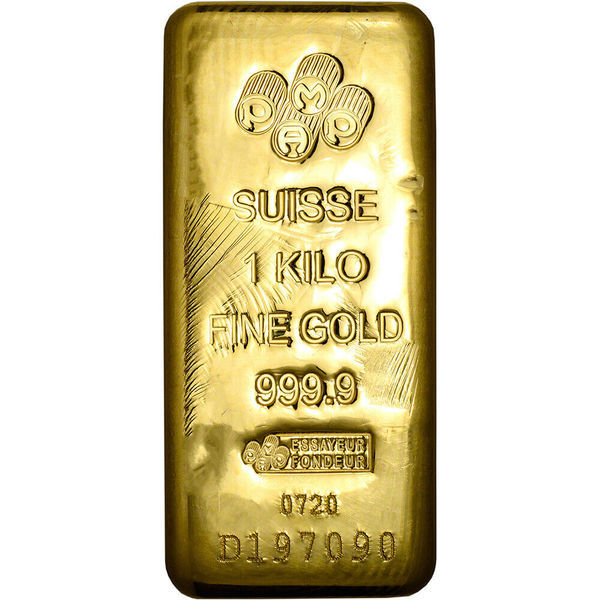
PAMP operates a PROVENANCE™ program that documents chain-of-custody for gold sourcing. The company maintains a zero-tolerance policy toward conflict gold and requires complete supply-chain documentation from all suppliers. For ESG-focused investors or institutions with responsible sourcing mandates, PAMP is one of the most transparent options available.
PAMP bars typically carry a slight premium over comparable Valcambi or Metalor bars, reflecting brand recognition and the Veriscan authentication system.
Valcambi Suisse
Valcambi is one of the world’s largest gold refineries by throughput, operating in Balerna, Switzerland. It holds LBMA Good Delivery listing and Responsible Jewellery Council (RJC) and Conflict-Free Gold Standard (CFGS) certifications. Valcambi kilo bars are produced in both cast and minted formats, each stamped with weight, fineness, serial number, and refinery seal.
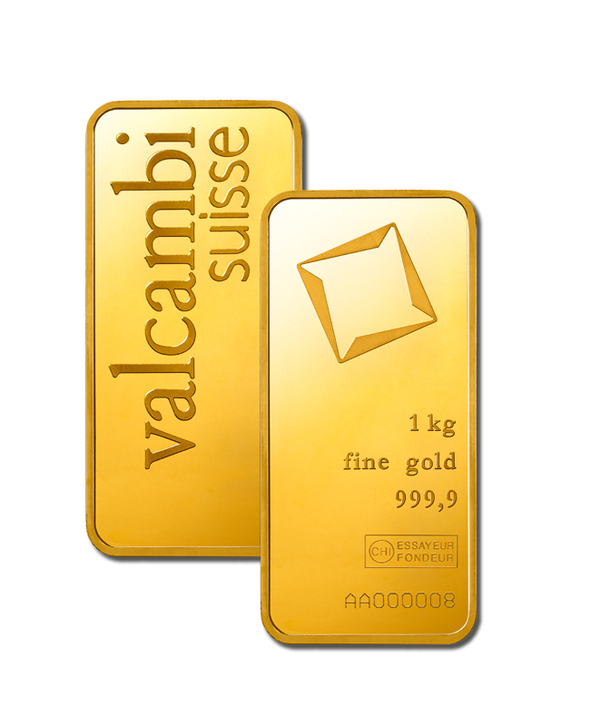
Valcambi publishes annual due diligence reports covering supply chain risk, supplier audits, and sourcing origin. The company participates in pilot programs for blockchain-based gold traceability and offers an institutional-grade Green Gold program sourced from certified responsible operations, though this is not typically available through standard retail bullion channels.
Metalor Technologies
Founded in 1852 in Neuchâtel, Switzerland, Metalor is one of the oldest operating refineries in the world. The company holds LBMA Good Delivery status and LBMA Responsible Gold Certification and is a significant supplier to central banks, government treasuries, and institutional wealth managers.
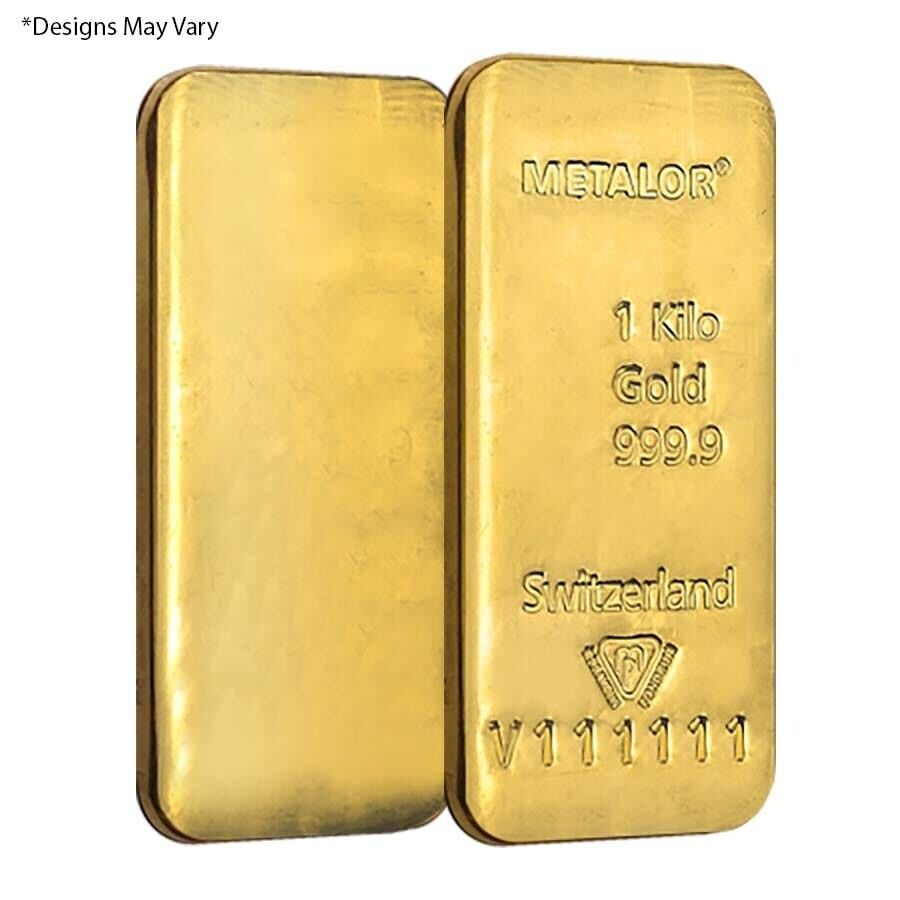
In 2020, Metalor announced it would refine gold only from mine sites it has fully audited, including suspending relationships with artisanal mining operations that could not demonstrate compliance. Metalor kilo bars are minimally branded — stamped with name, weight, purity, and serial number. The company adheres to a Track and Trace program and contributed to the development of the Mine-to-Market traceability initiative.
Argor-Heraeus
Argor-Heraeus is a Swiss refiner with majority ownership held by Heraeus Holding, a global technology company in precious and special metals. It holds LBMA Good Delivery listing and ISO 9001 and 14001 certifications. Argor-Heraeus kilo bars are a common choice for price-sensitive institutional buyers who want verified Swiss-origin purity at competitive premiums, with clean functional stamping: weight, fineness, serial number, refinery seal.
Royal Canadian Mint
A Government of Canada Crown corporation, the Royal Canadian Mint produces kilo gold bars at .9999 fine with a government purity guarantee. RCM bars often carry a modest premium over Swiss private refinery bars. For investors who value government assurance or who may be selling to non-specialist buyers who prefer sovereign-backed products, RCM is a strong choice.
Perth Mint
Owned by the Government of Western Australia, the Perth Mint produces kilo gold bars at .9999 fineness under government guarantee. Perth Mint bars are accepted in COMEX-approved vaults and globally recognized, and are particularly common in Asia-Pacific markets. For North American buyers they are widely available, though premiums may be slightly higher than Swiss alternatives due to shipping origin.
Secondary Market and Legacy Bars
Secondary market kilo bars — bars from previous owners, sometimes without original packaging or assay cards — represent a significant portion of retail kilo trading. These bars originate primarily from LBMA-listed refiners such as PAMP, Metalor, Heraeus, and Valcambi, along with older Johnson Matthey bars, which remain in wide circulation. Note: Johnson Matthey exited the gold and silver bullion refining business in 2012; JM bars are secondary market products only, not actively produced.
Secondary market bars carry meaningfully lower premiums — often under 1% over spot — in exchange for the absence of original assay documentation. Reputable dealers that deal in secondary market bars test metal content independently before resale. Buyers should confirm the dealer’s testing policy explicitly before purchasing a bar without its original certificate.
Verifying Authenticity
Gold’s high value-to-weight ratio has made kilo bars a target for counterfeiting, most commonly through tungsten-core bars plated in gold. Standard verification methods:
Weight and dimensions. A genuine .9999 fine kilo bar must weigh exactly 1,000 grams. A laboratory balance accurate to 0.01 grams is appropriate; kitchen scales are insufficient at this precision.
Sigma Metalytics / XRF testing. Sigma Metalytics devices test composition through non-destructive electromagnetic induction. X-ray fluorescence (XRF) analyzers provide surface composition data. Both are standard at professional coin shops and most established bullion dealers.
Ultrasound testing. Tungsten has a density close to gold but a distinctly different acoustic velocity. Ultrasound probes detect a tungsten core in a gold-plated bar without drilling — the most definitive non-destructive test available.
Veriscan (PAMP bars only). PAMP’s proprietary system encodes a microscopic surface scan in the bar’s QR code, allowing real-time verification against PAMP’s central database via smartphone.
Purchasing from a reputable dealer with a documented return and buy-back policy remains the most practical protection for retail buyers who lack access to professional testing equipment.
How to Buy Online: A Practical Checklist
Before purchasing a kilo gold bar from any online dealer, confirm the following:
- Live pricing. The dealer should display prices calculated from live spot, not updated intermittently. Static or manually updated pricing is a red flag at this purchase size.
- Serialized bars with documentation. Confirm the bar includes a matching assay certificate. If buying secondary market, confirm the dealer’s independent verification policy in writing.
- Shipping insurance. Kilo bars should ship fully insured for replacement value. Some dealers insure only to a fixed dollar cap below the bar’s current value — confirm coverage explicitly before ordering.
- Secure payment. Check and wire transfer payments typically receive a discount versus credit card. Confirm the dealer’s payment methods and processing fees before transmitting funds.
- Return and buy-back policy. Understand the dealer’s conditions for returns and their buy-back spread before you purchase. A reputable dealer will have both policies published clearly.
- Reputation and history. Verify the dealer’s rating on the Better Business Bureau, Trustpilot, and precious metals industry forums. For purchases at this dollar value, established dealers with verifiable trading history are strongly preferable to newer or lower-profile sellers.
FindBullionPrices.com aggregates live kilo gold bar prices across multiple vetted dealers, allowing direct premium comparison before you commit.
Storage Options
Bank safe deposit box. Accessible and low-cost, but typically uninsured by the bank — insurance must be arranged separately through a personal policy or rider. Access limited to branch hours.
Home safe. A quality fireproof and theft-resistant safe (UL-listed, minimum 500 lbs or structurally anchored) provides on-demand access. Standard homeowner’s or renter’s insurance policies often cap precious metals coverage far below the value of a kilo bar; a separate rider or standalone policy is usually required.
Private vault / depository. Third-party vaulting services offer segregated or allocated storage with full insurance coverage, typically at 0.1–0.5% of value annually. Some arrangements allow for direct dealer buy-back without physical shipping.
IRA custodian storage. If holding kilo bars within a self-directed precious metals IRA, IRS rules require storage with an approved custodian at an IRS-qualified depository — home storage within an IRA structure is not permitted.
Tax Considerations
Physical gold, including kilo bars, is classified by the IRS as a collectible. Long-term capital gains on collectibles are taxed at a maximum federal rate of 28% — higher than the 15–20% long-term capital gains rate that applies to most equities. Short-term gains (assets held under one year) are taxed as ordinary income.
Dealers are required to file Form 1099-B with the IRS when certain purchase thresholds are met, depending on payment method and bar specifications. Buyers should maintain purchase records including acquisition date, purchase price, and serial number for accurate cost-basis reporting at the time of sale.
State sales tax treatment varies significantly — many states exempt monetary gold; others apply standard sales tax rates. Confirm your state’s treatment before purchase.
| Tax Advice Disclaimer This section summarizes general federal tax treatment for informational purposes and does not constitute tax advice. Tax law is complex and subject to change. Consult a qualified tax professional or CPA regarding your specific situation before making purchase decisions based on tax considerations. |
Investment Disclaimer
| Important Gold bar prices fluctuate continuously with global spot markets and vary by dealer, quantity, and market conditions. Physical gold is less liquid than publicly traded securities, and the spread between buy and sell prices represents a real cost of ownership. Past performance of gold as an asset class does not indicate future results. This article is informational in nature and does not constitute financial, investment, or tax advice. Assess your investment objectives, risk tolerance, and time horizon carefully, and consult a qualified financial advisor before making investment decisions at this scale. |
FindBullionPrices.com compares live 1 kilo gold bar prices from multiple vetted dealers so you can see current premiums and make an informed comparison before you buy.