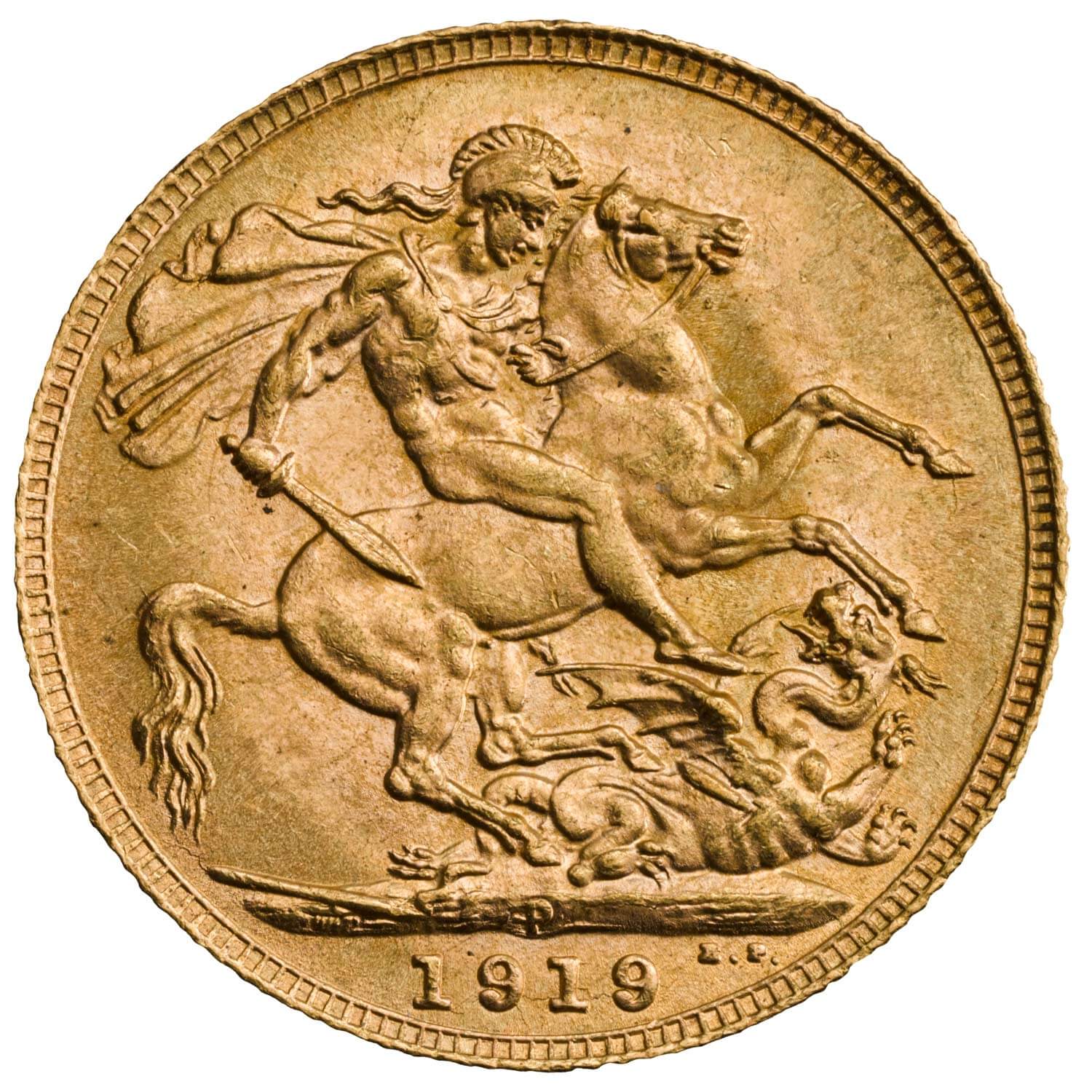
European gold coins fill a gap that modern fractional bullion leaves open. These are government-issued coins struck in gold weights between roughly one-tenth and one-fifth of a troy ounce, minted by sovereign institutions across Austria, Germany, the Netherlands, Belgium, France, Switzerland, Russia, and Turkey. Most carry bullion premiums well below their modern counterparts, and every one of them can be bought for under $1,000 per coin at current gold levels.
At a Glance
- 10 government-mint coins from eight countries, all under $1,000 at recent gold
- Gold content ranges from 0.0933 oz to 0.2127 oz per coin, roughly one-tenth to one-fifth of an ounce
- Austrian restrikes (4 Florin, 10 Corona, 1 Ducat) carry some of the lowest premiums in fractional gold
- 20 Francs coins from France, Belgium, and Switzerland share identical specs under the Latin Monetary Union standard
- Five Netherlands 10 Guilders coins deliver 0.9735 oz of gold, just shy of a full troy ounce
- None of these coins qualify for a precious metals IRA because fineness runs .900 to .986, below the IRS .995 threshold for gold
Why Fractional European Gold?
Modern fractional gold coins (1/10 oz Eagles, 1/4 oz Maples) are struck at full production scale with current-year dates and retail premiums to match. European fractional gold works differently. Many of these coins are restrikes, produced by their original mints using historical dies and frozen dates. The Austrian Mint still strikes 4 Florin and 10 Corona coins dated 1892 and 1912 respectively. That continuous production keeps supply high and bullion premiums low, sometimes under 5% over spot.
The coins also carry real weight variety. Instead of the standard 1/10, 1/4, and 1/2 oz increments used by North American and Australian mints, European coins come in odd fractional weights (0.0933 oz, 0.1152 oz, 0.1867 oz) dictated by the original monetary systems they were designed for. That variety lets you build a gold position in smaller increments than modern programs allow.
All 10 Coins Compared
The table below lists every coin covered in this guide with its actual gold weight, fineness, and current melt value based on live gold spot near 4,338.66 per troy ounce. Bullion premiums vary by dealer and are not included in the melt column. Check each product page for live pricing.
| Coin | Country | AGW (oz) | Fineness | Melt Value | Product Page |
|---|---|---|---|---|---|
| 4 Florin / 10 Francs | Austria | 0.0933 | .900 | $404.80 | View bullion prices |
| 5 Gulden | Netherlands | 0.0973 | .900 | $422.15 | View bullion prices |
| 10 Corona | Austria | 0.0980 | .900 | $425.19 | View bullion prices |
| 1 Ducat | Austria | 0.1107 | .986 | $480.29 | View bullion prices |
| 10 Mark | Germany | 0.1152 | .900 | $499.81 | View bullion prices |
| 5 Roubles | Russia | 0.1244 | .900 | $539.73 | View bullion prices |
| 20 Francs (LMU) | France / Switzerland | 0.1867 | .900 | $810.03 | View bullion prices |
| 20 Francs | Belgium | 0.1867 | .900 | $810.03 | View bullion prices |
| 10 Guilders | Netherlands | 0.1947 | .900 | $844.74 | View bullion prices |
| 100 Kurush | Turkey | 0.2127 | .917 | $922.83 | View bullion prices |
Melt values update automatically with live gold spot. AGW = Actual Gold Weight, the pure gold content regardless of alloy.
Coin Profiles
Austrian Restrikes: 4 Florin, 10 Corona, and 1 Ducat
The Austrian Mint produces all three as official restrikes with frozen dates (1892, 1912, and 1915 respectively). Because they are struck to order with no mintage cap, supply stays consistent and bullion premiums stay thin. The 4 Florin/10 Francs and 10 Corona are both .900 fine. The 1 Ducat stands apart at .986 fine (23.75 karat), a holdover from the centuries-old Ducat standard. The Ducat is also unusually thin, a wafer-like coin that feels different in hand than any modern bullion piece. For a full breakdown of all six Austrian gold denominations, see our Austrian Gold Coins guide.
20 Francs: The Latin Monetary Union Standard
The 20 Francs coin may be the most widely circulated gold denomination in history. Under the Latin Monetary Union (1865 to 1927), France, Belgium, Switzerland, Italy, and Greece all struck gold coins to an identical spec: 6.452 grams gross weight, .900 fine, 0.1867 oz AGW, 21mm diameter. A French Rooster, Swiss Helvetia, and Belgian Leopold are the same coin by weight and purity. Premiums on LMU 20 Francs tend to run in the single digits, and availability is deep because hundreds of millions were originally produced.
German 10 Marks
The German 10 Mark was minted across numerous German states between 1872 and 1914. At 0.1152 oz AGW and .900 fine, it sits between the Austrian 10 Corona and the 20 Francs in gold content. Coins come with different obverse designs depending on the issuing state. Prussia, Bavaria, Saxony, Hamburg, and others all struck their own. The variety adds numismatic interest without dramatic premium jumps on most common dates.
Netherlands 5 Gulden and 10 Guilders
The 5 Gulden is one of the lightest European gold coins at 0.0973 oz, a roughly 422.15 entry point at current gold. The 10 Guilders (also called 10 Gulden) nearly doubles that at 0.1947 oz. Both are .900 fine and feature Dutch monarchs on the obverse. Premiums are moderate, and the 10 Guilders in particular works well for building fractional gold positions because of its weight.
Turkey 100 Kurush
The 100 Kurush is the heaviest coin on this list at 0.2127 oz AGW and .917 fine, with a 7.216 gram gross weight. It carries Ataturk’s portrait on the obverse and a unique dual-date system marking both 1923 (founding of the Turkish Republic) and the number of years since. At roughly 922.83 in melt value, it delivers the most gold per coin in this group.
Russia 5 Roubles
The Russian 5 Roubles carries 0.1244 oz of gold at .900 fine. Unlike the Austrian restrikes, these are original-issue coins with limited surviving populations. That scarcity drives bullion premiums well above the rest of this list. Expect 20% to 80% over melt depending on condition and date. The 5 Roubles is a strong coin historically, but it is the most expensive per ounce of gold on this page.
Five 10 Guilders Equals One Ounce
One of the practical appeals of the Netherlands 10 Guilders is the stacking math. Each coin contains 0.1947 troy ounces of gold. Five coins deliver 0.9735 oz, just 0.0265 oz short of a full troy ounce. At 4,338.66 gold, that gap is about 114.97 worth of metal. A stack of five 10 Guilders coins gives you fractional flexibility (sell one at a time) with near-ounce gold exposure at the stack level. Compare that to five 1/10 oz modern coins at 0.50 oz total. You would need ten to approach an ounce, and the combined premiums would be substantially higher.
Premiums and Availability
Bullion premiums across this group split into three tiers:
Lowest premiums: Austrian restrikes. The 4 Florin, 10 Corona, and 1 Ducat benefit from continuous modern production at the Austrian Mint. They are struck to bullion-market demand, not collector schedules, and premiums frequently run under 5% over spot. If you want the cheapest path to fractional European gold, start here.
Mid-range premiums: 20 Francs, Dutch, German, and Turkish coins. These are original-issue coins with large surviving populations. Premiums typically sit between 5% and 15%, influenced by condition, date rarity, and dealer supply. The 20 Francs LMU coins tend to cluster at the lower end of this range because supply is so deep.
Highest premiums: Russian 5 Roubles. Premiums of 20% to 80%+ reflect genuine scarcity. These are collectible coins that happen to contain gold, rather than bullion coins priced near melt. Buy them for the history, not the gold efficiency.
How to Choose
Premium sensitivity. If you are accumulating gold and want the most metal per dollar, the Austrian restrikes and LMU 20 Francs deliver. Their premiums compete with, and sometimes beat, modern 1/10 oz coins from North American mints.
Liquidity. The 20 Francs is the most widely recognized European gold coin worldwide. Dealers across Europe, Asia, and North America buy and sell them routinely. Austrian restrikes are similarly liquid. The German 10 Marks and Dutch coins trade easily in the US dealer market but may take a moment of recognition at a general coin shop.
Historical interest. Every coin on this list predates World War I in its original design or mandate. German 10 Marks carry issuing-state variety. The 1 Ducat traces its lineage to a coin standard established in 1284. If the history matters to you alongside the gold content, these coins offer context that a modern fractional coin cannot.
IRA eligibility. None of these coins qualify for a self-directed precious metals IRA. The IRS requires gold coins and bars to be .995 fine or higher (with a specific exception for the American Gold Eagle at .9167). At .900, .917, and .986 fineness, every coin on this list falls short. If IRA eligibility is a requirement, look at modern .9999 fine coins or qualifying bars.
Frequently Asked Questions
Are European gold coins real gold?
Yes. Every coin listed here was struck by a sovereign government mint from gold at .900 fine or higher. The gold content (AGW) listed for each coin reflects the actual pure gold weight after accounting for the copper or silver alloy. These are not gold-plated or gold-filled. They are solid gold coins.
What is a restrike?
A restrike is a coin produced by the original mint using the original (or replica) dies, but struck at a later date than the year shown on the coin. The Austrian Mint’s 4 Florin (dated 1892), 10 Corona (1912), and 1 Ducat (1915) are all modern restrikes with frozen dates. They contain the same gold as the originals and are sold as bullion rather than collectibles. For more on how restrike programs work, see our guide to gold restrike coins.
Why are Russian 5 Roubles so much more expensive?
Supply. The Russian 5 Roubles was not restruck. All surviving coins are from original Czarist-era production, and the available population is small compared to continuously restruck Austrian coins or the hundreds of millions of 20 Francs produced across the Latin Monetary Union. Premiums of 20% to 80% over melt reflect that genuine scarcity.
Can I use these coins in a Gold IRA?
No. The IRS requires gold bullion in an IRA to be .995 fine or higher, with a narrow exception for the American Gold Eagle. All ten coins in this guide fall below that threshold. The highest fineness here is the Austrian 1 Ducat at .986, close but not qualifying.
Related Reading
- Austrian Gold Coins: From Ducats to Coronas
- Gold Restrike Coins: How Government Restrikes Keep Premiums Low
- Gold Hub: All Gold Coins and Bars
- 20 Francs Gold Coin: Compare Bullion Prices
- Netherlands 10 Guilders: Compare Bullion Prices
Disclaimer: This article is for informational and educational purposes only. It is not financial or investment advice. FindBullionPrices.com is a price comparison platform and does not sell bullion or coins.