The precious metals market is overwhelmingly made up of legitimate dealers, honest transactions, and real products. But the combination of high dollar values, buyer unfamiliarity, and the emotional appeal of gold and silver creates openings for bad actors. Most bullion scams follow a handful of predictable patterns — and once you know what to look for, they are easy to avoid.
The Overpriced “Rare” Coin Pitch
This is the most common and most costly scam in the precious metals industry. It is not illegal in most cases — which makes it worse, because the victims have little legal recourse.
The pitch works like this: a dealer — often over the phone, sometimes through television advertising — convinces the buyer that standard bullion coins and bars are a bad investment. Instead, the dealer steers the buyer toward “rare,” “collectible,” or “semi-numismatic” coins that supposedly offer better returns, tax advantages, or protection from government confiscation.
The coins being sold are typically common-date pre-1933 US gold coins in low grades, or modern commemorative coins with inflated “collector” values. The premiums are enormous — 30%, 50%, sometimes 100% or more above the melt value of the gold or silver content. A buyer who pays $3,000 for a $1,800-melt-value coin starts their investment $1,200 in the hole before gold moves a single dollar.
Compare that to an American Gold Eagle from an online bullion dealer, where the premium over melt value is typically 4-7%. The same gold content, for hundreds or thousands of dollars less.
How to Spot the Pitch
The overpriced coin pitch has several telltale markers:
They call you. Reputable online bullion dealers do not cold-call customers. If someone calls you unsolicited to sell gold or silver coins, that is a red flag regardless of what they are selling. The FTC has documented numerous cases of telemarketing precious metals fraud.
They discourage price comparison. A dealer who says “you won’t find this deal anywhere else” or pressures you to buy immediately does not want you checking FindBullionPrices.com to see what the same product costs elsewhere. Legitimate dealers welcome comparison shopping because their prices are competitive.
They use fear. Confiscation, hyperinflation, dollar collapse, imminent market crash — fear is the engine of the overpriced coin sale. The urgency pushes the buyer past rational price comparison and into an emotional purchase.
They claim special tax treatment. Some dealers tell buyers that “rare” coins are not subject to capital gains taxes, or that certain coins have tax advantages over bullion. This is misleading. The IRS treats precious metals as collectibles regardless of whether they are bullion or numismatic coins. Consult a tax professional — not a coin salesperson — for tax advice.
They steer you away from what you asked for. You call to buy a 1 oz gold bar. The salesperson says bars are “too risky” or “not a good investment” and redirects you to a graded coin at three times the price. This bait-and-switch is the clearest signal that the dealer’s interest is in their margin, not your investment.
Counterfeit Bullion
Fake gold and silver products are a real and growing problem. The most commonly counterfeited items include 1 oz gold bars (especially those in sealed assay cards), American Silver Eagles, and Chinese Gold Pandas. Counterfeits range from obvious fakes made of base metal to sophisticated tungsten-cored bars that pass basic visual inspection.
Protect yourself by buying from established bullion dealers who source directly from mints and authorized distributors. If buying from a secondary source — a private seller, a pawn shop, or an auction site — verify the product before paying. FBP has a guide to testing gold and silver at home that covers the basic tools and techniques.
Products with built-in anti-counterfeit features — like Sunshine Minting’s MintMark SI technology or PAMP Suisse’s Veriscan system — add a layer of verifiable authenticity that makes counterfeiting harder.
Dealer Red Flags
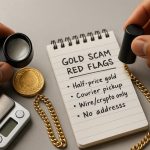
Beyond the overpriced coin pitch, here are specific red flags that indicate a dealer may not have your best interests in mind.
No posted prices. If a dealer does not list prices on their website or requires you to call for a quote, they are likely charging different prices to different customers based on how informed each buyer appears. Every reputable online bullion dealer posts prices publicly.
Prices far below spot. If a dealer advertises gold or silver below the spot price, something is wrong. Dealers have costs and margins — no one is selling gold at a loss. Below-spot pricing is either a bait-and-switch (the low price is for a product they do not intend to ship) or outright fraud.
No physical address. A dealer with no verifiable business address, no state business registration, and no history in the precious metals industry is a risk. Check the Better Business Bureau, Trustpilot, and industry forums before sending money to any dealer you have not used before.
Unusual payment requirements. Wire transfer and check are standard payment methods for bullion purchases. Cryptocurrency is increasingly common. But a dealer who insists on payment via gift cards, money orders to a personal name, or untraceable methods is not running a legitimate business.
Excessive delays. Standard shipping from a reputable dealer is 3-10 business days after payment clears. If a dealer consistently takes weeks or months to ship, they may be operating on a cash-flow model where new customer deposits fund old orders. This is the structure of a Ponzi scheme, and it eventually collapses.
Pressure to buy storage or vault programs. Some dealers sell bullion and then aggressively push their own storage program, sometimes at fees that exceed the cost of a bank safe deposit box. While third-party vault storage is a legitimate service, be cautious if the dealer’s business model seems designed around storage fees rather than product sales.
Online Auction and Marketplace Risks
eBay, Facebook Marketplace, Craigslist, and other platforms have significant precious metals activity. Some of it is legitimate. Some of it is not.
The risks on these platforms are different from dealer risks. You are dealing with individual sellers who may or may not know what they have, and the platform’s buyer protections may not adequately cover precious metals transactions. Specific concerns include counterfeit products sold as genuine, misleading descriptions (a “gold-plated” bar sold as “gold”), and sellers who take payment and never ship.
If you buy on secondary platforms, stick to sellers with established track records, use the platform’s payment and dispute systems (never pay outside the platform), and verify the product on arrival. For most buyers, the small savings over reputable online dealer prices are not worth the added risk.
How to Protect Yourself
Use FindBullionPrices.com before every purchase. The single most effective defense against overpaying is knowing what the product costs from legitimate online dealers. If someone is charging 30% more than the best online price for the same product, you have your answer.
Buy bullion, not stories. When a salesperson spends more time talking about history, rarity, and collectibility than about gold content, purity, and premium over spot, they are selling a story. You are buying metal. Focus on ounces, purity, and cost per ounce.
Never buy under pressure. Legitimate bullion deals do not expire in 15 minutes. Any dealer who creates artificial urgency — “this price is only good until the end of the call” — is using a sales tactic, not offering a real opportunity.
Verify before you buy from new dealers. Check their Better Business Bureau rating, read reviews on Trustpilot and industry forums like Reddit’s r/Silverbugs, and confirm their physical address and business registration. A few minutes of research prevents most problems.
Understand what you own. Know the weight, purity, and melt value of every piece in your collection. If you cannot calculate the melt value of a coin you own, you do not know whether you overpaid for it. The formula is simple: (spot price / 31.1035) x weight in grams x purity.
Keep records. Save receipts, invoices, and transaction confirmations for every purchase. You will need them for cost basis calculations if you sell, and they are essential if you ever need to file a dispute or report fraud.
What to Do If You Have Been Scammed
If you believe you have been the victim of precious metals fraud, file a complaint with the FTC at ftc.gov, your state attorney general’s office, and the Better Business Bureau. If the transaction involved wire fraud or mail fraud, contact the FBI’s Internet Crime Complaint Center (IC3). Document everything — save emails, call recordings if legal in your state, receipts, and product photos.
For buyers who overpaid for numismatic coins but received genuine products, legal options are limited. The sale may not meet the legal definition of fraud if the seller disclosed the price and the buyer agreed to pay it. This is why prevention — knowing the market price before you buy — is far more effective than trying to recover losses after the fact.
Related Reading
- How to Compare Bullion Premiums — Your primary defense against overpaying.
- How to Test Gold and Silver at Home — Verify authenticity before you finalize a purchase.
- Gold Confiscation: Executive Order 6102 — The real history behind the “confiscation-proof” sales pitch.
- Compare Online Bullion Dealers — Start with dealers who post transparent prices.
Disclaimer: This article is for informational and educational purposes only. It is not financial, investment, or legal advice. If you believe you have been the victim of fraud, consult a qualified attorney. FindBullionPrices.com is a price comparison platform and does not sell bullion or coins.