Arbitrage in precious metals is not limited to Wall Street trading desks. In 2025 and 2026, record gold prices, a structural silver deficit, and unusual market dislocations have created price gaps that individual investors can act on. Some require nothing more than a Costco membership. Others reward deep numismatic knowledge. All of them share the same principle: buy where the price is low, sell where the price is high, and pocket the difference after costs.
Here are six arbitrage strategies currently active in the precious metals market.
1. Costco Gold and Silver: The Static Price Window
Costco sets a fixed daily price on its gold bars and silver coin tubes. That price does not change during the trading day, even though gold and silver prices fluctuate continuously. When spot rises after Costco prices its inventory in the morning, buyers lock in what is effectively yesterday’s price on today’s metal.
The profit math is simple. If Costco lists a 1 oz gold bar at $4,200 and spot rises $50 during the trading session, the buyer holds a bar worth $4,250 at current market rates. Stack on the 2% Costco Executive membership cashback and 2% from the Costco Visa card, and the effective discount widens further.
Costco now sells gold bars, silver coin tubes (American Silver Eagles and Canadian Maple Leafs), and platinum. Purchase limits have tightened to two gold bars per member per 24-hour period. Wells Fargo estimated Costco’s combined precious metals sales exceeded $200 million per month by late 2025.
The risk is symmetrical. Spot can fall just as fast as it rises. Anyone buying Costco gold with the intent to flip needs a pre-arranged buyer or dealer relationship, because selling gold bars back into the market typically means accepting 1 to 2 percent below spot.
2. The Junk Silver Discount: Buying Below Melt
For the first time in years, 90% silver coins are trading at or below their melt value. This does not reflect lower demand for silver. It reflects refinery economics.
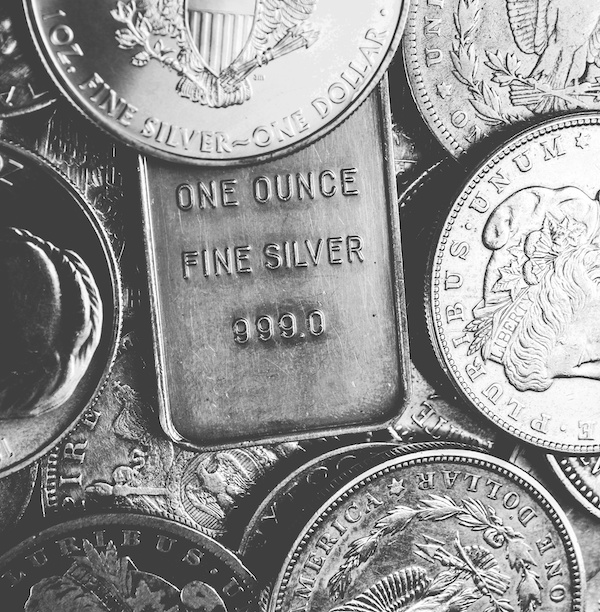
Record silver prices prompted a wave of selling from long-term holders. Dealers absorbed large volumes of pre-1965 dimes, quarters, and half dollars. But refineries that process 90% silver into .999 fine bars have limited throughput, and backlogs developed. With inventory piling up and no efficient way to convert it to .999 fine, dealers began discounting junk silver to move it.
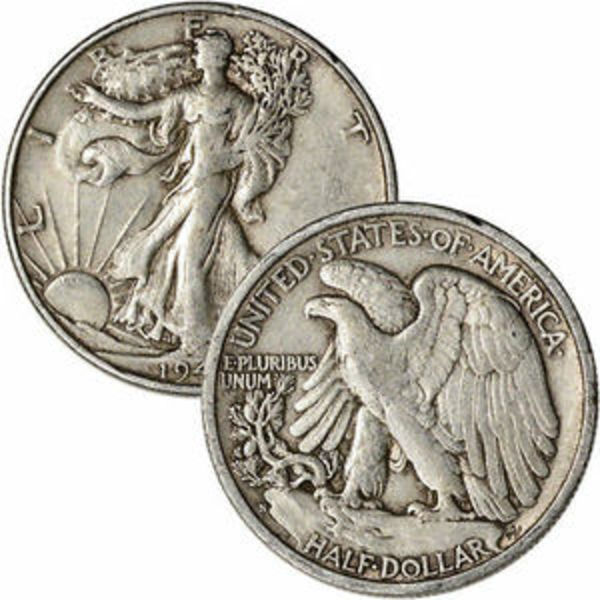
The result: 90% silver coins are available at roughly 2% over melt, and in some cases at or below melt. By comparison, American Silver Eagles carry 8 to 12% premiums and generic rounds run 3 to 6% over spot. For cost-per-ounce buyers, the opportunity is clear. You can verify the math with the coin melt value calculator.
This pricing inversion has occurred before during previous silver spikes and has historically normalized within months as refinery capacity catches up.
3. Gold-Silver Ratio: The Rotation Trade
The gold-silver ratio measures how many ounces of silver it takes to buy one ounce of gold. The 20-year average sits around 70:1. When the ratio exceeds 80, silver is historically cheap relative to gold. When it compresses below 60, gold is the better relative value.
In April 2025, the ratio briefly touched 105:1, a level rarely reached in modern history. Investors who recognized the signal and rotated into silver captured outsized returns. For full-year 2025, silver gained roughly 144%, compared to gold’s approximately 64% return. The ratio has since compressed below 70:1.
Silver faces its sixth consecutive annual supply deficit in 2026, a shortfall the Silver Institute projects at roughly 46 million ounces, driven by industrial demand from solar manufacturing and electronics. That structural imbalance supports the case for further ratio compression toward 60:1 or below.
The trade is simple in concept: hold gold when the ratio is low, swap to silver when the ratio is high, and wait for mean reversion. Execution requires patience and a willingness to hold physical metal through volatile periods.
4. Collector Coin Arbitrage: Cross-Grading and Raw-to-Slab
The numismatic market contains its own set of price gaps, particularly around grading.
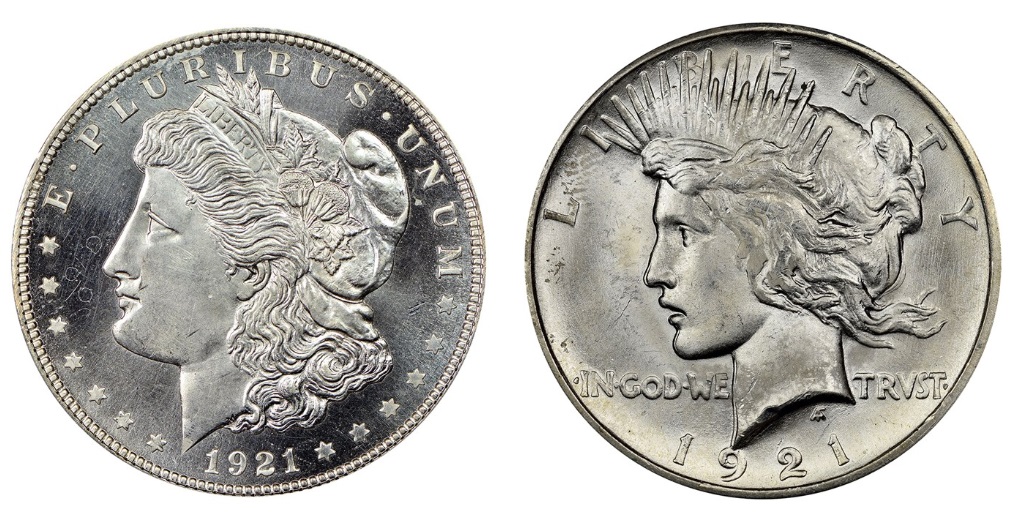
Cross-grading exploits the fact that PCGS and NGC do not always agree on a coin’s grade. PCGS-graded coins generally command higher prices than NGC-graded coins at the same grade level. A dealer who spots an NGC MS-64 Morgan dollar that appears to meet PCGS MS-65 standards can buy at the NGC MS-64 price (say $1,000), crack the coin out of its holder, resubmit to PCGS, and potentially sell a PCGS MS-65 for $1,800 to $2,200. After grading fees of $30 to $60 per coin, the net profit can reach $700 to $1,100 on a single coin.
Series that cross-grade well include Morgan dollars, Walking Liberty half dollars, and Pre-1933 gold coins such as Indian Head $10 eagles.
Raw-to-slab flipping follows a similar logic. Ungraded coins purchased at estate sales, coin shows, or online auctions often trade at prices that reflect uncertainty about condition. A raw Morgan dollar that a knowledgeable buyer evaluates as MS-65 material might sell for $175. After $40 in PCGS grading and shipping costs, the total investment is $215. If PCGS agrees and assigns MS-65, the certified coin can sell for $350, a 63% return.
Both strategies carry real risk. Coins can come back at the same grade or lower. Cross-grading requires a trained eye for surface quality, strike, and eye appeal. Check population reports from both grading services before submitting, because profit depends on the value gap between grade levels.
5. Global Arbitrage: Shanghai, London, and COMEX
Gold trades on multiple exchanges worldwide, and prices do not always match.
The Shanghai Gold Exchange typically prices gold at a premium to London and COMEX, reflecting strong Chinese physical demand funneled through a limited number of government-licensed import banks. When domestic demand outpaces licensed imports, the Shanghai premium widens.
In early 2025, the reverse happened on COMEX. Futures premiums over London spot blew out to several hundred dollars per ounce, triggering massive physical gold flows from London vaults to New York. December 2025 became one of the largest physical delivery months in COMEX history.
These institutional-scale opportunities are largely out of reach for retail investors. But they influence the premiums retail buyers pay on physical products. When COMEX is in steep contango, physical premiums tend to widen. When Shanghai discounts appear, it can signal softening demand that eventually filters through to global spot prices. Understanding these dynamics helps investors time purchases.
6. Dealer Premium Shopping: The Most Accessible Arbitrage
The simplest form of precious metals price arbitrage is comparing dealer premiums. At any given moment, the premium over spot for the same product can vary by several percentage points across different dealers.
A 1 oz gold bar might carry a 3% premium at one dealer and 5% at another. On a $4,200 bar, that 2-point spread is $84. Over a year of regular accumulation, the savings compound into serious money.
The same logic applies on the sell side. Dealer buyback prices vary, and the total round-trip cost of owning physical metal is the buy premium plus the sell discount. Some dealers offer low premiums but poor buyback rates. Others are more expensive on the buy side but pay closer to spot when you sell.
FindBullionPrices.com tracks real-time pricing from dozens of trusted dealers on gold, silver, and platinum, making it possible to identify the lowest available premium on any product before committing capital.
Risks That Apply to All Strategies
Every arbitrage has friction. Transaction costs, shipping, insurance, taxes, and time all erode margins. Gold and silver sales may trigger capital gains reporting obligations. Coins and bars can be counterfeited. And the price gaps that create arbitrage opportunities can close faster than anticipated.
The most dangerous assumption is that a price gap will close in your favor. The junk silver discount could persist if refinery economics do not improve. A cross-graded coin can come back at a lower grade. Spot can move against a Costco purchase before the bar reaches a buyer.
Successful precious metals arbitrage is not about eliminating risk. It is about understanding where the price gaps come from, sizing positions appropriately, and acting on dislocations where the expected return justifies the cost and the uncertainty.
Track today’s live precious metal prices