The 2026 Semiquincentennial Proof Set clad edition went on sale October 6, 2026 at noon ET. Product code 26RG, price $107. If you already picked up the silver edition (26RH, $245) when it launched on June 11, you have the companion piece covered — but the clad release rounds out the full proof set offering for America’s 250th anniversary year. Both versions contain 10 coins struck at the San Francisco Mint with the “S” mint mark, and both include several designs that mark the biggest changes to U.S. coinage in decades.
This is not an ordinary proof set. The 2026 program introduces a new Liberty dime, a new Liberty half dollar, dual-dated nickels and pennies, and five semiquincentennial quarters. Some of these coins represent the first design changes on their denominations in 80 years. Here is everything in each set, what the silver version is worth in metal, and how the pricing stacks up against what the Mint has charged in prior years.
What’s in the 2026 Proof Set: All 10 Coins
Both the clad and silver versions contain the same 10 coins, all bearing the “S” mint mark from San Francisco. The difference is metal composition — the silver edition uses .999 fine silver for the dime, five quarters, and half dollar, while the clad edition uses standard copper-nickel clad copper for those denominations.
| Coin | Design | Notable Detail |
|---|---|---|
| Lincoln Cent | Lincoln (dual-dated 1776 ~ 2026) | Only available in 3 numismatic products |
| Jefferson Nickel | Jefferson (dual-dated 1776 ~ 2026) | Dual date across obverse |
| Emerging Liberty Dime | New Liberty design | First non-Roosevelt dime since 1945 |
| Quarter #1 | Mayflower Compact | Pilgrims and Mayflower |
| Quarter #2 | American Revolutionary War | Continental soldier at Valley Forge |
| Quarter #3 | Declaration of Independence | Jefferson obverse, Liberty Bell reverse |
| Quarter #4 | U.S. Constitution | Madison obverse, Independence Hall steeple reverse |
| Quarter #5 | Gettysburg Address | Lincoln obverse, clasped hands reverse |
| Enduring Liberty Half Dollar | Statue of Liberty design | First non-Kennedy half dollar since 1964 |
| Native American $1 | Polly Cooper | Oneida Nation figure from the Revolution |
For a detailed breakdown of each quarter’s design, designer credits, and mintage data, see the full semiquincentennial quarters guide.
Historic Design Changes: Liberty Returns to the Dime and Half Dollar
The biggest story in this proof set is not the quarters. It is the dime and the half dollar.
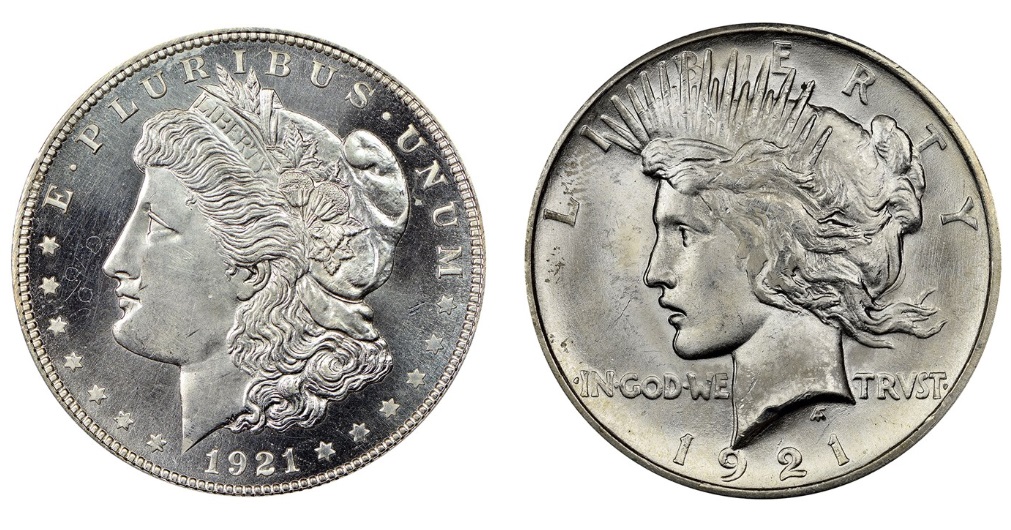
The Emerging Liberty Dime replaces the Roosevelt design that has appeared on every U.S. dime since 1946. That is 80 years of the same portrait. Before Roosevelt, the Mercury dime (technically the Winged Liberty Head) ran from 1916 to 1945. The new design returns a full figure of Liberty to the denomination for the first time since then. For collectors who have spent years watching the same designs cycle through unchanged, this is the kind of shift that turns a proof set from a routine annual purchase into something with long-term significance.
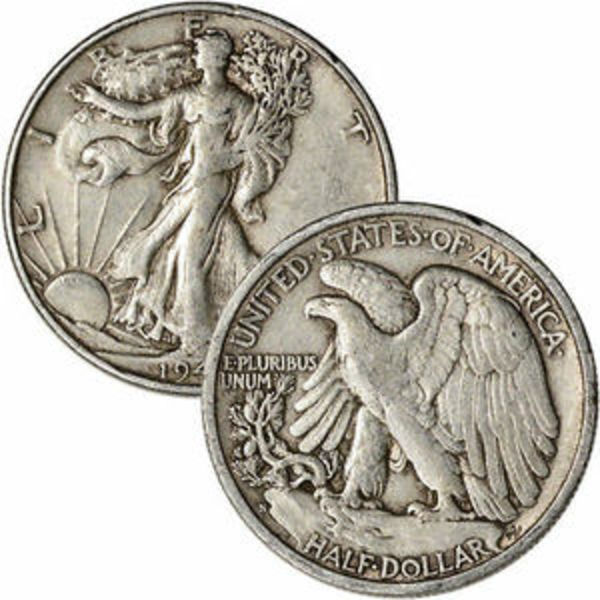
The Enduring Liberty Half Dollar replaces John F. Kennedy, who has appeared on the half dollar since 1964. The new design features the Statue of Liberty, connecting the half dollar to the broader semiquincentennial theme of enduring American ideals. Kennedy’s portrait has been on the denomination for 62 years — longer than any other half dollar design in U.S. history. The Walking Liberty half dollar (1916-1947) and the Franklin half dollar (1948-1963) each had shorter runs.
Both new designs are slated to continue beyond 2026, making this proof set the first-year-of-issue for two denominations simultaneously. First-year coins have historically attracted collector interest that persists well beyond the initial release window.
The Dual-Dated Nickel and Penny
The Jefferson nickel and Lincoln cent in both proof sets carry the dual date “1776 ~ 2026” across the obverse. The tilde separating the two years follows the same format used on the semiquincentennial quarters. The underlying designs remain Jefferson and Lincoln, but the dual date makes these one-year-only varieties that will not appear again.
The 2026 Penny Situation
Since late 2025, the U.S. Mint no longer produces Lincoln cents for general circulation. The last circulating penny was struck on November 12, 2025, in Philadelphia. The cost of manufacturing a penny had exceeded its face value for years, and the Mint finally stopped production and shipping to Federal Reserve Banks. That means the dual-dated 2026 Lincoln cent exists only inside numismatic products.
Specifically, there are only three products from the Mint that contain a 2026-dated cent: the clad proof set, the silver proof set, and the uncirculated coin set. There is no other way to get one. No rolls, no bags, no circulation finds. The last time a denomination was removed from circulation production, it was the half dollar — and those earlier date-specific coins now carry significant premiums on the secondary market.
This does not guarantee the 2026 cent will become a major rarity. Mintage depends on how many proof and uncirculated sets the Mint sells. But the structural scarcity — no circulation strikes, limited product availability — is real and worth paying attention to.
Five Quarters, Five Founding Moments
The five semiquincentennial quarters trace a timeline through 250 years of American history. Each one carries its own obverse and reverse design, which is unusual — most quarter programs kept a common obverse and swapped only the reverse.
Mayflower Compact (Quarter #1): The series opener covers the Pilgrims’ arrival and the 1620 agreement that established self-governance in the Plymouth Colony. The obverse shows two Pilgrims looking toward the New World. The reverse depicts the Mayflower under sail.
American Revolutionary War (Quarter #2): The only design in the series that retains George Washington on the obverse, using Joseph Menna’s 2007 portrait. The reverse shows a Continental Army soldier at Valley Forge during the winter of 1777-1778.
Declaration of Independence (Quarter #3): Thomas Jefferson appears on the obverse, with the Liberty Bell on the reverse — connecting the Declaration’s signing in Philadelphia on July 4, 1776, to the bell that has become its most enduring symbol.
U.S. Constitution (Quarter #4): James Madison appears on the obverse. The reverse shows the steeple of Independence Hall with its clock set to 2:50 — a nod to the 250th anniversary. The Constitution, drafted at the 1787 Convention in that building, replaced the Articles of Confederation and established the framework that has governed the country for 239 years.
Gettysburg Address (Quarter #5): Lincoln appears on the obverse, and the reverse features two clasped hands beneath the inscription “a new nation, conceived in liberty.” The design draws from Lincoln’s 1863 address at the dedication of the Soldiers’ National Cemetery, which reframed the Civil War as a test of whether the republic could endure — fitting for a coin series marking the country’s survival across 250 years.
For collectors hunting these designs in circulation, the 2026 quarter hunt guide covers what to look for and what certain errors and varieties are selling for.
Silver Proof Set: Melt Value and Premium Analysis
The silver proof set (26RH, $245) contains .999 fine silver in the dime, all five quarters, and the half dollar. Total actual silver weight (ASW) across those seven coins: 1.473 troy ounces.
At the current silver spot price, the melt value of the silver content in this set is $93.26. That puts the bullion premium at $245 minus the melt value — a spread that reflects the numismatic and collectible nature of proof coinage. The Mint is not selling these as bullion products. They are collectibles with silver content, and the pricing reflects design work, packaging, proof finish quality, and limited availability.
For context, the 2025 silver proof set had an ASW of around 1.34 troy ounces and sold for $105 at launch. The 2026 silver proof set costs $140 more, but the ASW is higher (1.473 oz vs. ~1.34 oz) and the coin designs are dramatically different from anything the Mint has produced in years. Whether that premium is justified depends on how much weight you put on the historic design changes versus pure metal content.
Collectors buying for silver content will find better value per ounce in bullion products like 2026 Silver Eagles. But proof sets are not competing with bullion rounds on a per-ounce basis. They occupy a different category — collectible coins with meaningful silver content as a floor.
Clad Proof Set: Pricing in Context
The clad proof set (26RG, $107) is the version launching on October 6. A standard U.S. Mint clad proof set in recent years has typically cost around $32-$37. At $107, the 2026 edition is roughly three times the usual price.
The markup reflects the special nature of the 2026 program. This is not a recycled-design annual set. It includes two brand-new denominations (the Liberty dime and Liberty half dollar), five unique quarter designs with individual obverses and reverses, dual-dated cents and nickels, and the only way to get a 2026 penny outside of two other Mint products. The Mint is pricing the set as a semiquincentennial collectible, not a routine annual offering.
For comparison, the 2018 Silver Reverse Proof Set — the last proof set with major collector interest — debuted at $54.95 and quickly sold out. Secondary market prices hit $200+ within months. The 2026 clad set starts at a much higher price point, which compresses the potential for quick secondary market gains but also reflects the Mint’s awareness that underpricing special sets just funnels profit to flippers.
Silver Edition Mintage: 271,520 Units
The silver proof set carries a mintage limit of 271,520 units. That number matters for long-term collector value. For context:
| Year | Silver Proof Set Mintage | Notes |
|---|---|---|
| 2023 | ~366,000 | Standard program |
| 2024 | ~340,000 | Standard program |
| 2025 | ~310,000 | Final American Women Quarters |
| 2026 | 271,520 (limit) | Semiquincentennial, new designs |
A 271,520 cap is lower than recent silver proof set production runs. Combined with the historic design changes — first new dime in 80 years, first new half dollar in 62 years — this mintage could prove meaningful on the secondary market if collector demand outpaces supply. The silver edition has already been available since June 11, so a portion of that 271,520 is already spoken for. How much allocation remains as of October is unclear, but the Mint’s product page will show availability status.
The clad proof set does not have a published mintage limit. Historically, clad proof sets are produced to demand during the sales window, and final mintage depends on how many orders come in. The semiquincentennial branding and higher price point may constrain demand compared to a typical year, which could make the final clad mintage lower than the 1-2 million range that recent years have produced.
The Polly Cooper Dollar Coin
The tenth coin in both sets is the 2026 Native American $1 coin honoring Polly Cooper, an Oneida Nation woman who aided Continental Army troops during the American Revolution. The Oneida were among the few Native nations to side with the colonists, and Cooper is remembered for traveling to Valley Forge with corn and provisions during the brutal winter encampment.
The Native American dollar series has featured a new reverse design annually since 2009. The Polly Cooper design ties directly into the semiquincentennial theme, connecting the Revolutionary War narrative on the quarters to the $1 denomination.
How to Buy
The clad proof set (26RG) went on sale at noon ET on October 6, 2026 at the U.S. Mint’s website (usmint.gov). Check the Mint’s product page for current availability and any household order limits.
The silver proof set (26RH, $245) has been available since June 11. Check the Mint’s website for current availability — sets with fixed mintage limits can sell out without warning once allocations run low.
Authorized dealers and secondary market sellers on major auction platforms also carry both versions, sometimes at premiums above or below the Mint’s issue price depending on demand. The Best of the Mint and other 2026 series releases are also worth watching if you are building a complete semiquincentennial collection.
Who Should Consider This Set
The 2026 proof set is not a routine annual release. The combination of first-year-of-issue designs on two denominations, the end of circulation-strike pennies, dual-dated coins, and a fixed mintage on the silver version makes it one of the more significant proof set releases in recent memory.
Collectors focused on type sets will want this for the Liberty dime and Liberty half dollar — these are the first coins in what will likely be long-running series, and the proof versions from year one tend to anchor a type collection. Silver stackers may find the 1.473 oz ASW appealing as a collectible with real metal backing, even if per-ounce bullion pricing is available elsewhere. And anyone interested in the semiquincentennial program as a whole will find this set ties together the full range of 2026 commemorative designs in a single package.
The clad version at $107 is the more accessible entry point. The silver version at $245 with its 271,520 mintage cap is the one more likely to hold or appreciate on the secondary market. Both contain the same 10 designs, the same “S” mint marks, and the same mirror-finish proof quality that San Francisco is known for.
Disclaimer: This article is for informational and educational purposes only. It does not constitute financial, investment, or legal advice. Coin values, mintage figures, and pricing data are based on available information at the time of publication and are subject to change. Past performance of collectible coins does not guarantee future results. Always conduct your own research and consult with a qualified professional before making purchasing or investment decisions. FindBullionPrices.com may receive compensation from dealers listed on the site.